
Home
Can't Buy My Love: How Advertising Changes the Way We Think and Feel
Barnes and Noble
Loading Inventory...
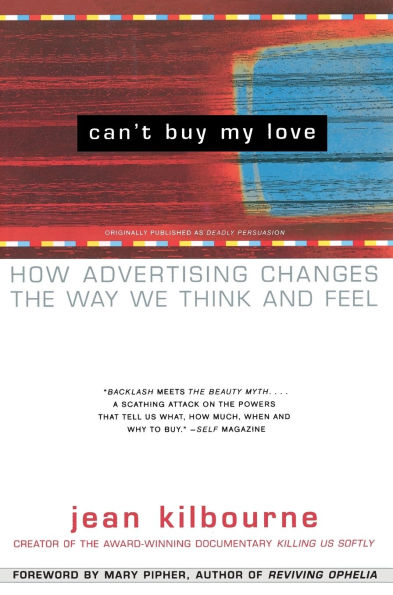
Can't Buy My Love: How Advertising Changes the Way We Think and Feel in Chattanooga, TN
Current price: $19.99
Barnes and Noble
Can't Buy My Love: How Advertising Changes the Way We Think and Feel in Chattanooga, TN
Current price: $19.99
Loading Inventory...
Size: Paperback
Many advertisements these days make us feel as if we have an intimate, even passionate relationship with a product. But as Jean Kilbourne points out in this fascinating and shocking exposé, the dreamlike promise of advertising always leaves us hungry for more. We can never be satisfied, because the products we love cannot love us back.
“When was the last time you felt this comfortable in a relationship?” —An ad for sneakers
“You can love it without getting your heart broken.” —An ad for a car
“Until I find a real man, I'll settle for a real smoke.” —A woman in a cigarette ad
Drawing upon her knowledge of psychology, media, and women's issues, Kilbourne offers nothing less than a new understanding of a ubiquitous phenomenon in our culture. The average American is exposed to over 3,000 advertisements a day and watches three years' worth of television ads over the course of a lifetime. Kilbourne paints a gripping portrait of how this barrage of advertising drastically affects young people, especially girls, by offering false promises of rebellion, connection, and control. She also offers a surprising analysis of the way advertising creates and then feeds an addictive mentality that often continues throughout adulthood.
“When was the last time you felt this comfortable in a relationship?” —An ad for sneakers
“You can love it without getting your heart broken.” —An ad for a car
“Until I find a real man, I'll settle for a real smoke.” —A woman in a cigarette ad
Drawing upon her knowledge of psychology, media, and women's issues, Kilbourne offers nothing less than a new understanding of a ubiquitous phenomenon in our culture. The average American is exposed to over 3,000 advertisements a day and watches three years' worth of television ads over the course of a lifetime. Kilbourne paints a gripping portrait of how this barrage of advertising drastically affects young people, especially girls, by offering false promises of rebellion, connection, and control. She also offers a surprising analysis of the way advertising creates and then feeds an addictive mentality that often continues throughout adulthood.
Many advertisements these days make us feel as if we have an intimate, even passionate relationship with a product. But as Jean Kilbourne points out in this fascinating and shocking exposé, the dreamlike promise of advertising always leaves us hungry for more. We can never be satisfied, because the products we love cannot love us back.
“When was the last time you felt this comfortable in a relationship?” —An ad for sneakers
“You can love it without getting your heart broken.” —An ad for a car
“Until I find a real man, I'll settle for a real smoke.” —A woman in a cigarette ad
Drawing upon her knowledge of psychology, media, and women's issues, Kilbourne offers nothing less than a new understanding of a ubiquitous phenomenon in our culture. The average American is exposed to over 3,000 advertisements a day and watches three years' worth of television ads over the course of a lifetime. Kilbourne paints a gripping portrait of how this barrage of advertising drastically affects young people, especially girls, by offering false promises of rebellion, connection, and control. She also offers a surprising analysis of the way advertising creates and then feeds an addictive mentality that often continues throughout adulthood.
“When was the last time you felt this comfortable in a relationship?” —An ad for sneakers
“You can love it without getting your heart broken.” —An ad for a car
“Until I find a real man, I'll settle for a real smoke.” —A woman in a cigarette ad
Drawing upon her knowledge of psychology, media, and women's issues, Kilbourne offers nothing less than a new understanding of a ubiquitous phenomenon in our culture. The average American is exposed to over 3,000 advertisements a day and watches three years' worth of television ads over the course of a lifetime. Kilbourne paints a gripping portrait of how this barrage of advertising drastically affects young people, especially girls, by offering false promises of rebellion, connection, and control. She also offers a surprising analysis of the way advertising creates and then feeds an addictive mentality that often continues throughout adulthood.
You May Also Like














More About Barnes and Noble at Hamilton Place
Barnes & Noble is the world’s largest retail bookseller and a leading retailer of content, digital media and educational products. Our Nook Digital business offers a lineup of NOOK® tablets and e-Readers and an expansive collection of digital reading content through the NOOK Store®. Barnes & Noble’s mission is to operate the best omni-channel specialty retail business in America, helping both our customers and booksellers reach their aspirations, while being a credit to the communities we serve.
2100 Hamilton Pl Blvd, Chattanooga, TN 37421, United States
Find Barnes and Noble at Hamilton Place in Chattanooga, TN
Visit Barnes and Noble at Hamilton Place in Chattanooga, TN
