
Home
Buka's Emergencies Dermatology
Barnes and Noble
Loading Inventory...
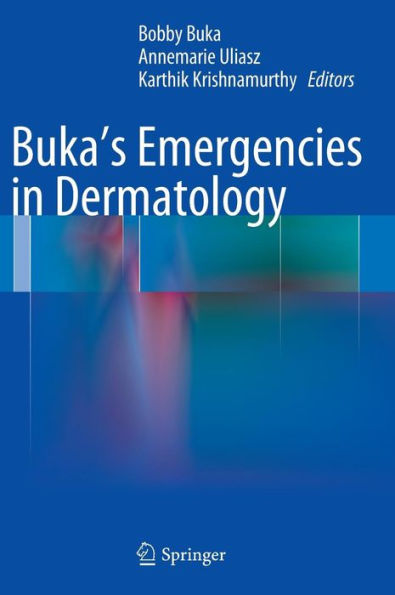
Buka's Emergencies Dermatology in Chattanooga, TN
Current price: $169.99
Barnes and Noble
Buka's Emergencies Dermatology in Chattanooga, TN
Current price: $169.99
Loading Inventory...
Size: Hardcover
The term “dermatologic emergency” is rarely used, and a dermatologist is typically not the first physician called when a patient presents in the emergency department. However, largely under-recognized dermatoses can be life-threatening if not diagnosed and treated in a timely fashion.
Buka's Emergencies in Dermatology
addresses the need for a concise, portable reference that can be used by emergency medicine and dermatology physicians and residents alike.
This book, heavily illustrated with color images, proves to be especially critical if a community-based hospital does not have a dermatology department and the responsibility for initial diagnosis falls to the emergency room or critical care physician. However, since the majority of cutaneous outbreaks are not life-threatening, it is often the case that emergency department personnel are less equipped to diagnose these conditions correctly.
addresses this concern and focuses on the most critical issues related to emergencies in dermatology, beginning with a general overview of the basics of critical care for dermatologic emergencies, then moving to neonatal and pediatric emergencies, infectious emergencies, drug eruptions, and HIV-AIDS-related emergencies in dermatology, just to name a few.
Buka's Emergencies in Dermatology
addresses the need for a concise, portable reference that can be used by emergency medicine and dermatology physicians and residents alike.
This book, heavily illustrated with color images, proves to be especially critical if a community-based hospital does not have a dermatology department and the responsibility for initial diagnosis falls to the emergency room or critical care physician. However, since the majority of cutaneous outbreaks are not life-threatening, it is often the case that emergency department personnel are less equipped to diagnose these conditions correctly.
addresses this concern and focuses on the most critical issues related to emergencies in dermatology, beginning with a general overview of the basics of critical care for dermatologic emergencies, then moving to neonatal and pediatric emergencies, infectious emergencies, drug eruptions, and HIV-AIDS-related emergencies in dermatology, just to name a few.
The term “dermatologic emergency” is rarely used, and a dermatologist is typically not the first physician called when a patient presents in the emergency department. However, largely under-recognized dermatoses can be life-threatening if not diagnosed and treated in a timely fashion.
Buka's Emergencies in Dermatology
addresses the need for a concise, portable reference that can be used by emergency medicine and dermatology physicians and residents alike.
This book, heavily illustrated with color images, proves to be especially critical if a community-based hospital does not have a dermatology department and the responsibility for initial diagnosis falls to the emergency room or critical care physician. However, since the majority of cutaneous outbreaks are not life-threatening, it is often the case that emergency department personnel are less equipped to diagnose these conditions correctly.
addresses this concern and focuses on the most critical issues related to emergencies in dermatology, beginning with a general overview of the basics of critical care for dermatologic emergencies, then moving to neonatal and pediatric emergencies, infectious emergencies, drug eruptions, and HIV-AIDS-related emergencies in dermatology, just to name a few.
Buka's Emergencies in Dermatology
addresses the need for a concise, portable reference that can be used by emergency medicine and dermatology physicians and residents alike.
This book, heavily illustrated with color images, proves to be especially critical if a community-based hospital does not have a dermatology department and the responsibility for initial diagnosis falls to the emergency room or critical care physician. However, since the majority of cutaneous outbreaks are not life-threatening, it is often the case that emergency department personnel are less equipped to diagnose these conditions correctly.
addresses this concern and focuses on the most critical issues related to emergencies in dermatology, beginning with a general overview of the basics of critical care for dermatologic emergencies, then moving to neonatal and pediatric emergencies, infectious emergencies, drug eruptions, and HIV-AIDS-related emergencies in dermatology, just to name a few.
You May Also Like








More About Barnes and Noble at Hamilton Place
Barnes & Noble is the world’s largest retail bookseller and a leading retailer of content, digital media and educational products. Our Nook Digital business offers a lineup of NOOK® tablets and e-Readers and an expansive collection of digital reading content through the NOOK Store®. Barnes & Noble’s mission is to operate the best omni-channel specialty retail business in America, helping both our customers and booksellers reach their aspirations, while being a credit to the communities we serve.
2100 Hamilton Pl Blvd, Chattanooga, TN 37421, United States
Find Barnes and Noble at Hamilton Place in Chattanooga, TN
Visit Barnes and Noble at Hamilton Place in Chattanooga, TN
