
Home
Buildings and Landmarks of 19th-Century America: American Society Revealed
Barnes and Noble
Loading Inventory...
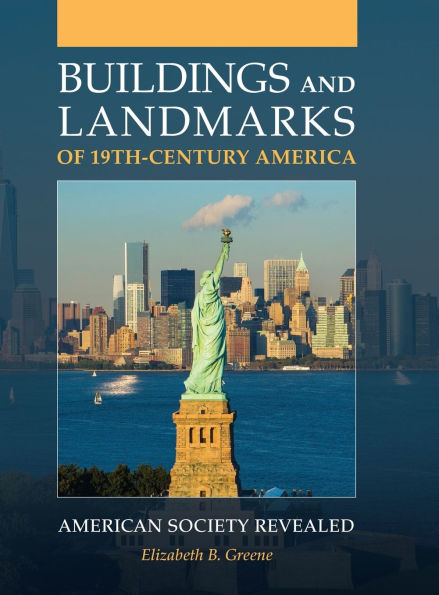
Buildings and Landmarks of 19th-Century America: American Society Revealed in Chattanooga, TN
Current price: $121.00
Barnes and Noble
Buildings and Landmarks of 19th-Century America: American Society Revealed in Chattanooga, TN
Current price: $121.00
Loading Inventory...
Size: Hardcover
An invaluable resource for readers interested in architecture and design that demonstrates how the construction, form, and function of key structures in the 19th-century influenced American social, political, economic, and intellectual life.
America has always been a nation of thinkers, believers, creators, and builders. Evidence of this is plentiful among the landmarks constructed in the 19th century.
Buildings and Landmarks of 19th-Century America: American Society Revealed
examines many examples that include homes, office buildings, recreational spaces, military sites, religious buildings, and other landmarks in a variety of geographical locations, discussing the background, architecture, and cultural significance of each. Each engaging, accessible entry not only provides readers detailed information about how the landmark relates to what was going on in American society at the time of its construction but also sparks the reader's interest to research the subject further.
As examples, consider that a rural cemetery built in Massachusetts in the early 19th century was the prime influence on public park design and led to the construction of New York's Central Park and many other public parks since. The millionaire industrialist and philanthropist Andrew Carnegie built many of the first free public libraries in the country, which led to the development of municipal public library systems. The huge success of 19th-century world's fairs, like the 1876 Centennial Exhibition and the 1893 World's Columbian Exhibition, had lasting effects on society through the many new products that they introduced to the public. Throughout the book, landmarks are analyzed to elucidate their influence on many aspects of 19th-century society, including the treatment of the mentally ill, impact of religious revivals, growth of leisure and vacation time, and housing for the poor and the western homesteader, among many others.
In the "How to Evaluate Buildings and Structures" section, readers are prompted to consider questions such as "What specific purposes did the building or structure have?" "When was it constructed, and what were the circumstances?" and "What was the need it addressed?" Students will learn about the period while also developing the skills of observation and assessment needed to analyze these landmarks and draw meaningful conclusions from them about their context and significance. The discussion of each landmark serves to help readers with these elements of critical thinking, assessment, and analysis.
America has always been a nation of thinkers, believers, creators, and builders. Evidence of this is plentiful among the landmarks constructed in the 19th century.
Buildings and Landmarks of 19th-Century America: American Society Revealed
examines many examples that include homes, office buildings, recreational spaces, military sites, religious buildings, and other landmarks in a variety of geographical locations, discussing the background, architecture, and cultural significance of each. Each engaging, accessible entry not only provides readers detailed information about how the landmark relates to what was going on in American society at the time of its construction but also sparks the reader's interest to research the subject further.
As examples, consider that a rural cemetery built in Massachusetts in the early 19th century was the prime influence on public park design and led to the construction of New York's Central Park and many other public parks since. The millionaire industrialist and philanthropist Andrew Carnegie built many of the first free public libraries in the country, which led to the development of municipal public library systems. The huge success of 19th-century world's fairs, like the 1876 Centennial Exhibition and the 1893 World's Columbian Exhibition, had lasting effects on society through the many new products that they introduced to the public. Throughout the book, landmarks are analyzed to elucidate their influence on many aspects of 19th-century society, including the treatment of the mentally ill, impact of religious revivals, growth of leisure and vacation time, and housing for the poor and the western homesteader, among many others.
In the "How to Evaluate Buildings and Structures" section, readers are prompted to consider questions such as "What specific purposes did the building or structure have?" "When was it constructed, and what were the circumstances?" and "What was the need it addressed?" Students will learn about the period while also developing the skills of observation and assessment needed to analyze these landmarks and draw meaningful conclusions from them about their context and significance. The discussion of each landmark serves to help readers with these elements of critical thinking, assessment, and analysis.
An invaluable resource for readers interested in architecture and design that demonstrates how the construction, form, and function of key structures in the 19th-century influenced American social, political, economic, and intellectual life.
America has always been a nation of thinkers, believers, creators, and builders. Evidence of this is plentiful among the landmarks constructed in the 19th century.
Buildings and Landmarks of 19th-Century America: American Society Revealed
examines many examples that include homes, office buildings, recreational spaces, military sites, religious buildings, and other landmarks in a variety of geographical locations, discussing the background, architecture, and cultural significance of each. Each engaging, accessible entry not only provides readers detailed information about how the landmark relates to what was going on in American society at the time of its construction but also sparks the reader's interest to research the subject further.
As examples, consider that a rural cemetery built in Massachusetts in the early 19th century was the prime influence on public park design and led to the construction of New York's Central Park and many other public parks since. The millionaire industrialist and philanthropist Andrew Carnegie built many of the first free public libraries in the country, which led to the development of municipal public library systems. The huge success of 19th-century world's fairs, like the 1876 Centennial Exhibition and the 1893 World's Columbian Exhibition, had lasting effects on society through the many new products that they introduced to the public. Throughout the book, landmarks are analyzed to elucidate their influence on many aspects of 19th-century society, including the treatment of the mentally ill, impact of religious revivals, growth of leisure and vacation time, and housing for the poor and the western homesteader, among many others.
In the "How to Evaluate Buildings and Structures" section, readers are prompted to consider questions such as "What specific purposes did the building or structure have?" "When was it constructed, and what were the circumstances?" and "What was the need it addressed?" Students will learn about the period while also developing the skills of observation and assessment needed to analyze these landmarks and draw meaningful conclusions from them about their context and significance. The discussion of each landmark serves to help readers with these elements of critical thinking, assessment, and analysis.
America has always been a nation of thinkers, believers, creators, and builders. Evidence of this is plentiful among the landmarks constructed in the 19th century.
Buildings and Landmarks of 19th-Century America: American Society Revealed
examines many examples that include homes, office buildings, recreational spaces, military sites, religious buildings, and other landmarks in a variety of geographical locations, discussing the background, architecture, and cultural significance of each. Each engaging, accessible entry not only provides readers detailed information about how the landmark relates to what was going on in American society at the time of its construction but also sparks the reader's interest to research the subject further.
As examples, consider that a rural cemetery built in Massachusetts in the early 19th century was the prime influence on public park design and led to the construction of New York's Central Park and many other public parks since. The millionaire industrialist and philanthropist Andrew Carnegie built many of the first free public libraries in the country, which led to the development of municipal public library systems. The huge success of 19th-century world's fairs, like the 1876 Centennial Exhibition and the 1893 World's Columbian Exhibition, had lasting effects on society through the many new products that they introduced to the public. Throughout the book, landmarks are analyzed to elucidate their influence on many aspects of 19th-century society, including the treatment of the mentally ill, impact of religious revivals, growth of leisure and vacation time, and housing for the poor and the western homesteader, among many others.
In the "How to Evaluate Buildings and Structures" section, readers are prompted to consider questions such as "What specific purposes did the building or structure have?" "When was it constructed, and what were the circumstances?" and "What was the need it addressed?" Students will learn about the period while also developing the skills of observation and assessment needed to analyze these landmarks and draw meaningful conclusions from them about their context and significance. The discussion of each landmark serves to help readers with these elements of critical thinking, assessment, and analysis.
You May Also Like















More About Barnes and Noble at Hamilton Place
Barnes & Noble is the world’s largest retail bookseller and a leading retailer of content, digital media and educational products. Our Nook Digital business offers a lineup of NOOK® tablets and e-Readers and an expansive collection of digital reading content through the NOOK Store®. Barnes & Noble’s mission is to operate the best omni-channel specialty retail business in America, helping both our customers and booksellers reach their aspirations, while being a credit to the communities we serve.
2100 Hamilton Pl Blvd, Chattanooga, TN 37421, United States
Find Barnes and Noble at Hamilton Place in Chattanooga, TN
Visit Barnes and Noble at Hamilton Place in Chattanooga, TN
