
Home
Bringing Back the Past
Barnes and Noble
Loading Inventory...
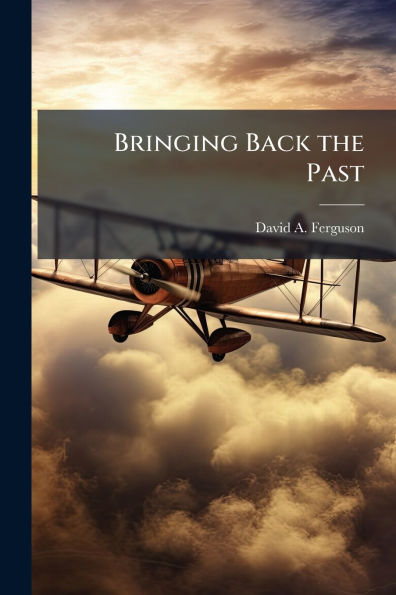
Bringing Back the Past in Chattanooga, TN
Current price: $26.95
Barnes and Noble
Bringing Back the Past in Chattanooga, TN
Current price: $26.95
Loading Inventory...
Size: Hardcover
Service culture affects how military branches organize, train, equip, and survive as separate institutions of the US military. The culture of a service includes the persistent, patterned way of thinking about operations and relationships. The population of a particular service will identify with a common mission, capability, and or ethos, thus forming a cohesive culture. Air Force culture is centered upon the idea that advanced technology enables the service to be a decisive contributor to warfare from the air domain. In order to stay relevant to current military requirements, services are faced with the challenge of either re-organizing or directing a major change in practices, or both. Once the service initiates the change, the service culture's response is a direct contributor to whether or not the change will be successful. The US Air Force is considering procuring propeller-driven aircraft to conduct strike operations. This is a major change in practices, and goes against the current service culture that has, since before its inception as an independent institution, fostered a technology biased ethos. There are historic examples that illustrate how service cultures rejected the institution's proposal to re-organize or initiate a major change in practices. During Vietnam the Army culture resisted transformation to deal with counterinsurgency due to organizational and material costs. There are also historic examples that demonstrate how cultural buy-in from the institution allowed a major change to occur. The methodology for this monograph analyzes two such case studies. The first case study is the Army Transformation that was initiated by General Shinseki in 1999 and is still ongoing. The second case study analyzes the Marine Corps' decision to resurrect the amphibious assault mission during the interwar period. Both case studies are examples of how Army and Marine leaders influenced their service culture to adopt a major re-organization and a significant chang
This work has been selected by scholars as being culturally important, and is part of the knowledge base of civilization as we know it. This work was reproduced from the original artifact, and remains as true to the original work as possible. Therefore, you will see the original copyright references, library stamps (as most of these works have been housed in our most important libraries around the world), and other notations in the work.
This work is in the public domain in the United States of America, and possibly other nations. Within the United States, you may freely copy and distribute this work, as no entity (individual or corporate) has a copyright on the body of the work.
As a reproduction of a historical artifact, this work may contain missing or blurred pages, poor pictures, errant marks, etc. Scholars believe, and we concur, that this work is important enough to be preserved, reproduced, and made generally available to the public. We appreciate your support of the preservation process, and thank you for being an important part of keeping this knowledge alive and relevant.
This work has been selected by scholars as being culturally important, and is part of the knowledge base of civilization as we know it. This work was reproduced from the original artifact, and remains as true to the original work as possible. Therefore, you will see the original copyright references, library stamps (as most of these works have been housed in our most important libraries around the world), and other notations in the work.
This work is in the public domain in the United States of America, and possibly other nations. Within the United States, you may freely copy and distribute this work, as no entity (individual or corporate) has a copyright on the body of the work.
As a reproduction of a historical artifact, this work may contain missing or blurred pages, poor pictures, errant marks, etc. Scholars believe, and we concur, that this work is important enough to be preserved, reproduced, and made generally available to the public. We appreciate your support of the preservation process, and thank you for being an important part of keeping this knowledge alive and relevant.
Service culture affects how military branches organize, train, equip, and survive as separate institutions of the US military. The culture of a service includes the persistent, patterned way of thinking about operations and relationships. The population of a particular service will identify with a common mission, capability, and or ethos, thus forming a cohesive culture. Air Force culture is centered upon the idea that advanced technology enables the service to be a decisive contributor to warfare from the air domain. In order to stay relevant to current military requirements, services are faced with the challenge of either re-organizing or directing a major change in practices, or both. Once the service initiates the change, the service culture's response is a direct contributor to whether or not the change will be successful. The US Air Force is considering procuring propeller-driven aircraft to conduct strike operations. This is a major change in practices, and goes against the current service culture that has, since before its inception as an independent institution, fostered a technology biased ethos. There are historic examples that illustrate how service cultures rejected the institution's proposal to re-organize or initiate a major change in practices. During Vietnam the Army culture resisted transformation to deal with counterinsurgency due to organizational and material costs. There are also historic examples that demonstrate how cultural buy-in from the institution allowed a major change to occur. The methodology for this monograph analyzes two such case studies. The first case study is the Army Transformation that was initiated by General Shinseki in 1999 and is still ongoing. The second case study analyzes the Marine Corps' decision to resurrect the amphibious assault mission during the interwar period. Both case studies are examples of how Army and Marine leaders influenced their service culture to adopt a major re-organization and a significant chang
This work has been selected by scholars as being culturally important, and is part of the knowledge base of civilization as we know it. This work was reproduced from the original artifact, and remains as true to the original work as possible. Therefore, you will see the original copyright references, library stamps (as most of these works have been housed in our most important libraries around the world), and other notations in the work.
This work is in the public domain in the United States of America, and possibly other nations. Within the United States, you may freely copy and distribute this work, as no entity (individual or corporate) has a copyright on the body of the work.
As a reproduction of a historical artifact, this work may contain missing or blurred pages, poor pictures, errant marks, etc. Scholars believe, and we concur, that this work is important enough to be preserved, reproduced, and made generally available to the public. We appreciate your support of the preservation process, and thank you for being an important part of keeping this knowledge alive and relevant.
This work has been selected by scholars as being culturally important, and is part of the knowledge base of civilization as we know it. This work was reproduced from the original artifact, and remains as true to the original work as possible. Therefore, you will see the original copyright references, library stamps (as most of these works have been housed in our most important libraries around the world), and other notations in the work.
This work is in the public domain in the United States of America, and possibly other nations. Within the United States, you may freely copy and distribute this work, as no entity (individual or corporate) has a copyright on the body of the work.
As a reproduction of a historical artifact, this work may contain missing or blurred pages, poor pictures, errant marks, etc. Scholars believe, and we concur, that this work is important enough to be preserved, reproduced, and made generally available to the public. We appreciate your support of the preservation process, and thank you for being an important part of keeping this knowledge alive and relevant.
You May Also Like


















More About Barnes and Noble at Hamilton Place
Barnes & Noble is the world’s largest retail bookseller and a leading retailer of content, digital media and educational products. Our Nook Digital business offers a lineup of NOOK® tablets and e-Readers and an expansive collection of digital reading content through the NOOK Store®. Barnes & Noble’s mission is to operate the best omni-channel specialty retail business in America, helping both our customers and booksellers reach their aspirations, while being a credit to the communities we serve.
2100 Hamilton Pl Blvd, Chattanooga, TN 37421, United States
Find Barnes and Noble at Hamilton Place in Chattanooga, TN
Visit Barnes and Noble at Hamilton Place in Chattanooga, TN
