
Home
Breaking Through the Access Barrier: How Academic Capital Formation Can Improve Policy Higher Education
Barnes and Noble
Loading Inventory...
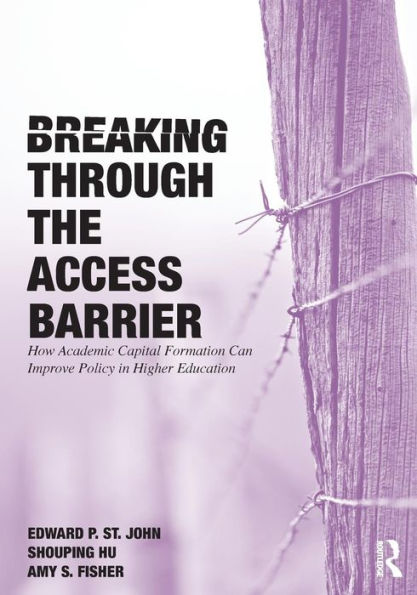
Breaking Through the Access Barrier: How Academic Capital Formation Can Improve Policy Higher Education in Chattanooga, TN
Current price: $210.00
Barnes and Noble
Breaking Through the Access Barrier: How Academic Capital Formation Can Improve Policy Higher Education in Chattanooga, TN
Current price: $210.00
Loading Inventory...
Size: Hardcover
Breaking Through the Access Barrier
argues that the policies designed to address inequalities in college access are failing to address underlying issues of inequality. This book introduces academic capital formation (ACF), a groundbreaking new theory defined by family knowledge of educational options and the opportunities for pursuing them. The authors suggest focusing on intervention programs and public policy to promote improvement in academic preparation, college information, and student aid.
This textbook offers:
a new construct–academic capital–that integrates and draws upon existing literature on influencing access to college
practical advice for better preparation and intervention
real student outcomes, databases, and interviews taken from exemplary intervention programs
empirical research illuminating the role of class reproduction in education and how interventions (financial, academic, and networking) can reduce student barriers
quantitative and qualitative analysis of the importance and effectiveness of several major policy interventions.
Written for courses on higher education policy and policy analysis, readers will find
offers valuable advice for working within new policy frameworks and reshaping the future of educational opportunities and access for under-represented students from disadvantaged backgrounds.
argues that the policies designed to address inequalities in college access are failing to address underlying issues of inequality. This book introduces academic capital formation (ACF), a groundbreaking new theory defined by family knowledge of educational options and the opportunities for pursuing them. The authors suggest focusing on intervention programs and public policy to promote improvement in academic preparation, college information, and student aid.
This textbook offers:
a new construct–academic capital–that integrates and draws upon existing literature on influencing access to college
practical advice for better preparation and intervention
real student outcomes, databases, and interviews taken from exemplary intervention programs
empirical research illuminating the role of class reproduction in education and how interventions (financial, academic, and networking) can reduce student barriers
quantitative and qualitative analysis of the importance and effectiveness of several major policy interventions.
Written for courses on higher education policy and policy analysis, readers will find
offers valuable advice for working within new policy frameworks and reshaping the future of educational opportunities and access for under-represented students from disadvantaged backgrounds.
Breaking Through the Access Barrier
argues that the policies designed to address inequalities in college access are failing to address underlying issues of inequality. This book introduces academic capital formation (ACF), a groundbreaking new theory defined by family knowledge of educational options and the opportunities for pursuing them. The authors suggest focusing on intervention programs and public policy to promote improvement in academic preparation, college information, and student aid.
This textbook offers:
a new construct–academic capital–that integrates and draws upon existing literature on influencing access to college
practical advice for better preparation and intervention
real student outcomes, databases, and interviews taken from exemplary intervention programs
empirical research illuminating the role of class reproduction in education and how interventions (financial, academic, and networking) can reduce student barriers
quantitative and qualitative analysis of the importance and effectiveness of several major policy interventions.
Written for courses on higher education policy and policy analysis, readers will find
offers valuable advice for working within new policy frameworks and reshaping the future of educational opportunities and access for under-represented students from disadvantaged backgrounds.
argues that the policies designed to address inequalities in college access are failing to address underlying issues of inequality. This book introduces academic capital formation (ACF), a groundbreaking new theory defined by family knowledge of educational options and the opportunities for pursuing them. The authors suggest focusing on intervention programs and public policy to promote improvement in academic preparation, college information, and student aid.
This textbook offers:
a new construct–academic capital–that integrates and draws upon existing literature on influencing access to college
practical advice for better preparation and intervention
real student outcomes, databases, and interviews taken from exemplary intervention programs
empirical research illuminating the role of class reproduction in education and how interventions (financial, academic, and networking) can reduce student barriers
quantitative and qualitative analysis of the importance and effectiveness of several major policy interventions.
Written for courses on higher education policy and policy analysis, readers will find
offers valuable advice for working within new policy frameworks and reshaping the future of educational opportunities and access for under-represented students from disadvantaged backgrounds.
You May Also Like












More About Barnes and Noble at Hamilton Place
Barnes & Noble is the world’s largest retail bookseller and a leading retailer of content, digital media and educational products. Our Nook Digital business offers a lineup of NOOK® tablets and e-Readers and an expansive collection of digital reading content through the NOOK Store®. Barnes & Noble’s mission is to operate the best omni-channel specialty retail business in America, helping both our customers and booksellers reach their aspirations, while being a credit to the communities we serve.
2100 Hamilton Pl Blvd, Chattanooga, TN 37421, United States
Find Barnes and Noble at Hamilton Place in Chattanooga, TN
Visit Barnes and Noble at Hamilton Place in Chattanooga, TN
