
Home
Borders and Borderlands as Resources in the Horn of Africa
Barnes and Noble
Loading Inventory...
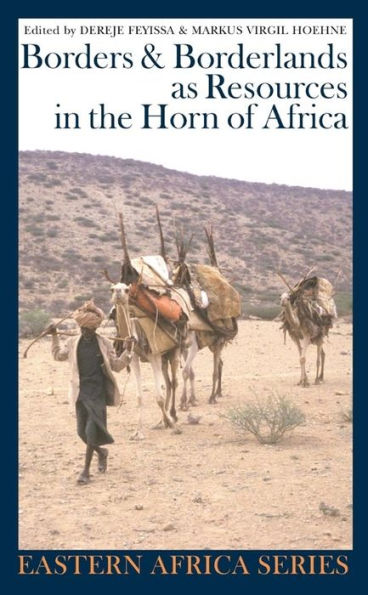
Borders and Borderlands as Resources in the Horn of Africa in Chattanooga, TN
Current price: $110.00
Barnes and Noble
Borders and Borderlands as Resources in the Horn of Africa in Chattanooga, TN
Current price: $110.00
Loading Inventory...
Size: OS
Borders offer opportunities as well as restrictions, and in the Horn of Africa they are used as economic, political, identity and status resources by borderland peoples.
State borders are more than barriers. They structure social, economic and political spaces and as such provide opportunities as well as obstacles for the communities straddling both sides of the border. This book deals with the conduits and opportunities of state borders in the Horn of Africa, and investigates how the people living there exploit state borders through various strategies.
Using a micro level perspective, the case studies, which includethe Horn and Eastern Africa, particularly the borders of Djibouti, Eritrea, Ethiopia, Sudan, Somalia, Kenya, Uganda and Tanzania, focus on opportunities, highlight the agency of the borderlanders, and acknowledge the permeabilitybut consequentiality of the borders.
DEREJE FEYISSA, Max Planck Institute of Social Anthropology, Halle, Germany; MARKUS VIRGIL HOEHNE, Max Planck Institute of Social Anthropology, Halle, Germany.
State borders are more than barriers. They structure social, economic and political spaces and as such provide opportunities as well as obstacles for the communities straddling both sides of the border. This book deals with the conduits and opportunities of state borders in the Horn of Africa, and investigates how the people living there exploit state borders through various strategies.
Using a micro level perspective, the case studies, which includethe Horn and Eastern Africa, particularly the borders of Djibouti, Eritrea, Ethiopia, Sudan, Somalia, Kenya, Uganda and Tanzania, focus on opportunities, highlight the agency of the borderlanders, and acknowledge the permeabilitybut consequentiality of the borders.
DEREJE FEYISSA, Max Planck Institute of Social Anthropology, Halle, Germany; MARKUS VIRGIL HOEHNE, Max Planck Institute of Social Anthropology, Halle, Germany.
Borders offer opportunities as well as restrictions, and in the Horn of Africa they are used as economic, political, identity and status resources by borderland peoples.
State borders are more than barriers. They structure social, economic and political spaces and as such provide opportunities as well as obstacles for the communities straddling both sides of the border. This book deals with the conduits and opportunities of state borders in the Horn of Africa, and investigates how the people living there exploit state borders through various strategies.
Using a micro level perspective, the case studies, which includethe Horn and Eastern Africa, particularly the borders of Djibouti, Eritrea, Ethiopia, Sudan, Somalia, Kenya, Uganda and Tanzania, focus on opportunities, highlight the agency of the borderlanders, and acknowledge the permeabilitybut consequentiality of the borders.
DEREJE FEYISSA, Max Planck Institute of Social Anthropology, Halle, Germany; MARKUS VIRGIL HOEHNE, Max Planck Institute of Social Anthropology, Halle, Germany.
State borders are more than barriers. They structure social, economic and political spaces and as such provide opportunities as well as obstacles for the communities straddling both sides of the border. This book deals with the conduits and opportunities of state borders in the Horn of Africa, and investigates how the people living there exploit state borders through various strategies.
Using a micro level perspective, the case studies, which includethe Horn and Eastern Africa, particularly the borders of Djibouti, Eritrea, Ethiopia, Sudan, Somalia, Kenya, Uganda and Tanzania, focus on opportunities, highlight the agency of the borderlanders, and acknowledge the permeabilitybut consequentiality of the borders.
DEREJE FEYISSA, Max Planck Institute of Social Anthropology, Halle, Germany; MARKUS VIRGIL HOEHNE, Max Planck Institute of Social Anthropology, Halle, Germany.
You May Also Like
![The Border [Orange Vinyl] [Barnes & Noble Exclusive]](https://prodimage.images-bn.com/pimages/0196588897917_p0_v2_s600x595.jpg)










More About Barnes and Noble at Hamilton Place
Barnes & Noble is the world’s largest retail bookseller and a leading retailer of content, digital media and educational products. Our Nook Digital business offers a lineup of NOOK® tablets and e-Readers and an expansive collection of digital reading content through the NOOK Store®. Barnes & Noble’s mission is to operate the best omni-channel specialty retail business in America, helping both our customers and booksellers reach their aspirations, while being a credit to the communities we serve.
2100 Hamilton Pl Blvd, Chattanooga, TN 37421, United States
Find Barnes and Noble at Hamilton Place in Chattanooga, TN
Visit Barnes and Noble at Hamilton Place in Chattanooga, TN
