
Home
Blake's Human Form Divine
Barnes and Noble
Loading Inventory...
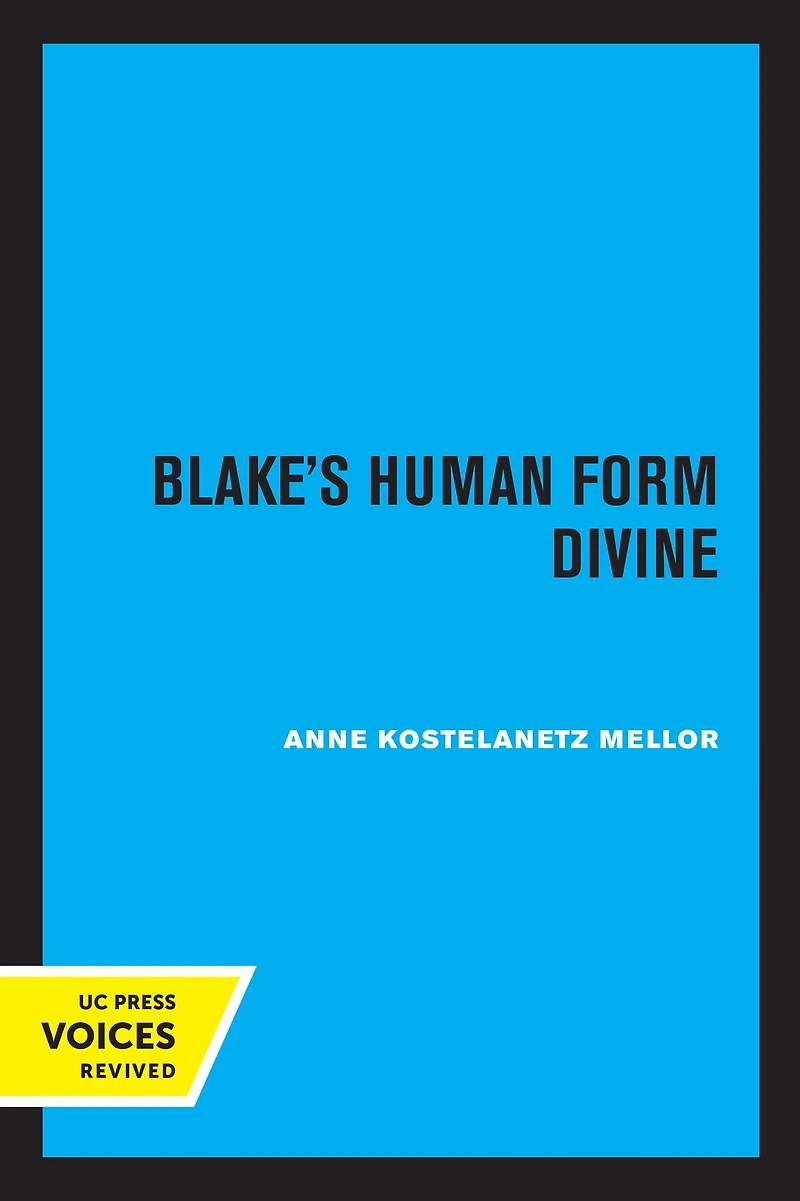

Blake's Human Form Divine in Chattanooga, TN
By Barnes & Noble
Current price: $29.95
Barnes and Noble
Blake's Human Form Divine in Chattanooga, TN
By Barnes & Noble
Current price: $29.95
Loading Inventory...
Size: EBook
In Blake’s Human Form Divine, the profound interplay between philosophy and stylistic principles in William Blake’s work comes to life. This study delves into Blake’s evolving perception of "form," focusing on its dual role as a philosophical concept and a defining feature of his visual-verbal art. Through detailed analysis, the book explores a central paradox in Blake’s creative journey: his simultaneous rejection of form as a constraining "Urizenic tyranny" and his reliance on bounded, outlined forms in his artwork. By 1795, Blake grappled with the dilemma of expressing divinity and imaginative freedom within the constraints of mortal, finite forms, a conflict central to both his artistic and philosophical pursuits. The study illuminates Blake’s struggle to reconcile these opposing forces, charting his journey through the interplay of visual style and poetic vision. Blake’s stylistic roots in the late eighteenth-century neoclassical idiom of romantic classicism provide the backdrop for this exploration. Characterized by clear outlines, linear rhythms, and idealized human forms, this style shaped Blake’s early illuminated works, such as Songs of Innocence, which reflect a harmonious, self-contained vision of human divinity. However, as his philosophical outlook shifted toward a critique of reason’s dominance in society, Blake began to question the aesthetic and philosophical implications of bounded form. This internal conflict between his artistic reliance on romantic classicism and his philosophical denunciation of reason’s constraints culminated in iconic works like The Ancient of Days. Through a nuanced analysis of Blake’s poetry and visual art, this book examines how he sought to transcend these tensions, offering fresh insights into the evolution of his radical imagination. This title is part of UC Press's Voices Revived program, which commemorates University of California Press’s mission to seek out and cultivate the brightest minds and give them voice, reach, and impact. Drawing on a backlist dating to 1893, Voices Revived makes high-quality, peer-reviewed scholarship accessible once again using print-on-demand technology. This title was originally published in 1974.
In Blake’s Human Form Divine, the profound interplay between philosophy and stylistic principles in William Blake’s work comes to life. This study delves into Blake’s evolving perception of "form," focusing on its dual role as a philosophical concept and a defining feature of his visual-verbal art. Through detailed analysis, the book explores a central paradox in Blake’s creative journey: his simultaneous rejection of form as a constraining "Urizenic tyranny" and his reliance on bounded, outlined forms in his artwork. By 1795, Blake grappled with the dilemma of expressing divinity and imaginative freedom within the constraints of mortal, finite forms, a conflict central to both his artistic and philosophical pursuits. The study illuminates Blake’s struggle to reconcile these opposing forces, charting his journey through the interplay of visual style and poetic vision. Blake’s stylistic roots in the late eighteenth-century neoclassical idiom of romantic classicism provide the backdrop for this exploration. Characterized by clear outlines, linear rhythms, and idealized human forms, this style shaped Blake’s early illuminated works, such as Songs of Innocence, which reflect a harmonious, self-contained vision of human divinity. However, as his philosophical outlook shifted toward a critique of reason’s dominance in society, Blake began to question the aesthetic and philosophical implications of bounded form. This internal conflict between his artistic reliance on romantic classicism and his philosophical denunciation of reason’s constraints culminated in iconic works like The Ancient of Days. Through a nuanced analysis of Blake’s poetry and visual art, this book examines how he sought to transcend these tensions, offering fresh insights into the evolution of his radical imagination. This title is part of UC Press's Voices Revived program, which commemorates University of California Press’s mission to seek out and cultivate the brightest minds and give them voice, reach, and impact. Drawing on a backlist dating to 1893, Voices Revived makes high-quality, peer-reviewed scholarship accessible once again using print-on-demand technology. This title was originally published in 1974.
You May Also Like









More About Barnes and Noble at Hamilton Place
Barnes & Noble is the world’s largest retail bookseller and a leading retailer of content, digital media and educational products. Our Nook Digital business offers a lineup of NOOK® tablets and e-Readers and an expansive collection of digital reading content through the NOOK Store®. Barnes & Noble’s mission is to operate the best omni-channel specialty retail business in America, helping both our customers and booksellers reach their aspirations, while being a credit to the communities we serve.
2100 Hamilton Pl Blvd, Chattanooga, TN 37421, United States
Find Barnes and Noble at Hamilton Place in Chattanooga, TN
Visit Barnes and Noble at Hamilton Place in Chattanooga, TN
