
Home
Biosensors: Nanomaterials, Approaches, and Performance-Enhancement Strategies
Barnes and Noble
Loading Inventory...
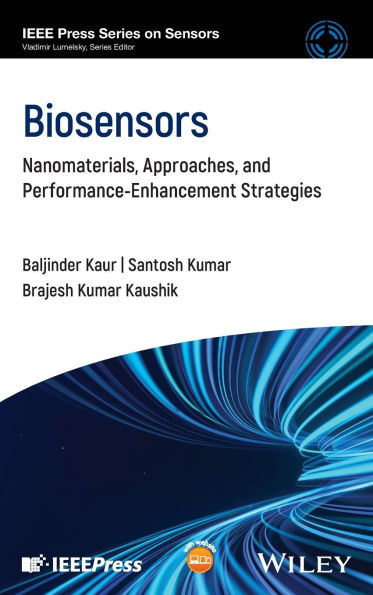
Biosensors: Nanomaterials, Approaches, and Performance-Enhancement Strategies in Chattanooga, TN
Current price: $135.00
Barnes and Noble
Biosensors: Nanomaterials, Approaches, and Performance-Enhancement Strategies in Chattanooga, TN
Current price: $135.00
Loading Inventory...
Size: Hardcover
Comprehensive resource covering new technologies, materials, strategies, and recent advancements in the field of biosensing
Biosensors
summarizes cutting-edge technologies in biosensing, including gene editing (known as Clustered Regularly Interspaced Short Palindromic Repeat or CRISPR), quorum sensing utilizing inter and intra cell signals, two-dimensional (2D) materials and aptamer-mediated sensor designs, and more, with additional coverage of the latest materials, strategies, and advancements made in the field.
Chapters are categorized on the basis of various bio-recognition elements that include aptamer, nucleic acid, enzymes, antibodies, bacteriophages, peptides, and molecular imprinted polymers. Plasmonic, surface-enhanced Raman scattering, colorimetric, fluorescence, electrochemical, magneto and piezo-electric biosensor sensing techniques are also considered. The roles of various nanomaterials, advancement in synthesis, signal enhancement strategies, and new trends for biomedical applications are also described. Current challenges, limitations, and future prospects to developing biosensors for point-of-care and clinical applications are also discussed.
Written by three highly qualified authors,
includes information on:
Diverse bio-receptors include nucleic acids, aptamers, enzymes, antibodies, bacteriophages, molecularly imprinted polymers, whole-cell, and techniques of immobilization
Different transduction principles using bio-receptors (e.g., optical, electrochemical, piezo-electrical, and SERS) to detect microorganism, toxins, and diseases
Nanomaterials synthesis, their role in biosensing, pros and cons of carbon, polymer, metals, metal oxides, and quantum dots-based nanomaterials in medical biosensing applications
is a comprehensive and complete resource on the subject for researchers and professionals in physics, chemistry, and biomedical science, research communities working in the fields of plasmonics, optics, biosensors, and nano-photonics, and students in related programs of study.
Biosensors
summarizes cutting-edge technologies in biosensing, including gene editing (known as Clustered Regularly Interspaced Short Palindromic Repeat or CRISPR), quorum sensing utilizing inter and intra cell signals, two-dimensional (2D) materials and aptamer-mediated sensor designs, and more, with additional coverage of the latest materials, strategies, and advancements made in the field.
Chapters are categorized on the basis of various bio-recognition elements that include aptamer, nucleic acid, enzymes, antibodies, bacteriophages, peptides, and molecular imprinted polymers. Plasmonic, surface-enhanced Raman scattering, colorimetric, fluorescence, electrochemical, magneto and piezo-electric biosensor sensing techniques are also considered. The roles of various nanomaterials, advancement in synthesis, signal enhancement strategies, and new trends for biomedical applications are also described. Current challenges, limitations, and future prospects to developing biosensors for point-of-care and clinical applications are also discussed.
Written by three highly qualified authors,
includes information on:
Diverse bio-receptors include nucleic acids, aptamers, enzymes, antibodies, bacteriophages, molecularly imprinted polymers, whole-cell, and techniques of immobilization
Different transduction principles using bio-receptors (e.g., optical, electrochemical, piezo-electrical, and SERS) to detect microorganism, toxins, and diseases
Nanomaterials synthesis, their role in biosensing, pros and cons of carbon, polymer, metals, metal oxides, and quantum dots-based nanomaterials in medical biosensing applications
is a comprehensive and complete resource on the subject for researchers and professionals in physics, chemistry, and biomedical science, research communities working in the fields of plasmonics, optics, biosensors, and nano-photonics, and students in related programs of study.
Comprehensive resource covering new technologies, materials, strategies, and recent advancements in the field of biosensing
Biosensors
summarizes cutting-edge technologies in biosensing, including gene editing (known as Clustered Regularly Interspaced Short Palindromic Repeat or CRISPR), quorum sensing utilizing inter and intra cell signals, two-dimensional (2D) materials and aptamer-mediated sensor designs, and more, with additional coverage of the latest materials, strategies, and advancements made in the field.
Chapters are categorized on the basis of various bio-recognition elements that include aptamer, nucleic acid, enzymes, antibodies, bacteriophages, peptides, and molecular imprinted polymers. Plasmonic, surface-enhanced Raman scattering, colorimetric, fluorescence, electrochemical, magneto and piezo-electric biosensor sensing techniques are also considered. The roles of various nanomaterials, advancement in synthesis, signal enhancement strategies, and new trends for biomedical applications are also described. Current challenges, limitations, and future prospects to developing biosensors for point-of-care and clinical applications are also discussed.
Written by three highly qualified authors,
includes information on:
Diverse bio-receptors include nucleic acids, aptamers, enzymes, antibodies, bacteriophages, molecularly imprinted polymers, whole-cell, and techniques of immobilization
Different transduction principles using bio-receptors (e.g., optical, electrochemical, piezo-electrical, and SERS) to detect microorganism, toxins, and diseases
Nanomaterials synthesis, their role in biosensing, pros and cons of carbon, polymer, metals, metal oxides, and quantum dots-based nanomaterials in medical biosensing applications
is a comprehensive and complete resource on the subject for researchers and professionals in physics, chemistry, and biomedical science, research communities working in the fields of plasmonics, optics, biosensors, and nano-photonics, and students in related programs of study.
Biosensors
summarizes cutting-edge technologies in biosensing, including gene editing (known as Clustered Regularly Interspaced Short Palindromic Repeat or CRISPR), quorum sensing utilizing inter and intra cell signals, two-dimensional (2D) materials and aptamer-mediated sensor designs, and more, with additional coverage of the latest materials, strategies, and advancements made in the field.
Chapters are categorized on the basis of various bio-recognition elements that include aptamer, nucleic acid, enzymes, antibodies, bacteriophages, peptides, and molecular imprinted polymers. Plasmonic, surface-enhanced Raman scattering, colorimetric, fluorescence, electrochemical, magneto and piezo-electric biosensor sensing techniques are also considered. The roles of various nanomaterials, advancement in synthesis, signal enhancement strategies, and new trends for biomedical applications are also described. Current challenges, limitations, and future prospects to developing biosensors for point-of-care and clinical applications are also discussed.
Written by three highly qualified authors,
includes information on:
Diverse bio-receptors include nucleic acids, aptamers, enzymes, antibodies, bacteriophages, molecularly imprinted polymers, whole-cell, and techniques of immobilization
Different transduction principles using bio-receptors (e.g., optical, electrochemical, piezo-electrical, and SERS) to detect microorganism, toxins, and diseases
Nanomaterials synthesis, their role in biosensing, pros and cons of carbon, polymer, metals, metal oxides, and quantum dots-based nanomaterials in medical biosensing applications
is a comprehensive and complete resource on the subject for researchers and professionals in physics, chemistry, and biomedical science, research communities working in the fields of plasmonics, optics, biosensors, and nano-photonics, and students in related programs of study.
You May Also Like

















More About Barnes and Noble at Hamilton Place
Barnes & Noble is the world’s largest retail bookseller and a leading retailer of content, digital media and educational products. Our Nook Digital business offers a lineup of NOOK® tablets and e-Readers and an expansive collection of digital reading content through the NOOK Store®. Barnes & Noble’s mission is to operate the best omni-channel specialty retail business in America, helping both our customers and booksellers reach their aspirations, while being a credit to the communities we serve.
2100 Hamilton Pl Blvd, Chattanooga, TN 37421, United States
Find Barnes and Noble at Hamilton Place in Chattanooga, TN
Visit Barnes and Noble at Hamilton Place in Chattanooga, TN
