
Home
Beyond the Rural-Urban Divide: Cross-Continental Perspectives on the Differentiated Countryside and Its Regulation
Barnes and Noble
Loading Inventory...
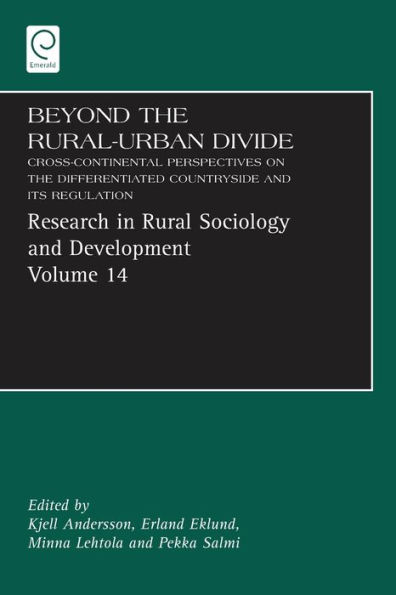
Beyond the Rural-Urban Divide: Cross-Continental Perspectives on the Differentiated Countryside and Its Regulation in Chattanooga, TN
Current price: $59.99
Barnes and Noble
Beyond the Rural-Urban Divide: Cross-Continental Perspectives on the Differentiated Countryside and Its Regulation in Chattanooga, TN
Current price: $59.99
Loading Inventory...
Size: OS
The ruralurban dichotomy is one of the most influential figures of thought in history, laying the foundation for academic disciplines such as rural and urban sociology. The dichotomy rests on the assumption that rural and urban areas differ fundamentally. By the midtwentieth century, scholars had observed that many rural areas displayed a blend of rural and urban features. Since then, counter urbanisation, urban sprawl and everincreasing flows of people, goods and ideas between rural and urban areas have blurred the distinctions even further. Attempts to create new ruralurban classification systems, whether based on factors such as population size, density or distances, have largely failed. Clearly, new classification systems must use the meaning of observed changes in ruralurban systems as their point of departure rather than simple measurements of these changes. These meanings can, despite the interdependencies of our global world, be explored only in their political, cultural and economic settings.
The ruralurban dichotomy is one of the most influential figures of thought in history, laying the foundation for academic disciplines such as rural and urban sociology. The dichotomy rests on the assumption that rural and urban areas differ fundamentally. By the midtwentieth century, scholars had observed that many rural areas displayed a blend of rural and urban features. Since then, counter urbanisation, urban sprawl and everincreasing flows of people, goods and ideas between rural and urban areas have blurred the distinctions even further. Attempts to create new ruralurban classification systems, whether based on factors such as population size, density or distances, have largely failed. Clearly, new classification systems must use the meaning of observed changes in ruralurban systems as their point of departure rather than simple measurements of these changes. These meanings can, despite the interdependencies of our global world, be explored only in their political, cultural and economic settings.
You May Also Like










More About Barnes and Noble at Hamilton Place
Barnes & Noble is the world’s largest retail bookseller and a leading retailer of content, digital media and educational products. Our Nook Digital business offers a lineup of NOOK® tablets and e-Readers and an expansive collection of digital reading content through the NOOK Store®. Barnes & Noble’s mission is to operate the best omni-channel specialty retail business in America, helping both our customers and booksellers reach their aspirations, while being a credit to the communities we serve.
2100 Hamilton Pl Blvd, Chattanooga, TN 37421, United States
Find Barnes and Noble at Hamilton Place in Chattanooga, TN
Visit Barnes and Noble at Hamilton Place in Chattanooga, TN
