
Home
Between Tyranny and Anarchy: A History of Democracy Latin America, 1800-2006
Barnes and Noble
Loading Inventory...
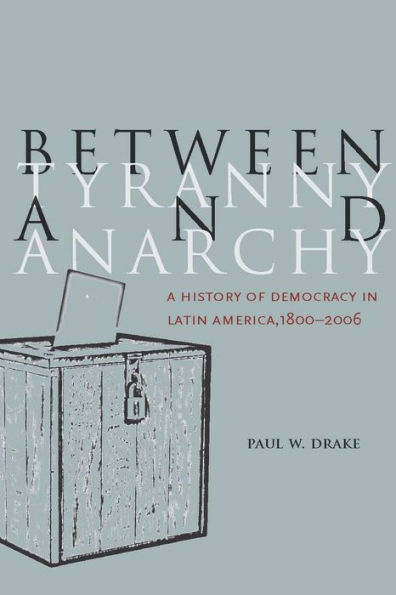
Between Tyranny and Anarchy: A History of Democracy Latin America, 1800-2006 in Chattanooga, TN
Current price: $130.00
Barnes and Noble
Between Tyranny and Anarchy: A History of Democracy Latin America, 1800-2006 in Chattanooga, TN
Current price: $130.00
Loading Inventory...
Size: Hardcover
Between Tyranny and Anarchy
provides a unique comprehensive history and interpretation of efforts to establish democracies over two centuries in the major Latin American countries. Drake takes an unusual interdisciplinary approach, combining history and political science with an emphasis on political institutions. He argues that, without a thorough examination of the historical roots and causes of Latin American democracy, most general theories can not adequately explain its failures, successes, and forms.
Latin America offers an extraordinary laboratory for the study of democratic experiments. Alongside a well-deserved reputation for authoritarianism, it boasts one of the world's deepest, richest histories of democratic movements, ideas, and institutions. Contrary to conventional wisdom, the region's leading democracies did not lag very far behind the United States and Western Europe in making numerous advances. In comparison with those countries, though, Latin America's democratic history has been distinctive because of its fundamental dilemma: how to reconcile political systems theoretically committed to legal equality with societies divided by extreme socio-economic inequalities.
provides a unique comprehensive history and interpretation of efforts to establish democracies over two centuries in the major Latin American countries. Drake takes an unusual interdisciplinary approach, combining history and political science with an emphasis on political institutions. He argues that, without a thorough examination of the historical roots and causes of Latin American democracy, most general theories can not adequately explain its failures, successes, and forms.
Latin America offers an extraordinary laboratory for the study of democratic experiments. Alongside a well-deserved reputation for authoritarianism, it boasts one of the world's deepest, richest histories of democratic movements, ideas, and institutions. Contrary to conventional wisdom, the region's leading democracies did not lag very far behind the United States and Western Europe in making numerous advances. In comparison with those countries, though, Latin America's democratic history has been distinctive because of its fundamental dilemma: how to reconcile political systems theoretically committed to legal equality with societies divided by extreme socio-economic inequalities.
Between Tyranny and Anarchy
provides a unique comprehensive history and interpretation of efforts to establish democracies over two centuries in the major Latin American countries. Drake takes an unusual interdisciplinary approach, combining history and political science with an emphasis on political institutions. He argues that, without a thorough examination of the historical roots and causes of Latin American democracy, most general theories can not adequately explain its failures, successes, and forms.
Latin America offers an extraordinary laboratory for the study of democratic experiments. Alongside a well-deserved reputation for authoritarianism, it boasts one of the world's deepest, richest histories of democratic movements, ideas, and institutions. Contrary to conventional wisdom, the region's leading democracies did not lag very far behind the United States and Western Europe in making numerous advances. In comparison with those countries, though, Latin America's democratic history has been distinctive because of its fundamental dilemma: how to reconcile political systems theoretically committed to legal equality with societies divided by extreme socio-economic inequalities.
provides a unique comprehensive history and interpretation of efforts to establish democracies over two centuries in the major Latin American countries. Drake takes an unusual interdisciplinary approach, combining history and political science with an emphasis on political institutions. He argues that, without a thorough examination of the historical roots and causes of Latin American democracy, most general theories can not adequately explain its failures, successes, and forms.
Latin America offers an extraordinary laboratory for the study of democratic experiments. Alongside a well-deserved reputation for authoritarianism, it boasts one of the world's deepest, richest histories of democratic movements, ideas, and institutions. Contrary to conventional wisdom, the region's leading democracies did not lag very far behind the United States and Western Europe in making numerous advances. In comparison with those countries, though, Latin America's democratic history has been distinctive because of its fundamental dilemma: how to reconcile political systems theoretically committed to legal equality with societies divided by extreme socio-economic inequalities.
You May Also Like












More About Barnes and Noble at Hamilton Place
Barnes & Noble is the world’s largest retail bookseller and a leading retailer of content, digital media and educational products. Our Nook Digital business offers a lineup of NOOK® tablets and e-Readers and an expansive collection of digital reading content through the NOOK Store®. Barnes & Noble’s mission is to operate the best omni-channel specialty retail business in America, helping both our customers and booksellers reach their aspirations, while being a credit to the communities we serve.
2100 Hamilton Pl Blvd, Chattanooga, TN 37421, United States
Find Barnes and Noble at Hamilton Place in Chattanooga, TN
Visit Barnes and Noble at Hamilton Place in Chattanooga, TN
