
Home
Between Medicine and Criminology: Richard Cabot the Making of Cambridge-Somerville Youth Study
Barnes and Noble
Loading Inventory...
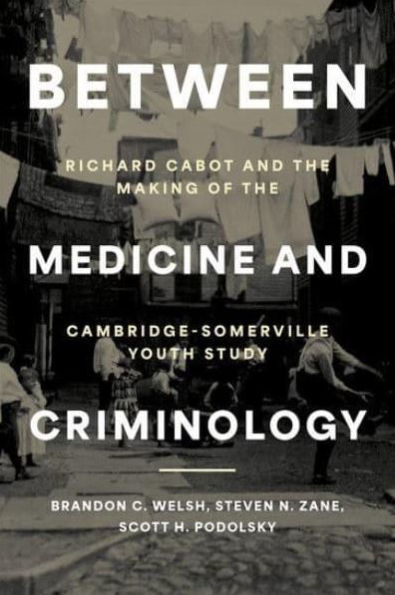
Between Medicine and Criminology: Richard Cabot the Making of Cambridge-Somerville Youth Study in Chattanooga, TN
Current price: $99.00
Barnes and Noble
Between Medicine and Criminology: Richard Cabot the Making of Cambridge-Somerville Youth Study in Chattanooga, TN
Current price: $99.00
Loading Inventory...
Size: Hardcover
In 1935, Richard Cabot (1868-1939), a renowned physician and professor of clinical medicine and social ethics at Harvard University, founded the Cambridge-Somerville Youth Study. Appalled by high recidivism rates of reformatories of the day, Cabot wanted to do something to help young, underprivileged boys from engaging in delinquency and embarking on a life of crime. Described as character development through positive role models, with similarities to today's mentoring programs, the prevention intervention enrolled 650 boys (later reduced to 506) from Cambridge and Somerville (Mass.) and operated from 1939-45. Over the next 30 years, three major follow-ups would be undertaken, producing a wealth of knowledge on the development and prevention of offending over the life-course.
As the earliest randomized controlled trial in criminology, one of the earliest trials of a social intervention, and the longest running trial in the Western world-with the latest follow-up currently tracing participants well into old age-the CSYS is a famous and consequential study in the annals of criminology. But Cabot was not a criminologist. Instead, he worked at the interface of medicine and the social sciences, bringing to bear his important grounding in social ethics and engaging with leading academicians, including Sheldon and Eleanor Glueck and William Healy. In the years to come, Joan McCord-a leading criminologist in her own right-would take over the study and bring it into the modern era.
Drawing on extensive archival materials and published works,
Between Medicine and Criminology
is the first book about the history of the making of the CSYS, as well as what this history holds for modern criminology. It interrogates and describes in fascinating detail the personal, professional, and institutional influences that led Cabot to develop the study; the social and intellectual contexts during the 1920s and 1930s that helped shape the study's novel and rigorous evaluation design; how the operation of the study and changes from the original design may have contributed to its ineffectiveness in preventing delinquency and later offending; and the impacts-and limitations-of this iconic study in the history of criminology.
As the earliest randomized controlled trial in criminology, one of the earliest trials of a social intervention, and the longest running trial in the Western world-with the latest follow-up currently tracing participants well into old age-the CSYS is a famous and consequential study in the annals of criminology. But Cabot was not a criminologist. Instead, he worked at the interface of medicine and the social sciences, bringing to bear his important grounding in social ethics and engaging with leading academicians, including Sheldon and Eleanor Glueck and William Healy. In the years to come, Joan McCord-a leading criminologist in her own right-would take over the study and bring it into the modern era.
Drawing on extensive archival materials and published works,
Between Medicine and Criminology
is the first book about the history of the making of the CSYS, as well as what this history holds for modern criminology. It interrogates and describes in fascinating detail the personal, professional, and institutional influences that led Cabot to develop the study; the social and intellectual contexts during the 1920s and 1930s that helped shape the study's novel and rigorous evaluation design; how the operation of the study and changes from the original design may have contributed to its ineffectiveness in preventing delinquency and later offending; and the impacts-and limitations-of this iconic study in the history of criminology.
In 1935, Richard Cabot (1868-1939), a renowned physician and professor of clinical medicine and social ethics at Harvard University, founded the Cambridge-Somerville Youth Study. Appalled by high recidivism rates of reformatories of the day, Cabot wanted to do something to help young, underprivileged boys from engaging in delinquency and embarking on a life of crime. Described as character development through positive role models, with similarities to today's mentoring programs, the prevention intervention enrolled 650 boys (later reduced to 506) from Cambridge and Somerville (Mass.) and operated from 1939-45. Over the next 30 years, three major follow-ups would be undertaken, producing a wealth of knowledge on the development and prevention of offending over the life-course.
As the earliest randomized controlled trial in criminology, one of the earliest trials of a social intervention, and the longest running trial in the Western world-with the latest follow-up currently tracing participants well into old age-the CSYS is a famous and consequential study in the annals of criminology. But Cabot was not a criminologist. Instead, he worked at the interface of medicine and the social sciences, bringing to bear his important grounding in social ethics and engaging with leading academicians, including Sheldon and Eleanor Glueck and William Healy. In the years to come, Joan McCord-a leading criminologist in her own right-would take over the study and bring it into the modern era.
Drawing on extensive archival materials and published works,
Between Medicine and Criminology
is the first book about the history of the making of the CSYS, as well as what this history holds for modern criminology. It interrogates and describes in fascinating detail the personal, professional, and institutional influences that led Cabot to develop the study; the social and intellectual contexts during the 1920s and 1930s that helped shape the study's novel and rigorous evaluation design; how the operation of the study and changes from the original design may have contributed to its ineffectiveness in preventing delinquency and later offending; and the impacts-and limitations-of this iconic study in the history of criminology.
As the earliest randomized controlled trial in criminology, one of the earliest trials of a social intervention, and the longest running trial in the Western world-with the latest follow-up currently tracing participants well into old age-the CSYS is a famous and consequential study in the annals of criminology. But Cabot was not a criminologist. Instead, he worked at the interface of medicine and the social sciences, bringing to bear his important grounding in social ethics and engaging with leading academicians, including Sheldon and Eleanor Glueck and William Healy. In the years to come, Joan McCord-a leading criminologist in her own right-would take over the study and bring it into the modern era.
Drawing on extensive archival materials and published works,
Between Medicine and Criminology
is the first book about the history of the making of the CSYS, as well as what this history holds for modern criminology. It interrogates and describes in fascinating detail the personal, professional, and institutional influences that led Cabot to develop the study; the social and intellectual contexts during the 1920s and 1930s that helped shape the study's novel and rigorous evaluation design; how the operation of the study and changes from the original design may have contributed to its ineffectiveness in preventing delinquency and later offending; and the impacts-and limitations-of this iconic study in the history of criminology.
You May Also Like















More About Barnes and Noble at Hamilton Place
Barnes & Noble is the world’s largest retail bookseller and a leading retailer of content, digital media and educational products. Our Nook Digital business offers a lineup of NOOK® tablets and e-Readers and an expansive collection of digital reading content through the NOOK Store®. Barnes & Noble’s mission is to operate the best omni-channel specialty retail business in America, helping both our customers and booksellers reach their aspirations, while being a credit to the communities we serve.
2100 Hamilton Pl Blvd, Chattanooga, TN 37421, United States
Find Barnes and Noble at Hamilton Place in Chattanooga, TN
Visit Barnes and Noble at Hamilton Place in Chattanooga, TN
