
Home
Between Dreams and Reality: The Military Examination in Late Choson Korea, 1600-1894
Barnes and Noble
Loading Inventory...
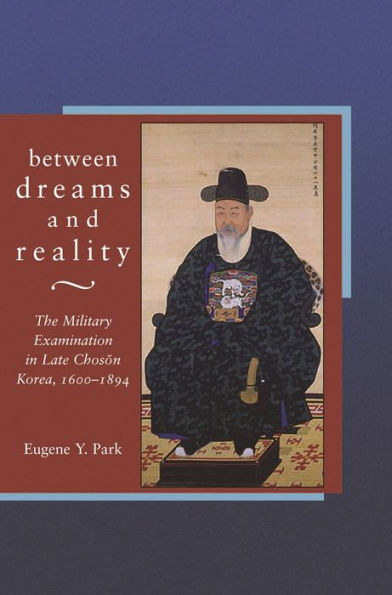
Between Dreams and Reality: The Military Examination in Late Choson Korea, 1600-1894 in Chattanooga, TN
Current price: $39.95
Barnes and Noble
Between Dreams and Reality: The Military Examination in Late Choson Korea, 1600-1894 in Chattanooga, TN
Current price: $39.95
Loading Inventory...
Size: OS
From the mid-seventeenth to the mid-nineteenth century, millions of Korean men from all walks of life trained in the arts of war to prepare not for actual combat but to sit for the state military examination (
mukwa
). Despite this widespread interest, only for a small minority did passing the test lead to appointment as a military official. Why, then, did so many men aspire to the
?
Eugene Y. Park argues that the
was not only the state's primary instrument for recruiting aristocrats as new members to the military bureaucracy but also a means by which the ruling elite of Seoul could partially satisfy the status aspirations of marginalized regional elites, secondary status groups, commoners, and manumitted slaves. Unlike the civil examination (
munkwa
), however, that assured successful examinees posts in the prestigious central bureaucracy, achievement in the
did not enable them to gain political power or membership in the existing aristocracy.
A wealth of empirical data and primary sources drives Park's study: a database of more than 32,000 military examination graduates; a range of new and underutilized documents such as court records, household registers, local gazetteers, private memoirs, examination rosters, and genealogies; and products of popular culture, such as
p'ansori
storytelling and vernacular fiction. Drawing on this extensive evidence, Park provides a comprehensive sociopolitical history of the
system in late Choson Korea.
mukwa
). Despite this widespread interest, only for a small minority did passing the test lead to appointment as a military official. Why, then, did so many men aspire to the
?
Eugene Y. Park argues that the
was not only the state's primary instrument for recruiting aristocrats as new members to the military bureaucracy but also a means by which the ruling elite of Seoul could partially satisfy the status aspirations of marginalized regional elites, secondary status groups, commoners, and manumitted slaves. Unlike the civil examination (
munkwa
), however, that assured successful examinees posts in the prestigious central bureaucracy, achievement in the
did not enable them to gain political power or membership in the existing aristocracy.
A wealth of empirical data and primary sources drives Park's study: a database of more than 32,000 military examination graduates; a range of new and underutilized documents such as court records, household registers, local gazetteers, private memoirs, examination rosters, and genealogies; and products of popular culture, such as
p'ansori
storytelling and vernacular fiction. Drawing on this extensive evidence, Park provides a comprehensive sociopolitical history of the
system in late Choson Korea.
From the mid-seventeenth to the mid-nineteenth century, millions of Korean men from all walks of life trained in the arts of war to prepare not for actual combat but to sit for the state military examination (
mukwa
). Despite this widespread interest, only for a small minority did passing the test lead to appointment as a military official. Why, then, did so many men aspire to the
?
Eugene Y. Park argues that the
was not only the state's primary instrument for recruiting aristocrats as new members to the military bureaucracy but also a means by which the ruling elite of Seoul could partially satisfy the status aspirations of marginalized regional elites, secondary status groups, commoners, and manumitted slaves. Unlike the civil examination (
munkwa
), however, that assured successful examinees posts in the prestigious central bureaucracy, achievement in the
did not enable them to gain political power or membership in the existing aristocracy.
A wealth of empirical data and primary sources drives Park's study: a database of more than 32,000 military examination graduates; a range of new and underutilized documents such as court records, household registers, local gazetteers, private memoirs, examination rosters, and genealogies; and products of popular culture, such as
p'ansori
storytelling and vernacular fiction. Drawing on this extensive evidence, Park provides a comprehensive sociopolitical history of the
system in late Choson Korea.
mukwa
). Despite this widespread interest, only for a small minority did passing the test lead to appointment as a military official. Why, then, did so many men aspire to the
?
Eugene Y. Park argues that the
was not only the state's primary instrument for recruiting aristocrats as new members to the military bureaucracy but also a means by which the ruling elite of Seoul could partially satisfy the status aspirations of marginalized regional elites, secondary status groups, commoners, and manumitted slaves. Unlike the civil examination (
munkwa
), however, that assured successful examinees posts in the prestigious central bureaucracy, achievement in the
did not enable them to gain political power or membership in the existing aristocracy.
A wealth of empirical data and primary sources drives Park's study: a database of more than 32,000 military examination graduates; a range of new and underutilized documents such as court records, household registers, local gazetteers, private memoirs, examination rosters, and genealogies; and products of popular culture, such as
p'ansori
storytelling and vernacular fiction. Drawing on this extensive evidence, Park provides a comprehensive sociopolitical history of the
system in late Choson Korea.
You May Also Like













More About Barnes and Noble at Hamilton Place
Barnes & Noble is the world’s largest retail bookseller and a leading retailer of content, digital media and educational products. Our Nook Digital business offers a lineup of NOOK® tablets and e-Readers and an expansive collection of digital reading content through the NOOK Store®. Barnes & Noble’s mission is to operate the best omni-channel specialty retail business in America, helping both our customers and booksellers reach their aspirations, while being a credit to the communities we serve.
2100 Hamilton Pl Blvd, Chattanooga, TN 37421, United States
Find Barnes and Noble at Hamilton Place in Chattanooga, TN
Visit Barnes and Noble at Hamilton Place in Chattanooga, TN
