
Home
Benedict Sheehan: Akathist
Barnes and Noble
Loading Inventory...
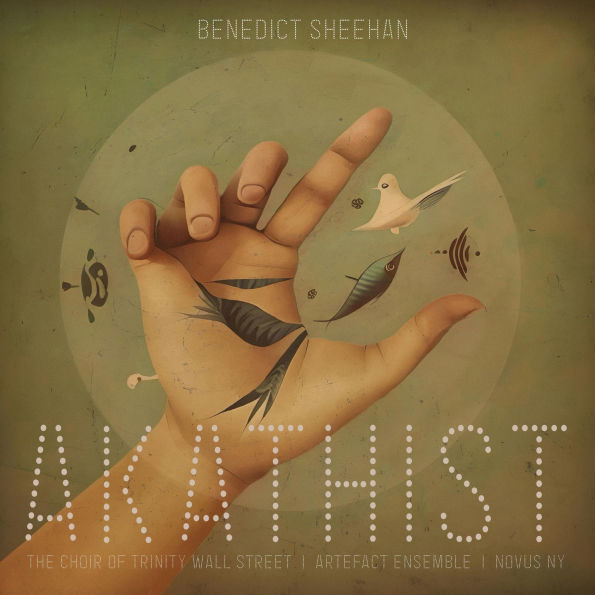
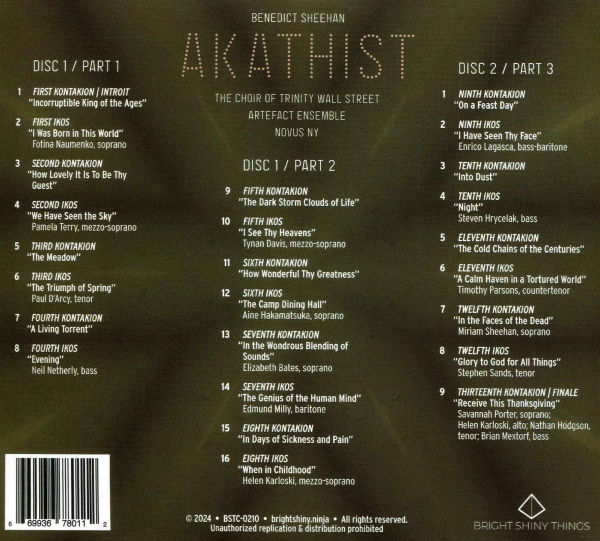
Benedict Sheehan: Akathist in Chattanooga, TN
Current price: $21.99
Barnes and Noble
Benedict Sheehan: Akathist in Chattanooga, TN
Current price: $21.99
Loading Inventory...
Size: OS
As both conductor and composer,
Benedict Sheehan
is known as an exponent of Eastern Orthodox musical styles. The title
Akathist
on this 2024 release would lead one to expect more of the same; an akathist, one learns from Wikipedia, is "a type of hymn usually recited by Eastern Orthodox and Byzantine Catholic Christians, dedicated to a saint, holy event, or one of the persons of the Holy Trinity." The sections of the work are marked kontakion, a hymn form, and ikos, a strophe of these. Yet, although
Sheehan
's
here has the shape of Orthodox choral music, the musical content is different;
has stated that he avoided Orthodox musical materials in search of a more universal appeal. He draws on chant, English sacred music (the work is an oratorio of sorts, and the classic English tradition provides overall inspiration), and various regional traditions, including gospel and jazz. The text of the work has a remarkable background; it was found on the body of an Orthodox priest murdered during
Joseph Stalin
's purges in the late '30s and consists of 27 stanzas expressing gratitude to God for the natural world, human works such as science, art, and music, for family and friends, and even for suffering and death.
's setting is quite a powerful thing, not precisely comparable to any other choral work. Signs that it may have achieved the composer's universalist ambitions are that this performance brings together an impressive range of New York musicians, from the conservative (the
Choir of Trinity Wall Street
) to the avant-garde-leaning (the
Artefact Ensemble
) and that the recording was issued by the experimentalist label
Bright Shiny Things
. This is unique music, absolutely worth the listener's attention, and it was recorded beautifully at the Trinity Wall Street church. ~ James Manheim
Benedict Sheehan
is known as an exponent of Eastern Orthodox musical styles. The title
Akathist
on this 2024 release would lead one to expect more of the same; an akathist, one learns from Wikipedia, is "a type of hymn usually recited by Eastern Orthodox and Byzantine Catholic Christians, dedicated to a saint, holy event, or one of the persons of the Holy Trinity." The sections of the work are marked kontakion, a hymn form, and ikos, a strophe of these. Yet, although
Sheehan
's
here has the shape of Orthodox choral music, the musical content is different;
has stated that he avoided Orthodox musical materials in search of a more universal appeal. He draws on chant, English sacred music (the work is an oratorio of sorts, and the classic English tradition provides overall inspiration), and various regional traditions, including gospel and jazz. The text of the work has a remarkable background; it was found on the body of an Orthodox priest murdered during
Joseph Stalin
's purges in the late '30s and consists of 27 stanzas expressing gratitude to God for the natural world, human works such as science, art, and music, for family and friends, and even for suffering and death.
's setting is quite a powerful thing, not precisely comparable to any other choral work. Signs that it may have achieved the composer's universalist ambitions are that this performance brings together an impressive range of New York musicians, from the conservative (the
Choir of Trinity Wall Street
) to the avant-garde-leaning (the
Artefact Ensemble
) and that the recording was issued by the experimentalist label
Bright Shiny Things
. This is unique music, absolutely worth the listener's attention, and it was recorded beautifully at the Trinity Wall Street church. ~ James Manheim
As both conductor and composer,
Benedict Sheehan
is known as an exponent of Eastern Orthodox musical styles. The title
Akathist
on this 2024 release would lead one to expect more of the same; an akathist, one learns from Wikipedia, is "a type of hymn usually recited by Eastern Orthodox and Byzantine Catholic Christians, dedicated to a saint, holy event, or one of the persons of the Holy Trinity." The sections of the work are marked kontakion, a hymn form, and ikos, a strophe of these. Yet, although
Sheehan
's
here has the shape of Orthodox choral music, the musical content is different;
has stated that he avoided Orthodox musical materials in search of a more universal appeal. He draws on chant, English sacred music (the work is an oratorio of sorts, and the classic English tradition provides overall inspiration), and various regional traditions, including gospel and jazz. The text of the work has a remarkable background; it was found on the body of an Orthodox priest murdered during
Joseph Stalin
's purges in the late '30s and consists of 27 stanzas expressing gratitude to God for the natural world, human works such as science, art, and music, for family and friends, and even for suffering and death.
's setting is quite a powerful thing, not precisely comparable to any other choral work. Signs that it may have achieved the composer's universalist ambitions are that this performance brings together an impressive range of New York musicians, from the conservative (the
Choir of Trinity Wall Street
) to the avant-garde-leaning (the
Artefact Ensemble
) and that the recording was issued by the experimentalist label
Bright Shiny Things
. This is unique music, absolutely worth the listener's attention, and it was recorded beautifully at the Trinity Wall Street church. ~ James Manheim
Benedict Sheehan
is known as an exponent of Eastern Orthodox musical styles. The title
Akathist
on this 2024 release would lead one to expect more of the same; an akathist, one learns from Wikipedia, is "a type of hymn usually recited by Eastern Orthodox and Byzantine Catholic Christians, dedicated to a saint, holy event, or one of the persons of the Holy Trinity." The sections of the work are marked kontakion, a hymn form, and ikos, a strophe of these. Yet, although
Sheehan
's
here has the shape of Orthodox choral music, the musical content is different;
has stated that he avoided Orthodox musical materials in search of a more universal appeal. He draws on chant, English sacred music (the work is an oratorio of sorts, and the classic English tradition provides overall inspiration), and various regional traditions, including gospel and jazz. The text of the work has a remarkable background; it was found on the body of an Orthodox priest murdered during
Joseph Stalin
's purges in the late '30s and consists of 27 stanzas expressing gratitude to God for the natural world, human works such as science, art, and music, for family and friends, and even for suffering and death.
's setting is quite a powerful thing, not precisely comparable to any other choral work. Signs that it may have achieved the composer's universalist ambitions are that this performance brings together an impressive range of New York musicians, from the conservative (the
Choir of Trinity Wall Street
) to the avant-garde-leaning (the
Artefact Ensemble
) and that the recording was issued by the experimentalist label
Bright Shiny Things
. This is unique music, absolutely worth the listener's attention, and it was recorded beautifully at the Trinity Wall Street church. ~ James Manheim
You May Also Like












More About Barnes and Noble at Hamilton Place
Barnes & Noble is the world’s largest retail bookseller and a leading retailer of content, digital media and educational products. Our Nook Digital business offers a lineup of NOOK® tablets and e-Readers and an expansive collection of digital reading content through the NOOK Store®. Barnes & Noble’s mission is to operate the best omni-channel specialty retail business in America, helping both our customers and booksellers reach their aspirations, while being a credit to the communities we serve.
2100 Hamilton Pl Blvd, Chattanooga, TN 37421, United States
Find Barnes and Noble at Hamilton Place in Chattanooga, TN
Visit Barnes and Noble at Hamilton Place in Chattanooga, TN