
Home
Belonging, Citizenship and Muslim Identity: A British-French Comparison
Barnes and Noble
Loading Inventory...
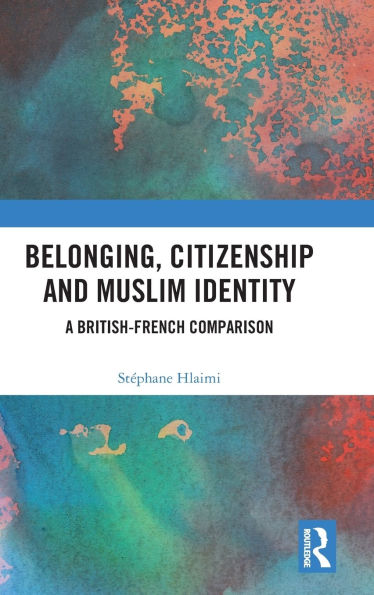
Belonging, Citizenship and Muslim Identity: A British-French Comparison in Chattanooga, TN
Current price: $190.00
Barnes and Noble
Belonging, Citizenship and Muslim Identity: A British-French Comparison in Chattanooga, TN
Current price: $190.00
Loading Inventory...
Size: Hardcover
This book explores belonging among Muslims in Britain and France, asking whether British and French Muslims are citizens first or Muslims first. Based on in-depth interviews with Muslims in both jurisdictions, it considers three options open to Muslims – assimilation, integration, or conflict – and considers the differences in approach that tend to prevail among Muslims in Britain and France, with British Muslims tending to favour a cohabitationist strategy, while many French Muslims adopt a more conflictual approach.
With attention to issues of Islamophobia, the author examines the crises multiculturalism and secularism are facing, and argues for a more inclusive rhetoric on questions of Islam and citizenship, to counter the essentialist, ‘othering’ approach that characterises media coverage and public discourse.
A call for a new paradigm of articulation between Muslim identity and Western citizenship,
Belonging, Citizenship and Muslim Identity
will be of interest to scholars of sociology, politics, geography and anthropology with interests in inclusion and diasporic communities.
With attention to issues of Islamophobia, the author examines the crises multiculturalism and secularism are facing, and argues for a more inclusive rhetoric on questions of Islam and citizenship, to counter the essentialist, ‘othering’ approach that characterises media coverage and public discourse.
A call for a new paradigm of articulation between Muslim identity and Western citizenship,
Belonging, Citizenship and Muslim Identity
will be of interest to scholars of sociology, politics, geography and anthropology with interests in inclusion and diasporic communities.
This book explores belonging among Muslims in Britain and France, asking whether British and French Muslims are citizens first or Muslims first. Based on in-depth interviews with Muslims in both jurisdictions, it considers three options open to Muslims – assimilation, integration, or conflict – and considers the differences in approach that tend to prevail among Muslims in Britain and France, with British Muslims tending to favour a cohabitationist strategy, while many French Muslims adopt a more conflictual approach.
With attention to issues of Islamophobia, the author examines the crises multiculturalism and secularism are facing, and argues for a more inclusive rhetoric on questions of Islam and citizenship, to counter the essentialist, ‘othering’ approach that characterises media coverage and public discourse.
A call for a new paradigm of articulation between Muslim identity and Western citizenship,
Belonging, Citizenship and Muslim Identity
will be of interest to scholars of sociology, politics, geography and anthropology with interests in inclusion and diasporic communities.
With attention to issues of Islamophobia, the author examines the crises multiculturalism and secularism are facing, and argues for a more inclusive rhetoric on questions of Islam and citizenship, to counter the essentialist, ‘othering’ approach that characterises media coverage and public discourse.
A call for a new paradigm of articulation between Muslim identity and Western citizenship,
Belonging, Citizenship and Muslim Identity
will be of interest to scholars of sociology, politics, geography and anthropology with interests in inclusion and diasporic communities.
You May Also Like










More About Barnes and Noble at Hamilton Place
Barnes & Noble is the world’s largest retail bookseller and a leading retailer of content, digital media and educational products. Our Nook Digital business offers a lineup of NOOK® tablets and e-Readers and an expansive collection of digital reading content through the NOOK Store®. Barnes & Noble’s mission is to operate the best omni-channel specialty retail business in America, helping both our customers and booksellers reach their aspirations, while being a credit to the communities we serve.
2100 Hamilton Pl Blvd, Chattanooga, TN 37421, United States
Find Barnes and Noble at Hamilton Place in Chattanooga, TN
Visit Barnes and Noble at Hamilton Place in Chattanooga, TN
