
Home
Becoming A U.S. Citizen through Derivative Citizenship: Step-by-Step Guide to Understanding Your Path Citizenship by Derivation
Barnes and Noble
Loading Inventory...
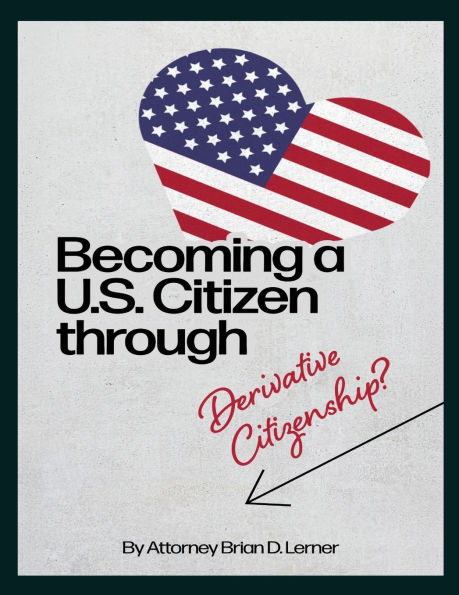
Becoming A U.S. Citizen through Derivative Citizenship: Step-by-Step Guide to Understanding Your Path Citizenship by Derivation in Chattanooga, TN
Current price: $45.00
Barnes and Noble
Becoming A U.S. Citizen through Derivative Citizenship: Step-by-Step Guide to Understanding Your Path Citizenship by Derivation in Chattanooga, TN
Current price: $45.00
Loading Inventory...
Size: Paperback
Derivative Citizenship
is citizenship automatically or subsequently granted to a child through the naturalization of one or both parents, or, in some cases, through adoption by United States citizen parents, provided certain legal requirements are met. Unlike acquisition of citizenship at birth, derivative citizenship is obtained after birth, typically when the child's parent(s) become naturalized U.S. citizens and the child meets specific eligibility criteria set forth under U.S. immigration law.
To qualify for derivative citizenship, the child generally must:
Have at least one parent who is a U.S. citizen
by birth or naturalization;
Be under 18 years of age
at the time the parent(s) become U.S. citizens;
Be residing in the United States
in the legal and physical custody of the U.S. citizen parent(s); and
Hold lawful permanent resident (LPR) status
before deriving citizenship.
These conditions are primarily governed by
Section 320 and Section 322 of the Immigration and Nationality Act (INA)
. Section 320 covers children residing in the United States with a U.S. citizen parent, while Section 322 applies to children residing outside the United States who may still derive citizenship through their U.S. citizen parent under certain conditions.
For adopted children, additional requirements apply-such as the adoption being legally finalized before the child turns 16 (with some exceptions) and the adoptive parent(s) meeting physical custody and residency requirements. Once all statutory conditions are satisfied, the child automatically becomes a U.S. citizen by operation of law and is entitled to proof of citizenship, such as a
Certificate of Citizenship
or a
U.S. passport
.
Derivative citizenship serves to unify families and ensure that children of newly naturalized citizens share the same nationality, rights, and protections under U.S. law, fostering stability and integration into American society.
is citizenship automatically or subsequently granted to a child through the naturalization of one or both parents, or, in some cases, through adoption by United States citizen parents, provided certain legal requirements are met. Unlike acquisition of citizenship at birth, derivative citizenship is obtained after birth, typically when the child's parent(s) become naturalized U.S. citizens and the child meets specific eligibility criteria set forth under U.S. immigration law.
To qualify for derivative citizenship, the child generally must:
Have at least one parent who is a U.S. citizen
by birth or naturalization;
Be under 18 years of age
at the time the parent(s) become U.S. citizens;
Be residing in the United States
in the legal and physical custody of the U.S. citizen parent(s); and
Hold lawful permanent resident (LPR) status
before deriving citizenship.
These conditions are primarily governed by
Section 320 and Section 322 of the Immigration and Nationality Act (INA)
. Section 320 covers children residing in the United States with a U.S. citizen parent, while Section 322 applies to children residing outside the United States who may still derive citizenship through their U.S. citizen parent under certain conditions.
For adopted children, additional requirements apply-such as the adoption being legally finalized before the child turns 16 (with some exceptions) and the adoptive parent(s) meeting physical custody and residency requirements. Once all statutory conditions are satisfied, the child automatically becomes a U.S. citizen by operation of law and is entitled to proof of citizenship, such as a
Certificate of Citizenship
or a
U.S. passport
.
Derivative citizenship serves to unify families and ensure that children of newly naturalized citizens share the same nationality, rights, and protections under U.S. law, fostering stability and integration into American society.
Derivative Citizenship
is citizenship automatically or subsequently granted to a child through the naturalization of one or both parents, or, in some cases, through adoption by United States citizen parents, provided certain legal requirements are met. Unlike acquisition of citizenship at birth, derivative citizenship is obtained after birth, typically when the child's parent(s) become naturalized U.S. citizens and the child meets specific eligibility criteria set forth under U.S. immigration law.
To qualify for derivative citizenship, the child generally must:
Have at least one parent who is a U.S. citizen
by birth or naturalization;
Be under 18 years of age
at the time the parent(s) become U.S. citizens;
Be residing in the United States
in the legal and physical custody of the U.S. citizen parent(s); and
Hold lawful permanent resident (LPR) status
before deriving citizenship.
These conditions are primarily governed by
Section 320 and Section 322 of the Immigration and Nationality Act (INA)
. Section 320 covers children residing in the United States with a U.S. citizen parent, while Section 322 applies to children residing outside the United States who may still derive citizenship through their U.S. citizen parent under certain conditions.
For adopted children, additional requirements apply-such as the adoption being legally finalized before the child turns 16 (with some exceptions) and the adoptive parent(s) meeting physical custody and residency requirements. Once all statutory conditions are satisfied, the child automatically becomes a U.S. citizen by operation of law and is entitled to proof of citizenship, such as a
Certificate of Citizenship
or a
U.S. passport
.
Derivative citizenship serves to unify families and ensure that children of newly naturalized citizens share the same nationality, rights, and protections under U.S. law, fostering stability and integration into American society.
is citizenship automatically or subsequently granted to a child through the naturalization of one or both parents, or, in some cases, through adoption by United States citizen parents, provided certain legal requirements are met. Unlike acquisition of citizenship at birth, derivative citizenship is obtained after birth, typically when the child's parent(s) become naturalized U.S. citizens and the child meets specific eligibility criteria set forth under U.S. immigration law.
To qualify for derivative citizenship, the child generally must:
Have at least one parent who is a U.S. citizen
by birth or naturalization;
Be under 18 years of age
at the time the parent(s) become U.S. citizens;
Be residing in the United States
in the legal and physical custody of the U.S. citizen parent(s); and
Hold lawful permanent resident (LPR) status
before deriving citizenship.
These conditions are primarily governed by
Section 320 and Section 322 of the Immigration and Nationality Act (INA)
. Section 320 covers children residing in the United States with a U.S. citizen parent, while Section 322 applies to children residing outside the United States who may still derive citizenship through their U.S. citizen parent under certain conditions.
For adopted children, additional requirements apply-such as the adoption being legally finalized before the child turns 16 (with some exceptions) and the adoptive parent(s) meeting physical custody and residency requirements. Once all statutory conditions are satisfied, the child automatically becomes a U.S. citizen by operation of law and is entitled to proof of citizenship, such as a
Certificate of Citizenship
or a
U.S. passport
.
Derivative citizenship serves to unify families and ensure that children of newly naturalized citizens share the same nationality, rights, and protections under U.S. law, fostering stability and integration into American society.
You May Also Like















More About Barnes and Noble at Hamilton Place
Barnes & Noble is the world’s largest retail bookseller and a leading retailer of content, digital media and educational products. Our Nook Digital business offers a lineup of NOOK® tablets and e-Readers and an expansive collection of digital reading content through the NOOK Store®. Barnes & Noble’s mission is to operate the best omni-channel specialty retail business in America, helping both our customers and booksellers reach their aspirations, while being a credit to the communities we serve.
2100 Hamilton Pl Blvd, Chattanooga, TN 37421, United States
Find Barnes and Noble at Hamilton Place in Chattanooga, TN
Visit Barnes and Noble at Hamilton Place in Chattanooga, TN
