
Home
Barnett Newman and Heideggerian Philosophy
Barnes and Noble
Loading Inventory...
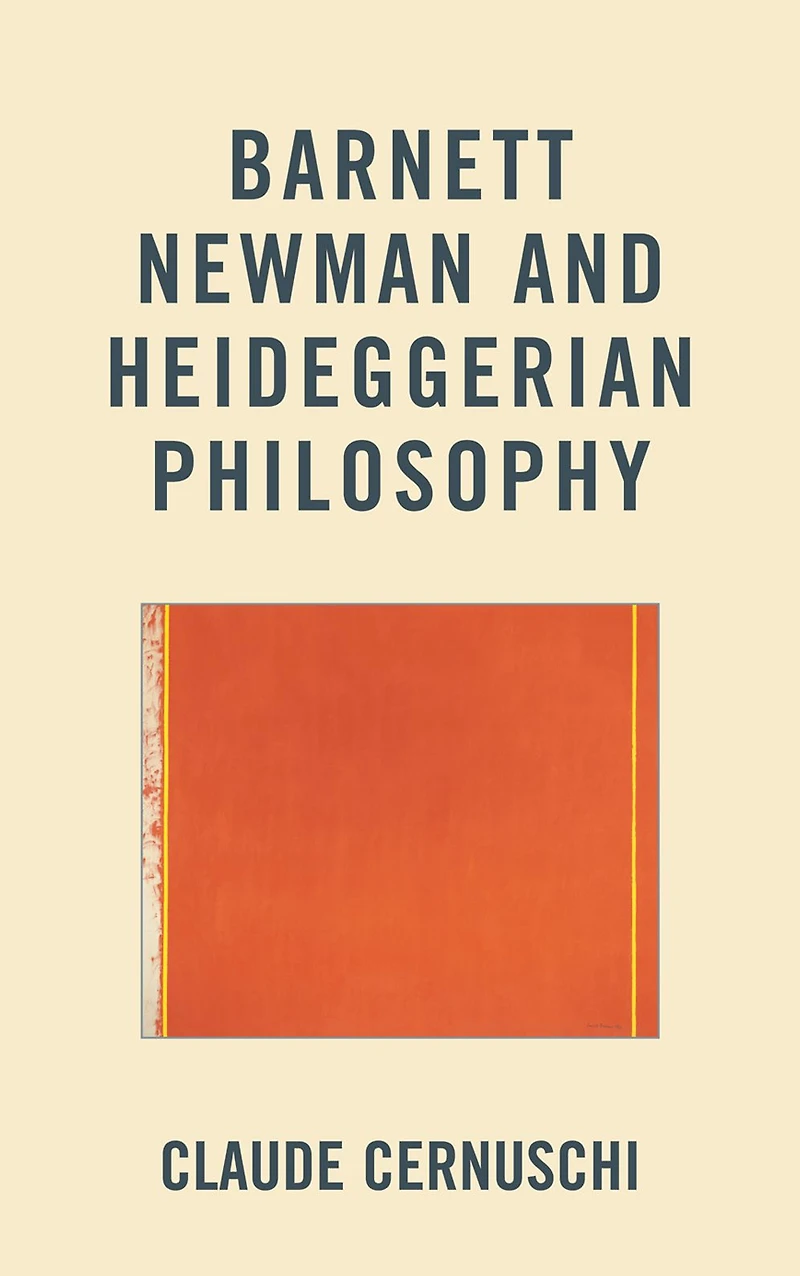
Barnett Newman and Heideggerian Philosophy in Chattanooga, TN
By Barnes & Noble
Current price: $121.50
Barnes and Noble
Barnett Newman and Heideggerian Philosophy in Chattanooga, TN
By Barnes & Noble
Current price: $121.50
Loading Inventory...
Size: EBook
As a major member of the New York School, Barnett Newman is celebrated for his radical explorations of color and scale and, as a precursor to the Minimalist movement, for his significant contribution to the development of twentieth-century American art. But if his reputation and place in history have grown progressively more secure, the work he produced remains highly resistant to interpretation. His paintings are rigorously abstract, and his writings full of references to arcane metaphysical concepts. Frustrated over their inability to reconcile the works with what the artist said about them, some critics have dismissed the paintings as impenetrable. The art historian Yve-Alain Bois called Newman “the most difficult artist” he could name, and the philosopher Jean-François Lyotard declared that “there is almost nothing to ‘consume’ [in his work], or if there is, I do not know what it is.” In order to advance interpretation, this book investigates both Newman’s writings and paintings in light of ideas articulated by one of Germany’s most important and influential philosophers: Martin Heidegger. Many of the themes explored in Newman’s statements, and echoed in the titles of his paintings, betray numerous points of intersection with Heidegger’s philosophy: the question of origins, the distinctiveness of human presence, a person’s sense of place, the sensation of terror, the definition of freedom, the importance of mood to existence, the particularities of art and language, the impact of technology on modern life, the meaning of time, and the human being’s relationship to others and to the divine. When examined in the context of Heideggerian thought, these issues acquire greater concreteness, and, in turn, their relation to the artist’s paintings becomes clearer. It is the contention of this book that, at the intersection of art history and philosophy, an interdisciplinary framework emerges wherein the artist’s broader motivations and the specific meanings of his paintings prove more amenable to elucidation.
As a major member of the New York School, Barnett Newman is celebrated for his radical explorations of color and scale and, as a precursor to the Minimalist movement, for his significant contribution to the development of twentieth-century American art. But if his reputation and place in history have grown progressively more secure, the work he produced remains highly resistant to interpretation. His paintings are rigorously abstract, and his writings full of references to arcane metaphysical concepts. Frustrated over their inability to reconcile the works with what the artist said about them, some critics have dismissed the paintings as impenetrable. The art historian Yve-Alain Bois called Newman “the most difficult artist” he could name, and the philosopher Jean-François Lyotard declared that “there is almost nothing to ‘consume’ [in his work], or if there is, I do not know what it is.” In order to advance interpretation, this book investigates both Newman’s writings and paintings in light of ideas articulated by one of Germany’s most important and influential philosophers: Martin Heidegger. Many of the themes explored in Newman’s statements, and echoed in the titles of his paintings, betray numerous points of intersection with Heidegger’s philosophy: the question of origins, the distinctiveness of human presence, a person’s sense of place, the sensation of terror, the definition of freedom, the importance of mood to existence, the particularities of art and language, the impact of technology on modern life, the meaning of time, and the human being’s relationship to others and to the divine. When examined in the context of Heideggerian thought, these issues acquire greater concreteness, and, in turn, their relation to the artist’s paintings becomes clearer. It is the contention of this book that, at the intersection of art history and philosophy, an interdisciplinary framework emerges wherein the artist’s broader motivations and the specific meanings of his paintings prove more amenable to elucidation.
You May Also Like








More About Barnes and Noble at Hamilton Place
Barnes & Noble is the world’s largest retail bookseller and a leading retailer of content, digital media and educational products. Our Nook Digital business offers a lineup of NOOK® tablets and e-Readers and an expansive collection of digital reading content through the NOOK Store®. Barnes & Noble’s mission is to operate the best omni-channel specialty retail business in America, helping both our customers and booksellers reach their aspirations, while being a credit to the communities we serve.
2100 Hamilton Pl Blvd, Chattanooga, TN 37421, United States
Find Barnes and Noble at Hamilton Place in Chattanooga, TN
Visit Barnes and Noble at Hamilton Place in Chattanooga, TN
