
Home
Back to Black: Jules Feiffer's Noir Trilogy
Barnes and Noble
Loading Inventory...
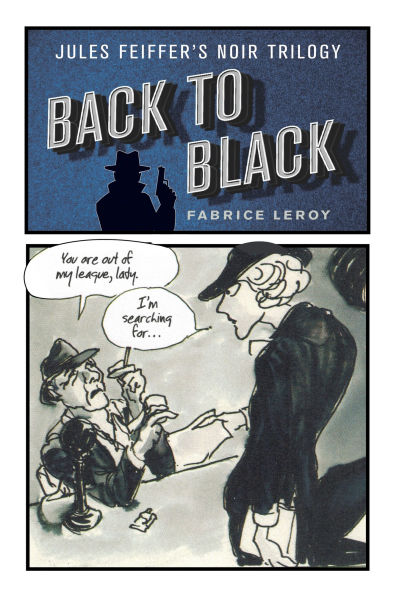
Back to Black: Jules Feiffer's Noir Trilogy in Chattanooga, TN
Current price: $79.95
Barnes and Noble
Back to Black: Jules Feiffer's Noir Trilogy in Chattanooga, TN
Current price: $79.95
Loading Inventory...
Size: Hardcover
The legendary American cartoonist and author Jules Feiffer has enjoyed a long and varied career, working on everything from illustrating
The Phantom Tollbooth
to writing the screenplay for the film
Popeye
. But some of his most innovative work came very late in his career, with a trio of graphic novels he composed in his eighties:
Kill My Mother
(2014),
Cousin Joseph
(2016), and
The Ghost Script
(2018).
Back to Black
provides the first fulllength critical analysis of this trilogy, exploring how it pays homage to the iconography and themes of film noir through constant graphic experimentation and a striking reinvention of Feiffer’s distinctive style. Fabrice Leroy shows how Feiffer deftly alternates between dramatic and satirical tones as he plays with the conventions of noir to provide a caustic yet moving commentary on midtwentiethcentury American life. Through close readings of each novel in the trilogy, he examines Feiffer’s singular depiction of the central political issues in the United States from the Great Depression to the 1950s, which still resonate today: unionization struggles, cinematic propaganda, McCarthyism, the American Dream, immigration, antisemitism, civil rights, and gender discrimination. Placing the noir trilogy into the context of Feiffer’s long career,
demonstrates how he offers a loving pastiche of the genre without losing his unique voice or critical edge.
The Phantom Tollbooth
to writing the screenplay for the film
Popeye
. But some of his most innovative work came very late in his career, with a trio of graphic novels he composed in his eighties:
Kill My Mother
(2014),
Cousin Joseph
(2016), and
The Ghost Script
(2018).
Back to Black
provides the first fulllength critical analysis of this trilogy, exploring how it pays homage to the iconography and themes of film noir through constant graphic experimentation and a striking reinvention of Feiffer’s distinctive style. Fabrice Leroy shows how Feiffer deftly alternates between dramatic and satirical tones as he plays with the conventions of noir to provide a caustic yet moving commentary on midtwentiethcentury American life. Through close readings of each novel in the trilogy, he examines Feiffer’s singular depiction of the central political issues in the United States from the Great Depression to the 1950s, which still resonate today: unionization struggles, cinematic propaganda, McCarthyism, the American Dream, immigration, antisemitism, civil rights, and gender discrimination. Placing the noir trilogy into the context of Feiffer’s long career,
demonstrates how he offers a loving pastiche of the genre without losing his unique voice or critical edge.
The legendary American cartoonist and author Jules Feiffer has enjoyed a long and varied career, working on everything from illustrating
The Phantom Tollbooth
to writing the screenplay for the film
Popeye
. But some of his most innovative work came very late in his career, with a trio of graphic novels he composed in his eighties:
Kill My Mother
(2014),
Cousin Joseph
(2016), and
The Ghost Script
(2018).
Back to Black
provides the first fulllength critical analysis of this trilogy, exploring how it pays homage to the iconography and themes of film noir through constant graphic experimentation and a striking reinvention of Feiffer’s distinctive style. Fabrice Leroy shows how Feiffer deftly alternates between dramatic and satirical tones as he plays with the conventions of noir to provide a caustic yet moving commentary on midtwentiethcentury American life. Through close readings of each novel in the trilogy, he examines Feiffer’s singular depiction of the central political issues in the United States from the Great Depression to the 1950s, which still resonate today: unionization struggles, cinematic propaganda, McCarthyism, the American Dream, immigration, antisemitism, civil rights, and gender discrimination. Placing the noir trilogy into the context of Feiffer’s long career,
demonstrates how he offers a loving pastiche of the genre without losing his unique voice or critical edge.
The Phantom Tollbooth
to writing the screenplay for the film
Popeye
. But some of his most innovative work came very late in his career, with a trio of graphic novels he composed in his eighties:
Kill My Mother
(2014),
Cousin Joseph
(2016), and
The Ghost Script
(2018).
Back to Black
provides the first fulllength critical analysis of this trilogy, exploring how it pays homage to the iconography and themes of film noir through constant graphic experimentation and a striking reinvention of Feiffer’s distinctive style. Fabrice Leroy shows how Feiffer deftly alternates between dramatic and satirical tones as he plays with the conventions of noir to provide a caustic yet moving commentary on midtwentiethcentury American life. Through close readings of each novel in the trilogy, he examines Feiffer’s singular depiction of the central political issues in the United States from the Great Depression to the 1950s, which still resonate today: unionization struggles, cinematic propaganda, McCarthyism, the American Dream, immigration, antisemitism, civil rights, and gender discrimination. Placing the noir trilogy into the context of Feiffer’s long career,
demonstrates how he offers a loving pastiche of the genre without losing his unique voice or critical edge.
You May Also Like


![Back to the Future Trilogy [35th Anniversary]](https://prodimage.images-bn.com/pimages/0191329144640_p0_v4_s600x595.jpg)
![Back to the Future: 30th Anniversary Trilogy [5 Discs]](https://prodimage.images-bn.com/pimages/0025192286865_p0_v5_s600x595.jpg)

![Going Back Home [Dreamsicle Color Vinyl] [Barnes & Noble Exclusive]](https://prodimage.images-bn.com/pimages/0848064018940_p0_v1_s600x595.jpg)







More About Barnes and Noble at Hamilton Place
Barnes & Noble is the world’s largest retail bookseller and a leading retailer of content, digital media and educational products. Our Nook Digital business offers a lineup of NOOK® tablets and e-Readers and an expansive collection of digital reading content through the NOOK Store®. Barnes & Noble’s mission is to operate the best omni-channel specialty retail business in America, helping both our customers and booksellers reach their aspirations, while being a credit to the communities we serve.
2100 Hamilton Pl Blvd, Chattanooga, TN 37421, United States
Find Barnes and Noble at Hamilton Place in Chattanooga, TN
Visit Barnes and Noble at Hamilton Place in Chattanooga, TN