
Home
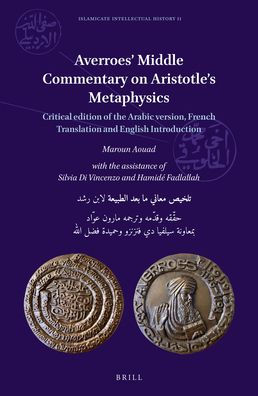
Averroes' Middle Commentary on Aristotle's Metaphysics
Barnes and Noble
Loading Inventory...
Averroes' Middle Commentary on Aristotle's Metaphysics in Chattanooga, TN
Current price: $175.00
Barnes and Noble
Averroes' Middle Commentary on Aristotle's Metaphysics in Chattanooga, TN
Current price: $175.00
Loading Inventory...
Size: OS
Averroes’ Middle Commentary on Aristotle’s Metaphysics
reveals the original version, previously considered lost, of a landmark work in Arabic philosophy. Undoubtedly authored by the Cordovan thinker Averroes (1126-1198), this “middle” commentary is distinct from the
Long Commentary
and the
Short Commentary
in method, several doctrinal elements, and scope (it includes books M and N of the Stagirite’s treatise). These points and the transmission of the
Middle Commentary
at the crossroads of Arabic, Hebrew, and Latin traditions are addressed in the introduction, which also establishes that the work was extensively quoted by the mystical philosopher Ibn Sabʿīn (13th c.). The edition of the text and the facing translation follow. At the end of the book are Ibn Sabʿīn’s quotations, along with extensive indexes.
reveals the original version, previously considered lost, of a landmark work in Arabic philosophy. Undoubtedly authored by the Cordovan thinker Averroes (1126-1198), this “middle” commentary is distinct from the
Long Commentary
and the
Short Commentary
in method, several doctrinal elements, and scope (it includes books M and N of the Stagirite’s treatise). These points and the transmission of the
Middle Commentary
at the crossroads of Arabic, Hebrew, and Latin traditions are addressed in the introduction, which also establishes that the work was extensively quoted by the mystical philosopher Ibn Sabʿīn (13th c.). The edition of the text and the facing translation follow. At the end of the book are Ibn Sabʿīn’s quotations, along with extensive indexes.
Averroes’ Middle Commentary on Aristotle’s Metaphysics
reveals the original version, previously considered lost, of a landmark work in Arabic philosophy. Undoubtedly authored by the Cordovan thinker Averroes (1126-1198), this “middle” commentary is distinct from the
Long Commentary
and the
Short Commentary
in method, several doctrinal elements, and scope (it includes books M and N of the Stagirite’s treatise). These points and the transmission of the
Middle Commentary
at the crossroads of Arabic, Hebrew, and Latin traditions are addressed in the introduction, which also establishes that the work was extensively quoted by the mystical philosopher Ibn Sabʿīn (13th c.). The edition of the text and the facing translation follow. At the end of the book are Ibn Sabʿīn’s quotations, along with extensive indexes.
reveals the original version, previously considered lost, of a landmark work in Arabic philosophy. Undoubtedly authored by the Cordovan thinker Averroes (1126-1198), this “middle” commentary is distinct from the
Long Commentary
and the
Short Commentary
in method, several doctrinal elements, and scope (it includes books M and N of the Stagirite’s treatise). These points and the transmission of the
Middle Commentary
at the crossroads of Arabic, Hebrew, and Latin traditions are addressed in the introduction, which also establishes that the work was extensively quoted by the mystical philosopher Ibn Sabʿīn (13th c.). The edition of the text and the facing translation follow. At the end of the book are Ibn Sabʿīn’s quotations, along with extensive indexes.
You May Also Like











More About Barnes and Noble at Hamilton Place
Barnes & Noble is the world’s largest retail bookseller and a leading retailer of content, digital media and educational products. Our Nook Digital business offers a lineup of NOOK® tablets and e-Readers and an expansive collection of digital reading content through the NOOK Store®. Barnes & Noble’s mission is to operate the best omni-channel specialty retail business in America, helping both our customers and booksellers reach their aspirations, while being a credit to the communities we serve.
2100 Hamilton Pl Blvd, Chattanooga, TN 37421, United States
Find Barnes and Noble at Hamilton Place in Chattanooga, TN
Visit Barnes and Noble at Hamilton Place in Chattanooga, TN
