
Home
Audible Geographies Latin America: Sounds of Race and Place
Barnes and Noble
Loading Inventory...
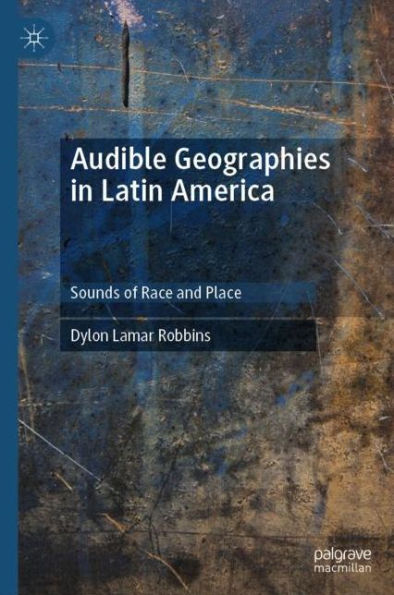
Audible Geographies Latin America: Sounds of Race and Place in Chattanooga, TN
Current price: $99.99
Barnes and Noble
Audible Geographies Latin America: Sounds of Race and Place in Chattanooga, TN
Current price: $99.99
Loading Inventory...
Size: Hardcover
Audible Geographies in Latin America
examines the audibility of place as a racialized phenomenon. It argues that place is not just a geographical or political notion, but also a sensorial one, shaped by the specific profile of the senses engaged through different media. Through a series of cases, the book examines racialized listening criteria and practices in the formation of ideas about place at exemplary moments between the 1890s and the 1960s. Through a discussion of Louis Moreau Gottschalk’s last concerts in Rio de Janeiro, and a contemporary sound installation involving telegraphs by Otávio Schipper and Sérgio Krakowski, Chapter 1 proposes a link between a sensorial economy and a political economy for which the racialized and commodified body serves as an essential feature of its operation. Chapter 2 analyzes resonance as a racialized concept through an examination of phonograph demonstrations in Rio de Janeiro and research on dancing manias and hypnosis in Salvador da Bahia in the 1890s. Chapter 3 studies voice and speech as racialized movements, informed by criminology and the proscriptive norms defining “white” Spanish in Cuba. Chapter 4 unpacks conflicting listening criteria for an optics of blackness in “national” sounds, developed according to a gendered set of premises that moved freely between diaspora and empire, national territory and the fraught politics of recorded versus performed music in the early 1930s. Chapter 5, in the context of Cuban Revolutionary cinema of the 1960s, explores the different facets of noise—both as a racialized and socially relevant sense of sound and as a feature and consequence of different reproduction and transmission technologies. Overall, the book argues that these and related instances reveal how sound and listening have played more prominent roles than previously acknowledged in place-making in the specific multi-ethnic, colonial contexts characterized by diasporic populations in Latin America and theCaribbean.
examines the audibility of place as a racialized phenomenon. It argues that place is not just a geographical or political notion, but also a sensorial one, shaped by the specific profile of the senses engaged through different media. Through a series of cases, the book examines racialized listening criteria and practices in the formation of ideas about place at exemplary moments between the 1890s and the 1960s. Through a discussion of Louis Moreau Gottschalk’s last concerts in Rio de Janeiro, and a contemporary sound installation involving telegraphs by Otávio Schipper and Sérgio Krakowski, Chapter 1 proposes a link between a sensorial economy and a political economy for which the racialized and commodified body serves as an essential feature of its operation. Chapter 2 analyzes resonance as a racialized concept through an examination of phonograph demonstrations in Rio de Janeiro and research on dancing manias and hypnosis in Salvador da Bahia in the 1890s. Chapter 3 studies voice and speech as racialized movements, informed by criminology and the proscriptive norms defining “white” Spanish in Cuba. Chapter 4 unpacks conflicting listening criteria for an optics of blackness in “national” sounds, developed according to a gendered set of premises that moved freely between diaspora and empire, national territory and the fraught politics of recorded versus performed music in the early 1930s. Chapter 5, in the context of Cuban Revolutionary cinema of the 1960s, explores the different facets of noise—both as a racialized and socially relevant sense of sound and as a feature and consequence of different reproduction and transmission technologies. Overall, the book argues that these and related instances reveal how sound and listening have played more prominent roles than previously acknowledged in place-making in the specific multi-ethnic, colonial contexts characterized by diasporic populations in Latin America and theCaribbean.
Audible Geographies in Latin America
examines the audibility of place as a racialized phenomenon. It argues that place is not just a geographical or political notion, but also a sensorial one, shaped by the specific profile of the senses engaged through different media. Through a series of cases, the book examines racialized listening criteria and practices in the formation of ideas about place at exemplary moments between the 1890s and the 1960s. Through a discussion of Louis Moreau Gottschalk’s last concerts in Rio de Janeiro, and a contemporary sound installation involving telegraphs by Otávio Schipper and Sérgio Krakowski, Chapter 1 proposes a link between a sensorial economy and a political economy for which the racialized and commodified body serves as an essential feature of its operation. Chapter 2 analyzes resonance as a racialized concept through an examination of phonograph demonstrations in Rio de Janeiro and research on dancing manias and hypnosis in Salvador da Bahia in the 1890s. Chapter 3 studies voice and speech as racialized movements, informed by criminology and the proscriptive norms defining “white” Spanish in Cuba. Chapter 4 unpacks conflicting listening criteria for an optics of blackness in “national” sounds, developed according to a gendered set of premises that moved freely between diaspora and empire, national territory and the fraught politics of recorded versus performed music in the early 1930s. Chapter 5, in the context of Cuban Revolutionary cinema of the 1960s, explores the different facets of noise—both as a racialized and socially relevant sense of sound and as a feature and consequence of different reproduction and transmission technologies. Overall, the book argues that these and related instances reveal how sound and listening have played more prominent roles than previously acknowledged in place-making in the specific multi-ethnic, colonial contexts characterized by diasporic populations in Latin America and theCaribbean.
examines the audibility of place as a racialized phenomenon. It argues that place is not just a geographical or political notion, but also a sensorial one, shaped by the specific profile of the senses engaged through different media. Through a series of cases, the book examines racialized listening criteria and practices in the formation of ideas about place at exemplary moments between the 1890s and the 1960s. Through a discussion of Louis Moreau Gottschalk’s last concerts in Rio de Janeiro, and a contemporary sound installation involving telegraphs by Otávio Schipper and Sérgio Krakowski, Chapter 1 proposes a link between a sensorial economy and a political economy for which the racialized and commodified body serves as an essential feature of its operation. Chapter 2 analyzes resonance as a racialized concept through an examination of phonograph demonstrations in Rio de Janeiro and research on dancing manias and hypnosis in Salvador da Bahia in the 1890s. Chapter 3 studies voice and speech as racialized movements, informed by criminology and the proscriptive norms defining “white” Spanish in Cuba. Chapter 4 unpacks conflicting listening criteria for an optics of blackness in “national” sounds, developed according to a gendered set of premises that moved freely between diaspora and empire, national territory and the fraught politics of recorded versus performed music in the early 1930s. Chapter 5, in the context of Cuban Revolutionary cinema of the 1960s, explores the different facets of noise—both as a racialized and socially relevant sense of sound and as a feature and consequence of different reproduction and transmission technologies. Overall, the book argues that these and related instances reveal how sound and listening have played more prominent roles than previously acknowledged in place-making in the specific multi-ethnic, colonial contexts characterized by diasporic populations in Latin America and theCaribbean.
You May Also Like









More About Barnes and Noble at Hamilton Place
Barnes & Noble is the world’s largest retail bookseller and a leading retailer of content, digital media and educational products. Our Nook Digital business offers a lineup of NOOK® tablets and e-Readers and an expansive collection of digital reading content through the NOOK Store®. Barnes & Noble’s mission is to operate the best omni-channel specialty retail business in America, helping both our customers and booksellers reach their aspirations, while being a credit to the communities we serve.
2100 Hamilton Pl Blvd, Chattanooga, TN 37421, United States
Find Barnes and Noble at Hamilton Place in Chattanooga, TN
Visit Barnes and Noble at Hamilton Place in Chattanooga, TN
