
Home
Asymmetric Continuum: Extreme Processes Solids and Fluids
Barnes and Noble
Loading Inventory...
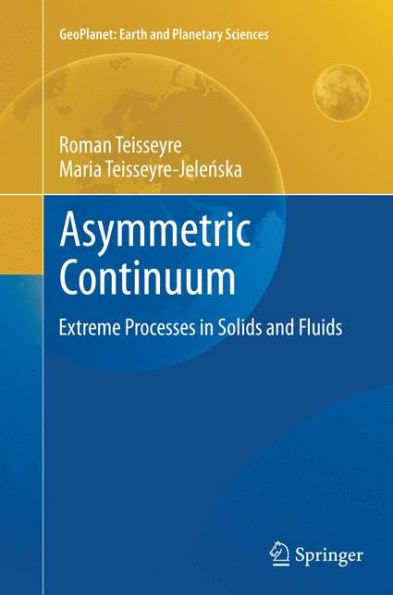
Asymmetric Continuum: Extreme Processes Solids and Fluids in Chattanooga, TN
Current price: $109.99
Barnes and Noble
Asymmetric Continuum: Extreme Processes Solids and Fluids in Chattanooga, TN
Current price: $109.99
Loading Inventory...
Size: Hardcover
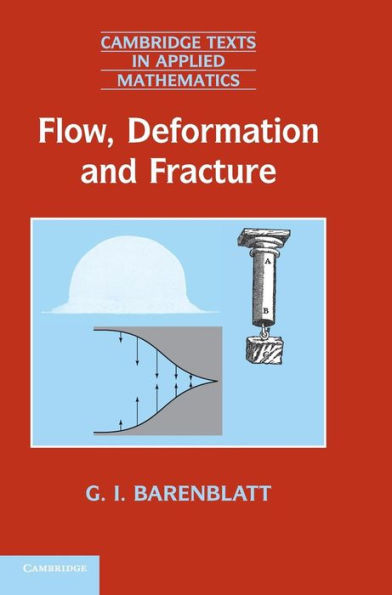
This book deals with a class of basic deformations in Asymmetric Continuum Theory. It describes molecular deformations and transport velocities in fluids, strain deformations in solids as well as the molecular transport, important in fracture processes.
In solids, a separate problem relates to the displacements; their recording, e.g., by means of the seismometers, proves only the existence of the displacement derivatives and not a real displacement. However, the molecular displacements and new fracture criterion including the defect distributions and induced strains are defined in the book too.
In fluids, the transport velocities and molecular strains describe the motion processes. The vortex motions are defined by means of the rotational transport; this approach leads to more complicated problems, like the turbulence phenomena.
The interaction processes, including the electric and magnetic fields, and some thermodynamical problems and quantum theory analogies help to understand the extreme processes
In solids, a separate problem relates to the displacements; their recording, e.g., by means of the seismometers, proves only the existence of the displacement derivatives and not a real displacement. However, the molecular displacements and new fracture criterion including the defect distributions and induced strains are defined in the book too.
In fluids, the transport velocities and molecular strains describe the motion processes. The vortex motions are defined by means of the rotational transport; this approach leads to more complicated problems, like the turbulence phenomena.
The interaction processes, including the electric and magnetic fields, and some thermodynamical problems and quantum theory analogies help to understand the extreme processes
This book deals with a class of basic deformations in Asymmetric Continuum Theory. It describes molecular deformations and transport velocities in fluids, strain deformations in solids as well as the molecular transport, important in fracture processes.
In solids, a separate problem relates to the displacements; their recording, e.g., by means of the seismometers, proves only the existence of the displacement derivatives and not a real displacement. However, the molecular displacements and new fracture criterion including the defect distributions and induced strains are defined in the book too.
In fluids, the transport velocities and molecular strains describe the motion processes. The vortex motions are defined by means of the rotational transport; this approach leads to more complicated problems, like the turbulence phenomena.
The interaction processes, including the electric and magnetic fields, and some thermodynamical problems and quantum theory analogies help to understand the extreme processes
In solids, a separate problem relates to the displacements; their recording, e.g., by means of the seismometers, proves only the existence of the displacement derivatives and not a real displacement. However, the molecular displacements and new fracture criterion including the defect distributions and induced strains are defined in the book too.
In fluids, the transport velocities and molecular strains describe the motion processes. The vortex motions are defined by means of the rotational transport; this approach leads to more complicated problems, like the turbulence phenomena.
The interaction processes, including the electric and magnetic fields, and some thermodynamical problems and quantum theory analogies help to understand the extreme processes
You May Also Like













More About Barnes and Noble at Hamilton Place
Barnes & Noble is the world’s largest retail bookseller and a leading retailer of content, digital media and educational products. Our Nook Digital business offers a lineup of NOOK® tablets and e-Readers and an expansive collection of digital reading content through the NOOK Store®. Barnes & Noble’s mission is to operate the best omni-channel specialty retail business in America, helping both our customers and booksellers reach their aspirations, while being a credit to the communities we serve.
2100 Hamilton Pl Blvd, Chattanooga, TN 37421, United States
Find Barnes and Noble at Hamilton Place in Chattanooga, TN
Visit Barnes and Noble at Hamilton Place in Chattanooga, TN
