
Home
Asian Influences on Tibetan Military History between the 17th and 20th Centuries
Barnes and Noble
Loading Inventory...
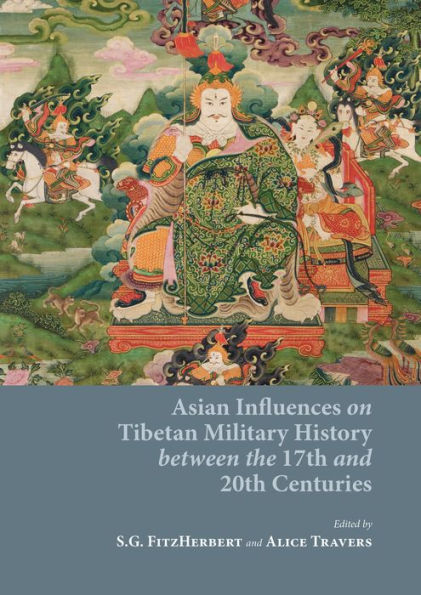
Asian Influences on Tibetan Military History between the 17th and 20th Centuries in Chattanooga, TN
Current price: $74.50
Barnes and Noble
Asian Influences on Tibetan Military History between the 17th and 20th Centuries in Chattanooga, TN
Current price: $74.50
Loading Inventory...
Size: OS
Military history is a domain in which nationalist or nation-state historical approaches often prevail. However the military institutions and military culture of any nation are also shaped by encounters with external actors, traditions and technologies. Tibetan military history between the 17th and 20th centuries clearly exemplifies this, reflecting an always unique, though ever-changing synthesis of influences and elements, in which older Tibetan traits, structural features, cultural orientations and nomenclatures, were mixed with those borrowed from foreign cultures. Predominant among the foreign influences in the early modern period were Mongol, Manchu, Chinese and Nepali, and then somewhat later, Japanese, Russian, Indian and British.This volume focuses on the hitherto less-well-researched Asian influences among these. Over the course of the three centuries from the establishment of the Ganden Phodrang as the government of Tibet in 1642, Tibetan military forces were in many kinds of contact with a variety of Asian military traditions and institutions, whether in situations of conflict, alliance, cooperation, rivalry or subordination, and in many cases, these had a major impact on Tibet’s own army and its wider military culture.While some of the articles in this volume focus on the culture of the military—reforms to military institutions, personnel and organisational issues, as well as evolutions in strategic orientations and technologies—others hope to shed light on the relationship between the military and society, i.e. on features of military culture as they were projected into social, cultural, political or religious spheres.
Military history is a domain in which nationalist or nation-state historical approaches often prevail. However the military institutions and military culture of any nation are also shaped by encounters with external actors, traditions and technologies. Tibetan military history between the 17th and 20th centuries clearly exemplifies this, reflecting an always unique, though ever-changing synthesis of influences and elements, in which older Tibetan traits, structural features, cultural orientations and nomenclatures, were mixed with those borrowed from foreign cultures. Predominant among the foreign influences in the early modern period were Mongol, Manchu, Chinese and Nepali, and then somewhat later, Japanese, Russian, Indian and British.This volume focuses on the hitherto less-well-researched Asian influences among these. Over the course of the three centuries from the establishment of the Ganden Phodrang as the government of Tibet in 1642, Tibetan military forces were in many kinds of contact with a variety of Asian military traditions and institutions, whether in situations of conflict, alliance, cooperation, rivalry or subordination, and in many cases, these had a major impact on Tibet’s own army and its wider military culture.While some of the articles in this volume focus on the culture of the military—reforms to military institutions, personnel and organisational issues, as well as evolutions in strategic orientations and technologies—others hope to shed light on the relationship between the military and society, i.e. on features of military culture as they were projected into social, cultural, political or religious spheres.
You May Also Like



![The 20th Century: A Moving Visual History [2 Discs]](https://prodimage.images-bn.com/pimages/0030306743226_p0_v2_s600x595.jpg)













More About Barnes and Noble at Hamilton Place
Barnes & Noble is the world’s largest retail bookseller and a leading retailer of content, digital media and educational products. Our Nook Digital business offers a lineup of NOOK® tablets and e-Readers and an expansive collection of digital reading content through the NOOK Store®. Barnes & Noble’s mission is to operate the best omni-channel specialty retail business in America, helping both our customers and booksellers reach their aspirations, while being a credit to the communities we serve.
2100 Hamilton Pl Blvd, Chattanooga, TN 37421, United States
Find Barnes and Noble at Hamilton Place in Chattanooga, TN
Visit Barnes and Noble at Hamilton Place in Chattanooga, TN
