
Home
Artificial Intelligence for Education and Sustainability
Barnes and Noble
Loading Inventory...
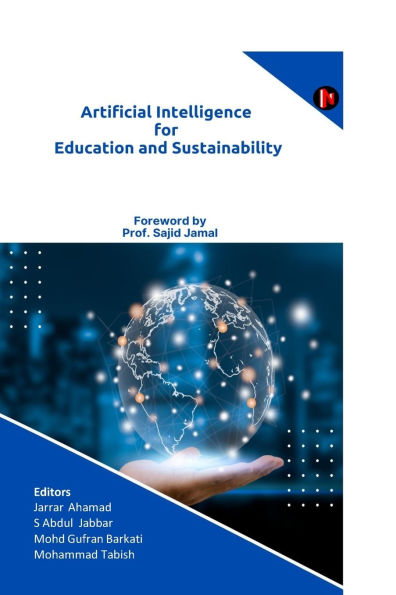
Artificial Intelligence for Education and Sustainability in Chattanooga, TN
Current price: $29.00
Barnes and Noble
Artificial Intelligence for Education and Sustainability in Chattanooga, TN
Current price: $29.00
Loading Inventory...
Size: Hardcover
Artificial Intelligence for Education and Sustainability is a thought-provoking collection that explores how two powerful forces of our time-Artificial Intelligence (AI) and Sustainable Development-are reshaping education. Edited by Dr. Jarrar Ahamad, Dr. S. Abdul Jabbar, Mr. Mohd Gufran Barkati, and Mr. Mohammad Tabish, the volume brings together contributions from scholars, educators, and researchers across the globe.
The book examines the many ways AI is influencing teaching, learning, curriculum design, and assessment, while also raising critical questions about equity, ethics, privacy, and mental health. At the same time, it highlights education's central role in achieving the United Nations' Sustainable Development Goals (SDGs), showing how AI can be used not only for efficiency but also for inclusivity and long-term social benefit.
With 22 chapters covering diverse themes-ranging from AI-driven advisory tools for sustainable investment to inclusive education, professional development, language learning, and curriculum innovation-the collection provides both practical insights and theoretical reflections.
Balanced in its approach, the book does not glorify AI uncritically, nor dismiss its challenges, but instead invites readers into an open, global conversation. It is an essential resource for teachers, students, policymakers, and researchers seeking to understand and shape the future of education in an AI-driven, sustainable world.
The book examines the many ways AI is influencing teaching, learning, curriculum design, and assessment, while also raising critical questions about equity, ethics, privacy, and mental health. At the same time, it highlights education's central role in achieving the United Nations' Sustainable Development Goals (SDGs), showing how AI can be used not only for efficiency but also for inclusivity and long-term social benefit.
With 22 chapters covering diverse themes-ranging from AI-driven advisory tools for sustainable investment to inclusive education, professional development, language learning, and curriculum innovation-the collection provides both practical insights and theoretical reflections.
Balanced in its approach, the book does not glorify AI uncritically, nor dismiss its challenges, but instead invites readers into an open, global conversation. It is an essential resource for teachers, students, policymakers, and researchers seeking to understand and shape the future of education in an AI-driven, sustainable world.
Artificial Intelligence for Education and Sustainability is a thought-provoking collection that explores how two powerful forces of our time-Artificial Intelligence (AI) and Sustainable Development-are reshaping education. Edited by Dr. Jarrar Ahamad, Dr. S. Abdul Jabbar, Mr. Mohd Gufran Barkati, and Mr. Mohammad Tabish, the volume brings together contributions from scholars, educators, and researchers across the globe.
The book examines the many ways AI is influencing teaching, learning, curriculum design, and assessment, while also raising critical questions about equity, ethics, privacy, and mental health. At the same time, it highlights education's central role in achieving the United Nations' Sustainable Development Goals (SDGs), showing how AI can be used not only for efficiency but also for inclusivity and long-term social benefit.
With 22 chapters covering diverse themes-ranging from AI-driven advisory tools for sustainable investment to inclusive education, professional development, language learning, and curriculum innovation-the collection provides both practical insights and theoretical reflections.
Balanced in its approach, the book does not glorify AI uncritically, nor dismiss its challenges, but instead invites readers into an open, global conversation. It is an essential resource for teachers, students, policymakers, and researchers seeking to understand and shape the future of education in an AI-driven, sustainable world.
The book examines the many ways AI is influencing teaching, learning, curriculum design, and assessment, while also raising critical questions about equity, ethics, privacy, and mental health. At the same time, it highlights education's central role in achieving the United Nations' Sustainable Development Goals (SDGs), showing how AI can be used not only for efficiency but also for inclusivity and long-term social benefit.
With 22 chapters covering diverse themes-ranging from AI-driven advisory tools for sustainable investment to inclusive education, professional development, language learning, and curriculum innovation-the collection provides both practical insights and theoretical reflections.
Balanced in its approach, the book does not glorify AI uncritically, nor dismiss its challenges, but instead invites readers into an open, global conversation. It is an essential resource for teachers, students, policymakers, and researchers seeking to understand and shape the future of education in an AI-driven, sustainable world.
You May Also Like








More About Barnes and Noble at Hamilton Place
Barnes & Noble is the world’s largest retail bookseller and a leading retailer of content, digital media and educational products. Our Nook Digital business offers a lineup of NOOK® tablets and e-Readers and an expansive collection of digital reading content through the NOOK Store®. Barnes & Noble’s mission is to operate the best omni-channel specialty retail business in America, helping both our customers and booksellers reach their aspirations, while being a credit to the communities we serve.
2100 Hamilton Pl Blvd, Chattanooga, TN 37421, United States
Find Barnes and Noble at Hamilton Place in Chattanooga, TN
Visit Barnes and Noble at Hamilton Place in Chattanooga, TN
