
Home
Arthashastra's Shadow: How India's Forgotten Thinkers Redefined Strategy Before the West
Barnes and Noble
Loading Inventory...
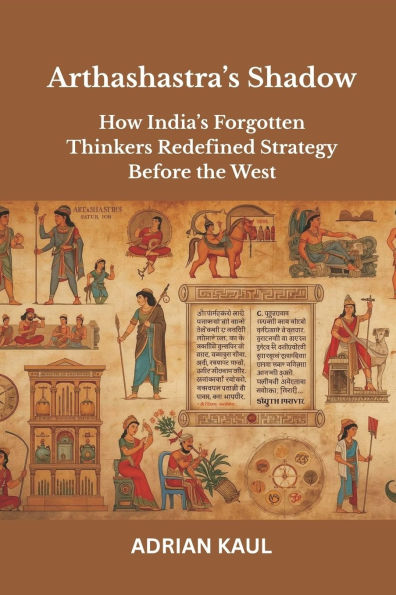
Arthashastra's Shadow: How India's Forgotten Thinkers Redefined Strategy Before the West in Chattanooga, TN
Current price: $45.00
Barnes and Noble
Arthashastra's Shadow: How India's Forgotten Thinkers Redefined Strategy Before the West in Chattanooga, TN
Current price: $45.00
Loading Inventory...
Size: Hardcover
For centuries, the world has looked to Sun Tzu, Machiavelli, and Clausewitz as the ultimate voices on power and war-yet long before them, an Indian thinker had already laid out a sharper, more comprehensive vision of statecraft. This book uncovers the forgotten world of Arthashastra, Kautilya's masterwork on governance, espionage, and diplomacy, revealing how its insights remain strikingly relevant in today's age of shifting alliances and fractured geopolitics.
At its heart lies a provocative question: why has India's strategic genius been erased from the global canon, and what happens when we finally bring it back? Readers are taken inside the Mandala theory of diplomacy, the Saptanga framework of statecraft, and ancient doctrines of espionage and intelligence that rival modern spycraft. These ideas are not relics-they are living tools that explain the ruthless calculus of alliances, the centrality of wealth in power, and the enduring struggle between morality and realpolitik.
This book is for anyone who wants to see beyond the narrow lens of Western strategic thought-students of politics, professionals in business and diplomacy, and curious readers fascinated by the hidden blueprints of power. Through vivid narratives, comparative analysis with Sun Tzu and Machiavelli, and accessible explanations of complex theories, it reframes how we understand leadership, survival, and statecraft.
By the final page, you will have a new map of power-one where Kautilya's strategy, Indian statecraft, and realism in Indian foreign policy stand alongside the great traditions of the world. Whether exploring geopolitics in a multipolar world or seeking timeless lessons on leadership, this book offers a bold, original perspective that challenges everything you thought you knew about strategy.
At its heart lies a provocative question: why has India's strategic genius been erased from the global canon, and what happens when we finally bring it back? Readers are taken inside the Mandala theory of diplomacy, the Saptanga framework of statecraft, and ancient doctrines of espionage and intelligence that rival modern spycraft. These ideas are not relics-they are living tools that explain the ruthless calculus of alliances, the centrality of wealth in power, and the enduring struggle between morality and realpolitik.
This book is for anyone who wants to see beyond the narrow lens of Western strategic thought-students of politics, professionals in business and diplomacy, and curious readers fascinated by the hidden blueprints of power. Through vivid narratives, comparative analysis with Sun Tzu and Machiavelli, and accessible explanations of complex theories, it reframes how we understand leadership, survival, and statecraft.
By the final page, you will have a new map of power-one where Kautilya's strategy, Indian statecraft, and realism in Indian foreign policy stand alongside the great traditions of the world. Whether exploring geopolitics in a multipolar world or seeking timeless lessons on leadership, this book offers a bold, original perspective that challenges everything you thought you knew about strategy.
For centuries, the world has looked to Sun Tzu, Machiavelli, and Clausewitz as the ultimate voices on power and war-yet long before them, an Indian thinker had already laid out a sharper, more comprehensive vision of statecraft. This book uncovers the forgotten world of Arthashastra, Kautilya's masterwork on governance, espionage, and diplomacy, revealing how its insights remain strikingly relevant in today's age of shifting alliances and fractured geopolitics.
At its heart lies a provocative question: why has India's strategic genius been erased from the global canon, and what happens when we finally bring it back? Readers are taken inside the Mandala theory of diplomacy, the Saptanga framework of statecraft, and ancient doctrines of espionage and intelligence that rival modern spycraft. These ideas are not relics-they are living tools that explain the ruthless calculus of alliances, the centrality of wealth in power, and the enduring struggle between morality and realpolitik.
This book is for anyone who wants to see beyond the narrow lens of Western strategic thought-students of politics, professionals in business and diplomacy, and curious readers fascinated by the hidden blueprints of power. Through vivid narratives, comparative analysis with Sun Tzu and Machiavelli, and accessible explanations of complex theories, it reframes how we understand leadership, survival, and statecraft.
By the final page, you will have a new map of power-one where Kautilya's strategy, Indian statecraft, and realism in Indian foreign policy stand alongside the great traditions of the world. Whether exploring geopolitics in a multipolar world or seeking timeless lessons on leadership, this book offers a bold, original perspective that challenges everything you thought you knew about strategy.
At its heart lies a provocative question: why has India's strategic genius been erased from the global canon, and what happens when we finally bring it back? Readers are taken inside the Mandala theory of diplomacy, the Saptanga framework of statecraft, and ancient doctrines of espionage and intelligence that rival modern spycraft. These ideas are not relics-they are living tools that explain the ruthless calculus of alliances, the centrality of wealth in power, and the enduring struggle between morality and realpolitik.
This book is for anyone who wants to see beyond the narrow lens of Western strategic thought-students of politics, professionals in business and diplomacy, and curious readers fascinated by the hidden blueprints of power. Through vivid narratives, comparative analysis with Sun Tzu and Machiavelli, and accessible explanations of complex theories, it reframes how we understand leadership, survival, and statecraft.
By the final page, you will have a new map of power-one where Kautilya's strategy, Indian statecraft, and realism in Indian foreign policy stand alongside the great traditions of the world. Whether exploring geopolitics in a multipolar world or seeking timeless lessons on leadership, this book offers a bold, original perspective that challenges everything you thought you knew about strategy.
You May Also Like















More About Barnes and Noble at Hamilton Place
Barnes & Noble is the world’s largest retail bookseller and a leading retailer of content, digital media and educational products. Our Nook Digital business offers a lineup of NOOK® tablets and e-Readers and an expansive collection of digital reading content through the NOOK Store®. Barnes & Noble’s mission is to operate the best omni-channel specialty retail business in America, helping both our customers and booksellers reach their aspirations, while being a credit to the communities we serve.
2100 Hamilton Pl Blvd, Chattanooga, TN 37421, United States
Find Barnes and Noble at Hamilton Place in Chattanooga, TN
Visit Barnes and Noble at Hamilton Place in Chattanooga, TN
