
Home
Anchoring Innovation Districts: The Entrepreneurial University and Urban Change
Barnes and Noble
Loading Inventory...
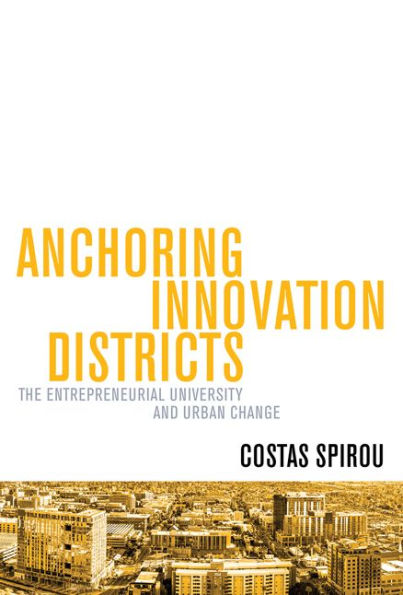
Anchoring Innovation Districts: The Entrepreneurial University and Urban Change in Chattanooga, TN
Current price: $52.95
Barnes and Noble
Anchoring Innovation Districts: The Entrepreneurial University and Urban Change in Chattanooga, TN
Current price: $52.95
Loading Inventory...
Size: Hardcover
As universities transform cities with their innovation districts, what works in these new public-private partnerships?
In recent years, the successful revitalization of urban areas has turned them into magnets for those looking for opportunities in a fast-paced and rapidly unfolding technology-based economy. After the economic crisis of 2008, many colleges and universities attempted to generate alternative sources of revenue and pursued aggressive economic development strategies. Some universities even began to actively invest resources in the rebirth (and rebranding) of urban cores, encouraging the development of entrepreneurial, technology-oriented innovation districts.
In
Anchoring Innovation Districts
, Costas Spirou explains that these districts have emerged as geographic clusters of technology startups, business incubators, and accelerators. They aim to take advantage of intellectual capital, commercialize knowledge, and give their associated institutions a way to enter into the market. The outcome of robust private-public partnerships and complex real estate strategies, these initiatives also complement other urban revitalization efforts and reshape the socioeconomic makeup of city neighborhoods. Presenting readers with six case studies that explore the role of technological innovation, Spirou argues that higher education–anchored innovation districts can make significant contributions to economic expansion, job growth, and the institutions that guide their development. He also points out that these districts nonetheless raise questions about the impact of the Ivory Tower on the urban environment.
Spirou focuses on Midtown Atlanta's Tech Square (Georgia Tech), Cambridge's Kendall Square (MIT), Philadelphia's University City (the University of Pennsylvania, Drexel University, and the University of the Sciences), the PHX Core (Arizona State University), and the role that the University of West Florida in Pensacola and the University of Tennessee at Chattanooga play in developing innovation ecosystems.
provides unique insight into the transformative opportunities offered and the challenges faced by higher education in the built environment. University administrators, board members, policy makers, and scholars will find Spirou's analysis thought-provoking and helpful.
In recent years, the successful revitalization of urban areas has turned them into magnets for those looking for opportunities in a fast-paced and rapidly unfolding technology-based economy. After the economic crisis of 2008, many colleges and universities attempted to generate alternative sources of revenue and pursued aggressive economic development strategies. Some universities even began to actively invest resources in the rebirth (and rebranding) of urban cores, encouraging the development of entrepreneurial, technology-oriented innovation districts.
In
Anchoring Innovation Districts
, Costas Spirou explains that these districts have emerged as geographic clusters of technology startups, business incubators, and accelerators. They aim to take advantage of intellectual capital, commercialize knowledge, and give their associated institutions a way to enter into the market. The outcome of robust private-public partnerships and complex real estate strategies, these initiatives also complement other urban revitalization efforts and reshape the socioeconomic makeup of city neighborhoods. Presenting readers with six case studies that explore the role of technological innovation, Spirou argues that higher education–anchored innovation districts can make significant contributions to economic expansion, job growth, and the institutions that guide their development. He also points out that these districts nonetheless raise questions about the impact of the Ivory Tower on the urban environment.
Spirou focuses on Midtown Atlanta's Tech Square (Georgia Tech), Cambridge's Kendall Square (MIT), Philadelphia's University City (the University of Pennsylvania, Drexel University, and the University of the Sciences), the PHX Core (Arizona State University), and the role that the University of West Florida in Pensacola and the University of Tennessee at Chattanooga play in developing innovation ecosystems.
provides unique insight into the transformative opportunities offered and the challenges faced by higher education in the built environment. University administrators, board members, policy makers, and scholars will find Spirou's analysis thought-provoking and helpful.
As universities transform cities with their innovation districts, what works in these new public-private partnerships?
In recent years, the successful revitalization of urban areas has turned them into magnets for those looking for opportunities in a fast-paced and rapidly unfolding technology-based economy. After the economic crisis of 2008, many colleges and universities attempted to generate alternative sources of revenue and pursued aggressive economic development strategies. Some universities even began to actively invest resources in the rebirth (and rebranding) of urban cores, encouraging the development of entrepreneurial, technology-oriented innovation districts.
In
Anchoring Innovation Districts
, Costas Spirou explains that these districts have emerged as geographic clusters of technology startups, business incubators, and accelerators. They aim to take advantage of intellectual capital, commercialize knowledge, and give their associated institutions a way to enter into the market. The outcome of robust private-public partnerships and complex real estate strategies, these initiatives also complement other urban revitalization efforts and reshape the socioeconomic makeup of city neighborhoods. Presenting readers with six case studies that explore the role of technological innovation, Spirou argues that higher education–anchored innovation districts can make significant contributions to economic expansion, job growth, and the institutions that guide their development. He also points out that these districts nonetheless raise questions about the impact of the Ivory Tower on the urban environment.
Spirou focuses on Midtown Atlanta's Tech Square (Georgia Tech), Cambridge's Kendall Square (MIT), Philadelphia's University City (the University of Pennsylvania, Drexel University, and the University of the Sciences), the PHX Core (Arizona State University), and the role that the University of West Florida in Pensacola and the University of Tennessee at Chattanooga play in developing innovation ecosystems.
provides unique insight into the transformative opportunities offered and the challenges faced by higher education in the built environment. University administrators, board members, policy makers, and scholars will find Spirou's analysis thought-provoking and helpful.
In recent years, the successful revitalization of urban areas has turned them into magnets for those looking for opportunities in a fast-paced and rapidly unfolding technology-based economy. After the economic crisis of 2008, many colleges and universities attempted to generate alternative sources of revenue and pursued aggressive economic development strategies. Some universities even began to actively invest resources in the rebirth (and rebranding) of urban cores, encouraging the development of entrepreneurial, technology-oriented innovation districts.
In
Anchoring Innovation Districts
, Costas Spirou explains that these districts have emerged as geographic clusters of technology startups, business incubators, and accelerators. They aim to take advantage of intellectual capital, commercialize knowledge, and give their associated institutions a way to enter into the market. The outcome of robust private-public partnerships and complex real estate strategies, these initiatives also complement other urban revitalization efforts and reshape the socioeconomic makeup of city neighborhoods. Presenting readers with six case studies that explore the role of technological innovation, Spirou argues that higher education–anchored innovation districts can make significant contributions to economic expansion, job growth, and the institutions that guide their development. He also points out that these districts nonetheless raise questions about the impact of the Ivory Tower on the urban environment.
Spirou focuses on Midtown Atlanta's Tech Square (Georgia Tech), Cambridge's Kendall Square (MIT), Philadelphia's University City (the University of Pennsylvania, Drexel University, and the University of the Sciences), the PHX Core (Arizona State University), and the role that the University of West Florida in Pensacola and the University of Tennessee at Chattanooga play in developing innovation ecosystems.
provides unique insight into the transformative opportunities offered and the challenges faced by higher education in the built environment. University administrators, board members, policy makers, and scholars will find Spirou's analysis thought-provoking and helpful.
You May Also Like








More About Barnes and Noble at Hamilton Place
Barnes & Noble is the world’s largest retail bookseller and a leading retailer of content, digital media and educational products. Our Nook Digital business offers a lineup of NOOK® tablets and e-Readers and an expansive collection of digital reading content through the NOOK Store®. Barnes & Noble’s mission is to operate the best omni-channel specialty retail business in America, helping both our customers and booksellers reach their aspirations, while being a credit to the communities we serve.
2100 Hamilton Pl Blvd, Chattanooga, TN 37421, United States
Find Barnes and Noble at Hamilton Place in Chattanooga, TN
Visit Barnes and Noble at Hamilton Place in Chattanooga, TN
