
Home
American Slavery, Imperialism: US Perceptions of Global Servitude, 1870-1914
Barnes and Noble
Loading Inventory...
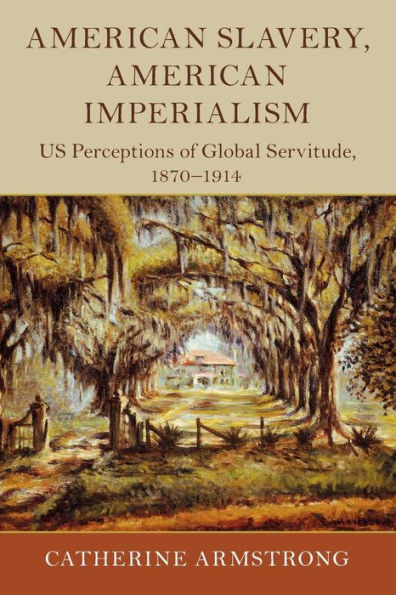
American Slavery, Imperialism: US Perceptions of Global Servitude, 1870-1914 in Chattanooga, TN
Current price: $66.00
Barnes and Noble
American Slavery, Imperialism: US Perceptions of Global Servitude, 1870-1914 in Chattanooga, TN
Current price: $66.00
Loading Inventory...
Size: Hardcover
Slavery casts a long shadow over American history; despite the cataclysmic changes of the Civil War and emancipation, the United States carried antebellum notions of slavery into its imperial expansion at the turn of the twentieth-century. African American, Chinese and other immigrant labourers were exploited in the name of domestic economic development, and overseas, local populations were made into colonial subjects of America. How did the U.S. deal with the paradox of presenting itself as a global power which abhorred slavery, while at the same time failing to deal with forced labour at home? Catherine Armstrong argues that this was done with rhetorical manoeuvres around the definition of slavery. Drawing primarily on representations of slavery in American print culture, this study charts how definitions and depictions of slavery both changed and stayed the same as the nation became a prominent actor on the world stage. In doing so, Armstrong challenges the idea that slavery is a merely historical problem, and shows its relevance in the contemporary world.
Slavery casts a long shadow over American history; despite the cataclysmic changes of the Civil War and emancipation, the United States carried antebellum notions of slavery into its imperial expansion at the turn of the twentieth-century. African American, Chinese and other immigrant labourers were exploited in the name of domestic economic development, and overseas, local populations were made into colonial subjects of America. How did the U.S. deal with the paradox of presenting itself as a global power which abhorred slavery, while at the same time failing to deal with forced labour at home? Catherine Armstrong argues that this was done with rhetorical manoeuvres around the definition of slavery. Drawing primarily on representations of slavery in American print culture, this study charts how definitions and depictions of slavery both changed and stayed the same as the nation became a prominent actor on the world stage. In doing so, Armstrong challenges the idea that slavery is a merely historical problem, and shows its relevance in the contemporary world.
You May Also Like













More About Barnes and Noble at Hamilton Place
Barnes & Noble is the world’s largest retail bookseller and a leading retailer of content, digital media and educational products. Our Nook Digital business offers a lineup of NOOK® tablets and e-Readers and an expansive collection of digital reading content through the NOOK Store®. Barnes & Noble’s mission is to operate the best omni-channel specialty retail business in America, helping both our customers and booksellers reach their aspirations, while being a credit to the communities we serve.
2100 Hamilton Pl Blvd, Chattanooga, TN 37421, United States
Find Barnes and Noble at Hamilton Place in Chattanooga, TN
Visit Barnes and Noble at Hamilton Place in Chattanooga, TN
