
Home
American Amphibious Warfare: The Roots of Tradition to 1865
Barnes and Noble
Loading Inventory...
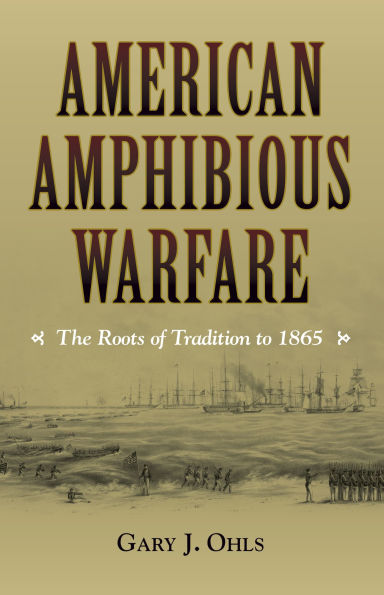
American Amphibious Warfare: The Roots of Tradition to 1865 in Chattanooga, TN
Current price: $43.95
Barnes and Noble
American Amphibious Warfare: The Roots of Tradition to 1865 in Chattanooga, TN
Current price: $43.95
Loading Inventory...
Size: Hardcover
American Amphibious Warfare offers analysis of the early amphibious landing operations from the Revolutionary War to the Civil War. Through a case study approach, the operational and strategic significance of each action is analyzed and its impact on the development of the United States is assessed. By focusing on seven major campaigns, Gary J. Ohls provides readers with a richer appreciation of the origins of American amphibious warfare. For many Americans, the concept of amphibious warfare derives from the World War II model in which landing forces assaulted foreign shores and faced determined resistance. These actions usually resulted in very high casualty rates, yet they proved uniformly successful. The circumstances of geography coupled with the weapons and equipment available at that time dictated this type of warfare. During the eighteenth and nineteenth centuries, no such equipment or weapons existed for assaulting defended beaches. Commanders attempted to land their forces in areas where the resistance would be light or nonexistent. The initiative and maneuverability inherent in naval forces permitted the delivery of combat power to the point of attack faster that the landbased defenders could react. Ohls explains how amphibious traditions began in this era and shows how they compare with modern amphibious forces, particularly the tactics of today's U.S. Marine Corps. The author makes a compelling case for a continuing tradition of American amphibious warfare learned and honed through a set of key battles and carried forward. Further, Ohls argues that the Marine Corps is the true inheritor of this warfare tradition formed in early America, concluding that weapons and equipment, coupled with new doctrine, actually allow modern forces to return to the sort of amphibious tactics and operations practiced more than two centuries ago. Both a work of history as well as an analysis of operational conflict, this study should please readers looking for a clearer understanding of U.S. amphibious operations. Since the concepts presented in this book continue to serve as excellent tools for both the professional officer and the analytical historian, American Amphibious Warfare as a whole provides a muchneeded comprehensive history of naval and military warfare.
American Amphibious Warfare offers analysis of the early amphibious landing operations from the Revolutionary War to the Civil War. Through a case study approach, the operational and strategic significance of each action is analyzed and its impact on the development of the United States is assessed. By focusing on seven major campaigns, Gary J. Ohls provides readers with a richer appreciation of the origins of American amphibious warfare. For many Americans, the concept of amphibious warfare derives from the World War II model in which landing forces assaulted foreign shores and faced determined resistance. These actions usually resulted in very high casualty rates, yet they proved uniformly successful. The circumstances of geography coupled with the weapons and equipment available at that time dictated this type of warfare. During the eighteenth and nineteenth centuries, no such equipment or weapons existed for assaulting defended beaches. Commanders attempted to land their forces in areas where the resistance would be light or nonexistent. The initiative and maneuverability inherent in naval forces permitted the delivery of combat power to the point of attack faster that the landbased defenders could react. Ohls explains how amphibious traditions began in this era and shows how they compare with modern amphibious forces, particularly the tactics of today's U.S. Marine Corps. The author makes a compelling case for a continuing tradition of American amphibious warfare learned and honed through a set of key battles and carried forward. Further, Ohls argues that the Marine Corps is the true inheritor of this warfare tradition formed in early America, concluding that weapons and equipment, coupled with new doctrine, actually allow modern forces to return to the sort of amphibious tactics and operations practiced more than two centuries ago. Both a work of history as well as an analysis of operational conflict, this study should please readers looking for a clearer understanding of U.S. amphibious operations. Since the concepts presented in this book continue to serve as excellent tools for both the professional officer and the analytical historian, American Amphibious Warfare as a whole provides a muchneeded comprehensive history of naval and military warfare.
You May Also Like















More About Barnes and Noble at Hamilton Place
Barnes & Noble is the world’s largest retail bookseller and a leading retailer of content, digital media and educational products. Our Nook Digital business offers a lineup of NOOK® tablets and e-Readers and an expansive collection of digital reading content through the NOOK Store®. Barnes & Noble’s mission is to operate the best omni-channel specialty retail business in America, helping both our customers and booksellers reach their aspirations, while being a credit to the communities we serve.
2100 Hamilton Pl Blvd, Chattanooga, TN 37421, United States
Find Barnes and Noble at Hamilton Place in Chattanooga, TN
Visit Barnes and Noble at Hamilton Place in Chattanooga, TN
