
Home
After Revelation: the Rabbinic Past Medieval Islamic World
Barnes and Noble
Loading Inventory...
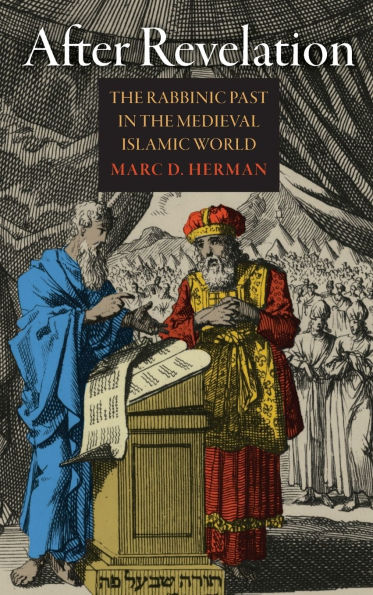
After Revelation: the Rabbinic Past Medieval Islamic World in Chattanooga, TN
Current price: $64.95
Barnes and Noble
After Revelation: the Rabbinic Past Medieval Islamic World in Chattanooga, TN
Current price: $64.95
Loading Inventory...
Size: Hardcover
Reveals how medieval Jews developed religious law through contact with their Muslim neighbors
After Revelation
offers a dynamic new perspective on medieval Jewish legal thought and its integration in the wider Islamic world. Here, Marc D. Herman demonstrates that Jews were fully conversant in their contemporaries’ ideas about revelation, law, and legal interpretation. Bookended by the two luminaries of medieval Judaism—Saadia Gaon and Moses Maimonides—
analyzes the legal theory that medieval Jews produced in Islamic lands, mostly in Arabic, and reveals previously unrecognized commonalities between Jewish and Islamic constructions of religious law.
Herman tackles one of the central doctrines of post-biblical Judaism: that God had supplemented the written Hebrew Bible with an Oral Torah. Tracing this idea from Baghdad to Córdoba to Cairo, he shows that the Oral Torah took many new forms in the medieval Islamic world.
makes plain that medieval Judaism took the shapes that it did largely because of contact with Islam.
After Revelation
offers a dynamic new perspective on medieval Jewish legal thought and its integration in the wider Islamic world. Here, Marc D. Herman demonstrates that Jews were fully conversant in their contemporaries’ ideas about revelation, law, and legal interpretation. Bookended by the two luminaries of medieval Judaism—Saadia Gaon and Moses Maimonides—
analyzes the legal theory that medieval Jews produced in Islamic lands, mostly in Arabic, and reveals previously unrecognized commonalities between Jewish and Islamic constructions of religious law.
Herman tackles one of the central doctrines of post-biblical Judaism: that God had supplemented the written Hebrew Bible with an Oral Torah. Tracing this idea from Baghdad to Córdoba to Cairo, he shows that the Oral Torah took many new forms in the medieval Islamic world.
makes plain that medieval Judaism took the shapes that it did largely because of contact with Islam.
Reveals how medieval Jews developed religious law through contact with their Muslim neighbors
After Revelation
offers a dynamic new perspective on medieval Jewish legal thought and its integration in the wider Islamic world. Here, Marc D. Herman demonstrates that Jews were fully conversant in their contemporaries’ ideas about revelation, law, and legal interpretation. Bookended by the two luminaries of medieval Judaism—Saadia Gaon and Moses Maimonides—
analyzes the legal theory that medieval Jews produced in Islamic lands, mostly in Arabic, and reveals previously unrecognized commonalities between Jewish and Islamic constructions of religious law.
Herman tackles one of the central doctrines of post-biblical Judaism: that God had supplemented the written Hebrew Bible with an Oral Torah. Tracing this idea from Baghdad to Córdoba to Cairo, he shows that the Oral Torah took many new forms in the medieval Islamic world.
makes plain that medieval Judaism took the shapes that it did largely because of contact with Islam.
After Revelation
offers a dynamic new perspective on medieval Jewish legal thought and its integration in the wider Islamic world. Here, Marc D. Herman demonstrates that Jews were fully conversant in their contemporaries’ ideas about revelation, law, and legal interpretation. Bookended by the two luminaries of medieval Judaism—Saadia Gaon and Moses Maimonides—
analyzes the legal theory that medieval Jews produced in Islamic lands, mostly in Arabic, and reveals previously unrecognized commonalities between Jewish and Islamic constructions of religious law.
Herman tackles one of the central doctrines of post-biblical Judaism: that God had supplemented the written Hebrew Bible with an Oral Torah. Tracing this idea from Baghdad to Córdoba to Cairo, he shows that the Oral Torah took many new forms in the medieval Islamic world.
makes plain that medieval Judaism took the shapes that it did largely because of contact with Islam.
You May Also Like













More About Barnes and Noble at Hamilton Place
Barnes & Noble is the world’s largest retail bookseller and a leading retailer of content, digital media and educational products. Our Nook Digital business offers a lineup of NOOK® tablets and e-Readers and an expansive collection of digital reading content through the NOOK Store®. Barnes & Noble’s mission is to operate the best omni-channel specialty retail business in America, helping both our customers and booksellers reach their aspirations, while being a credit to the communities we serve.
2100 Hamilton Pl Blvd, Chattanooga, TN 37421, United States
Find Barnes and Noble at Hamilton Place in Chattanooga, TN
Visit Barnes and Noble at Hamilton Place in Chattanooga, TN
