
Home
African Memoirs and Cultural Representations: Narrating Traditions
Barnes and Noble
Loading Inventory...
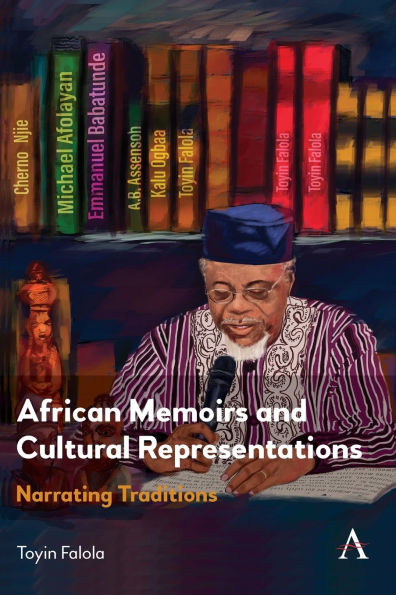
African Memoirs and Cultural Representations: Narrating Traditions in Chattanooga, TN
Current price: $110.00
Barnes and Noble
African Memoirs and Cultural Representations: Narrating Traditions in Chattanooga, TN
Current price: $110.00
Loading Inventory...
Size: Hardcover
Oral traditions and creative oratures have been celebrated in African studies over the years, specifically from the 1950s, as the most important and viable correspondence, aside from material artifacts, between social “archeologists” attempting to penetrate the African preliterate past and the socialpolitical and economic productions of that same past.
In the memoirs chosen for this book, oral traditions are braided with personal experiences in the formation of the self, providing the basis of some African literary outputs and championed as having the ability to engineer the African knowledge system in global academe. In this regard, this work stressesthe concept that most memoir writing scholars feel that the production and presentation of the autobiographical self aredependent on the categories of individualism and relationality.
The memoirists depict their own identities in their tales as not simply a part of their society but also one strongly impacted by prominent persons in their many lived settings. The bookdiscusses an approach that enables West African memoirists to review their cultural backgrounds in the light of living in other spaces and acquiring different experiences.
In the memoirs chosen for this book, oral traditions are braided with personal experiences in the formation of the self, providing the basis of some African literary outputs and championed as having the ability to engineer the African knowledge system in global academe. In this regard, this work stressesthe concept that most memoir writing scholars feel that the production and presentation of the autobiographical self aredependent on the categories of individualism and relationality.
The memoirists depict their own identities in their tales as not simply a part of their society but also one strongly impacted by prominent persons in their many lived settings. The bookdiscusses an approach that enables West African memoirists to review their cultural backgrounds in the light of living in other spaces and acquiring different experiences.
Oral traditions and creative oratures have been celebrated in African studies over the years, specifically from the 1950s, as the most important and viable correspondence, aside from material artifacts, between social “archeologists” attempting to penetrate the African preliterate past and the socialpolitical and economic productions of that same past.
In the memoirs chosen for this book, oral traditions are braided with personal experiences in the formation of the self, providing the basis of some African literary outputs and championed as having the ability to engineer the African knowledge system in global academe. In this regard, this work stressesthe concept that most memoir writing scholars feel that the production and presentation of the autobiographical self aredependent on the categories of individualism and relationality.
The memoirists depict their own identities in their tales as not simply a part of their society but also one strongly impacted by prominent persons in their many lived settings. The bookdiscusses an approach that enables West African memoirists to review their cultural backgrounds in the light of living in other spaces and acquiring different experiences.
In the memoirs chosen for this book, oral traditions are braided with personal experiences in the formation of the self, providing the basis of some African literary outputs and championed as having the ability to engineer the African knowledge system in global academe. In this regard, this work stressesthe concept that most memoir writing scholars feel that the production and presentation of the autobiographical self aredependent on the categories of individualism and relationality.
The memoirists depict their own identities in their tales as not simply a part of their society but also one strongly impacted by prominent persons in their many lived settings. The bookdiscusses an approach that enables West African memoirists to review their cultural backgrounds in the light of living in other spaces and acquiring different experiences.
You May Also Like










More About Barnes and Noble at Hamilton Place
Barnes & Noble is the world’s largest retail bookseller and a leading retailer of content, digital media and educational products. Our Nook Digital business offers a lineup of NOOK® tablets and e-Readers and an expansive collection of digital reading content through the NOOK Store®. Barnes & Noble’s mission is to operate the best omni-channel specialty retail business in America, helping both our customers and booksellers reach their aspirations, while being a credit to the communities we serve.
2100 Hamilton Pl Blvd, Chattanooga, TN 37421, United States
Find Barnes and Noble at Hamilton Place in Chattanooga, TN
Visit Barnes and Noble at Hamilton Place in Chattanooga, TN
