
Home
Abū ʼl-ʿabbās Al-Lawkarī (D. After 503/1109): Bayān Al-ḥaqq Bi-ḍamān Al-ṣidq. an Early 'Reader' in Avicenna's Philosophy: Al-ʿilm Al-ṭabīʿī 1 & 2: Physics & de Caelo. Editio Pr
Barnes and Noble
Loading Inventory...
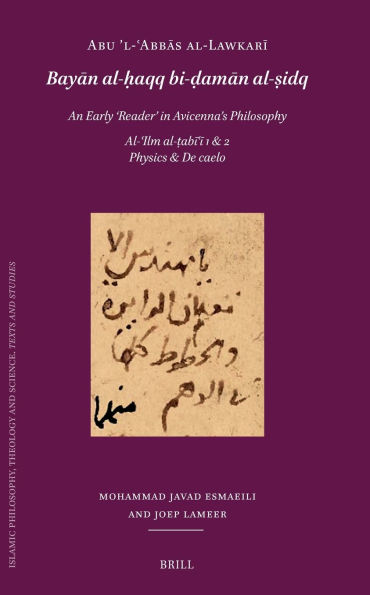
Abū ʼl-ʿabbās Al-Lawkarī (D. After 503/1109): Bayān Al-ḥaqq Bi-ḍamān Al-ṣidq. an Early 'Reader' in Avicenna's Philosophy: Al-ʿilm Al-ṭabīʿī 1 & 2: Physics & de Caelo. Editio Pr in Chattanooga, TN
Current price: $136.00
Barnes and Noble
Abū ʼl-ʿabbās Al-Lawkarī (D. After 503/1109): Bayān Al-ḥaqq Bi-ḍamān Al-ṣidq. an Early 'Reader' in Avicenna's Philosophy: Al-ʿilm Al-ṭabīʿī 1 & 2: Physics & de Caelo. Editio Pr in Chattanooga, TN
Current price: $136.00
Loading Inventory...
Size: OS
This edition comprises the first two books of the natural philosophy section of a unique teacher’s manual on Avicenna’s philosophy, authored by his second-generation student Abū ’l-ʿAbbās al-Lawkarī (d. after 503/1109). Al-Lawkarī was the person responsible for promoting Avicenna’s philosophy in Khorasan at a time when theologians like Abū Ḥāmid al-Ghazālī (d. 505/1111) condemned its most fundamental tenets. The importance of this work lies in al-Lawkarī’s endeavour to provide the resources for a condensed yet comprehensive lecture course on Avicenna’s philosophy, with the aim of perpetuating his ideas. His covert use of the work of his teacher Bahmanyār (d. 458/1066) is especially noteworthy, here as well as in other sections of this work.
This edition comprises the first two books of the natural philosophy section of a unique teacher’s manual on Avicenna’s philosophy, authored by his second-generation student Abū ’l-ʿAbbās al-Lawkarī (d. after 503/1109). Al-Lawkarī was the person responsible for promoting Avicenna’s philosophy in Khorasan at a time when theologians like Abū Ḥāmid al-Ghazālī (d. 505/1111) condemned its most fundamental tenets. The importance of this work lies in al-Lawkarī’s endeavour to provide the resources for a condensed yet comprehensive lecture course on Avicenna’s philosophy, with the aim of perpetuating his ideas. His covert use of the work of his teacher Bahmanyār (d. 458/1066) is especially noteworthy, here as well as in other sections of this work.
You May Also Like













More About Barnes and Noble at Hamilton Place
Barnes & Noble is the world’s largest retail bookseller and a leading retailer of content, digital media and educational products. Our Nook Digital business offers a lineup of NOOK® tablets and e-Readers and an expansive collection of digital reading content through the NOOK Store®. Barnes & Noble’s mission is to operate the best omni-channel specialty retail business in America, helping both our customers and booksellers reach their aspirations, while being a credit to the communities we serve.
2100 Hamilton Pl Blvd, Chattanooga, TN 37421, United States
Find Barnes and Noble at Hamilton Place in Chattanooga, TN
Visit Barnes and Noble at Hamilton Place in Chattanooga, TN
