
Home
Abraham on Trial: The Social Legacy of Biblical Myth
Barnes and Noble
Loading Inventory...
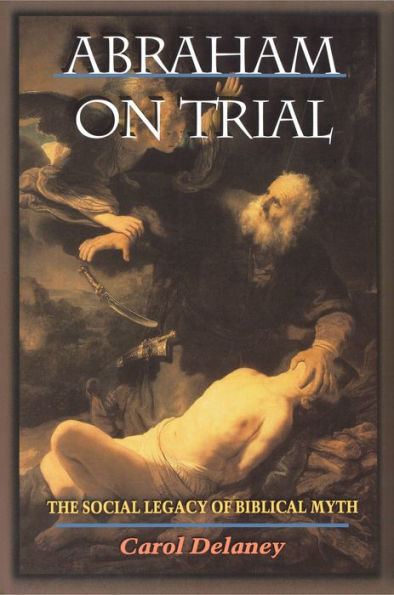
Abraham on Trial: The Social Legacy of Biblical Myth in Chattanooga, TN
Current price: $53.00
Barnes and Noble
Abraham on Trial: The Social Legacy of Biblical Myth in Chattanooga, TN
Current price: $53.00
Loading Inventory...
Size: Paperback
Abraham on Trial
questions the foundations of faith that have made a virtue out of the willingness to sacrifice a child. Through his desire to obey God at all costs, even if it meant sacrificing his son, Abraham became the definitive model of faith for the major world religions of Judaism, Christianity, and Islam. In this bold look at the legacy of this biblical and qur'anic story, Carol Delaney explores how the sacrifice rather than the protection of children became the focus of faith, to the point where the abuse and betrayal of children has today become widespread and sometimes institutionalized. Her strikingly original analysis also offers a new perspective on what unites and divides the peoples of the sibling religions derived from Abraham and, implicitly, a way to overcome the increasing violence among them.
Delaney critically examines evidence from Jewish, Christian, and Muslim interpretations, from archaeology and Freudian theory, as well as a recent trial in which a father sacrificed his child in obedience to God's voice, and shows how the meaning of Abraham's story is bound up with a specific notion of fatherhood. The preeminence of the father (which is part of the meaning of the name Abraham) comes from the still operative theory of procreation in which men transmit life by means of their "seed," an image that encapsulates the generative, creative power that symbolically allies men with God. The communities of faith argue interminably about
who
is the true seed of Abraham, who can claim the patrimony, but until now, no one has asked
what
is this seed.
Kinship and origin myths, the cultural construction of fatherhood and motherhood, suspicions of actual child sacrifices in ancient times, and a revisiting of Freud's Oedipus complex all contribute to Delaney's remarkably rich discussion. She shows how the story of Abraham legitimates a hierarchical structure of authority, a specific form of family, definitions of gender, and the value of obedience that have become the bedrock of society. The question she leaves us with is whether we should perpetuate this story and the lessons it teaches.
questions the foundations of faith that have made a virtue out of the willingness to sacrifice a child. Through his desire to obey God at all costs, even if it meant sacrificing his son, Abraham became the definitive model of faith for the major world religions of Judaism, Christianity, and Islam. In this bold look at the legacy of this biblical and qur'anic story, Carol Delaney explores how the sacrifice rather than the protection of children became the focus of faith, to the point where the abuse and betrayal of children has today become widespread and sometimes institutionalized. Her strikingly original analysis also offers a new perspective on what unites and divides the peoples of the sibling religions derived from Abraham and, implicitly, a way to overcome the increasing violence among them.
Delaney critically examines evidence from Jewish, Christian, and Muslim interpretations, from archaeology and Freudian theory, as well as a recent trial in which a father sacrificed his child in obedience to God's voice, and shows how the meaning of Abraham's story is bound up with a specific notion of fatherhood. The preeminence of the father (which is part of the meaning of the name Abraham) comes from the still operative theory of procreation in which men transmit life by means of their "seed," an image that encapsulates the generative, creative power that symbolically allies men with God. The communities of faith argue interminably about
who
is the true seed of Abraham, who can claim the patrimony, but until now, no one has asked
what
is this seed.
Kinship and origin myths, the cultural construction of fatherhood and motherhood, suspicions of actual child sacrifices in ancient times, and a revisiting of Freud's Oedipus complex all contribute to Delaney's remarkably rich discussion. She shows how the story of Abraham legitimates a hierarchical structure of authority, a specific form of family, definitions of gender, and the value of obedience that have become the bedrock of society. The question she leaves us with is whether we should perpetuate this story and the lessons it teaches.
Abraham on Trial
questions the foundations of faith that have made a virtue out of the willingness to sacrifice a child. Through his desire to obey God at all costs, even if it meant sacrificing his son, Abraham became the definitive model of faith for the major world religions of Judaism, Christianity, and Islam. In this bold look at the legacy of this biblical and qur'anic story, Carol Delaney explores how the sacrifice rather than the protection of children became the focus of faith, to the point where the abuse and betrayal of children has today become widespread and sometimes institutionalized. Her strikingly original analysis also offers a new perspective on what unites and divides the peoples of the sibling religions derived from Abraham and, implicitly, a way to overcome the increasing violence among them.
Delaney critically examines evidence from Jewish, Christian, and Muslim interpretations, from archaeology and Freudian theory, as well as a recent trial in which a father sacrificed his child in obedience to God's voice, and shows how the meaning of Abraham's story is bound up with a specific notion of fatherhood. The preeminence of the father (which is part of the meaning of the name Abraham) comes from the still operative theory of procreation in which men transmit life by means of their "seed," an image that encapsulates the generative, creative power that symbolically allies men with God. The communities of faith argue interminably about
who
is the true seed of Abraham, who can claim the patrimony, but until now, no one has asked
what
is this seed.
Kinship and origin myths, the cultural construction of fatherhood and motherhood, suspicions of actual child sacrifices in ancient times, and a revisiting of Freud's Oedipus complex all contribute to Delaney's remarkably rich discussion. She shows how the story of Abraham legitimates a hierarchical structure of authority, a specific form of family, definitions of gender, and the value of obedience that have become the bedrock of society. The question she leaves us with is whether we should perpetuate this story and the lessons it teaches.
questions the foundations of faith that have made a virtue out of the willingness to sacrifice a child. Through his desire to obey God at all costs, even if it meant sacrificing his son, Abraham became the definitive model of faith for the major world religions of Judaism, Christianity, and Islam. In this bold look at the legacy of this biblical and qur'anic story, Carol Delaney explores how the sacrifice rather than the protection of children became the focus of faith, to the point where the abuse and betrayal of children has today become widespread and sometimes institutionalized. Her strikingly original analysis also offers a new perspective on what unites and divides the peoples of the sibling religions derived from Abraham and, implicitly, a way to overcome the increasing violence among them.
Delaney critically examines evidence from Jewish, Christian, and Muslim interpretations, from archaeology and Freudian theory, as well as a recent trial in which a father sacrificed his child in obedience to God's voice, and shows how the meaning of Abraham's story is bound up with a specific notion of fatherhood. The preeminence of the father (which is part of the meaning of the name Abraham) comes from the still operative theory of procreation in which men transmit life by means of their "seed," an image that encapsulates the generative, creative power that symbolically allies men with God. The communities of faith argue interminably about
who
is the true seed of Abraham, who can claim the patrimony, but until now, no one has asked
what
is this seed.
Kinship and origin myths, the cultural construction of fatherhood and motherhood, suspicions of actual child sacrifices in ancient times, and a revisiting of Freud's Oedipus complex all contribute to Delaney's remarkably rich discussion. She shows how the story of Abraham legitimates a hierarchical structure of authority, a specific form of family, definitions of gender, and the value of obedience that have become the bedrock of society. The question she leaves us with is whether we should perpetuate this story and the lessons it teaches.
You May Also Like










More About Barnes and Noble at Hamilton Place
Barnes & Noble is the world’s largest retail bookseller and a leading retailer of content, digital media and educational products. Our Nook Digital business offers a lineup of NOOK® tablets and e-Readers and an expansive collection of digital reading content through the NOOK Store®. Barnes & Noble’s mission is to operate the best omni-channel specialty retail business in America, helping both our customers and booksellers reach their aspirations, while being a credit to the communities we serve.
2100 Hamilton Pl Blvd, Chattanooga, TN 37421, United States
Find Barnes and Noble at Hamilton Place in Chattanooga, TN
Visit Barnes and Noble at Hamilton Place in Chattanooga, TN
