
Home
A Transition to Proof: An Introduction Advanced Mathematics
Barnes and Noble
Loading Inventory...
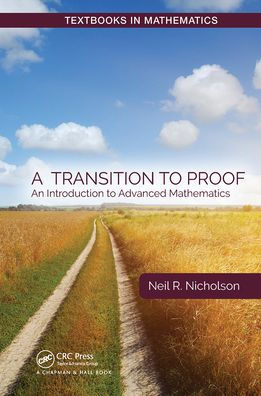
A Transition to Proof: An Introduction Advanced Mathematics in Chattanooga, TN
Current price: $120.00
Barnes and Noble
A Transition to Proof: An Introduction Advanced Mathematics in Chattanooga, TN
Current price: $120.00
Loading Inventory...
Size: Hardcover
A Transition to Proof: An Introduction to Advanced Mathematics
describes writing proofs as a creative process. There is a lot that goes into creating a mathematical proof before writing it. Ample discussion of how to figure out the "nuts and bolts'" of the proof takes place: thought processes, scratch work and ways to attack problems. Readers will learn not just how to write mathematics but also how to do mathematics. They will then learn to communicate mathematics effectively.
The text emphasizes the creativity, intuition, and correct mathematical exposition as it prepares students for courses beyond the calculus sequence. The author urges readers to work to define their mathematical voices. This is done with style tips and strict "mathematical do’s and don’ts", which are presented in eye-catching "text-boxes" throughout the text. The end result enables readers to fully understand the fundamentals of proof.
Features:
The text is aimed at transition courses preparing students to take analysis
Promotes creativity, intuition, and accuracy in exposition
The language of proof is established in the first two chapters, which cover logic and set theory
Includes chapters on cardinality and introductory topology
describes writing proofs as a creative process. There is a lot that goes into creating a mathematical proof before writing it. Ample discussion of how to figure out the "nuts and bolts'" of the proof takes place: thought processes, scratch work and ways to attack problems. Readers will learn not just how to write mathematics but also how to do mathematics. They will then learn to communicate mathematics effectively.
The text emphasizes the creativity, intuition, and correct mathematical exposition as it prepares students for courses beyond the calculus sequence. The author urges readers to work to define their mathematical voices. This is done with style tips and strict "mathematical do’s and don’ts", which are presented in eye-catching "text-boxes" throughout the text. The end result enables readers to fully understand the fundamentals of proof.
Features:
The text is aimed at transition courses preparing students to take analysis
Promotes creativity, intuition, and accuracy in exposition
The language of proof is established in the first two chapters, which cover logic and set theory
Includes chapters on cardinality and introductory topology
A Transition to Proof: An Introduction to Advanced Mathematics
describes writing proofs as a creative process. There is a lot that goes into creating a mathematical proof before writing it. Ample discussion of how to figure out the "nuts and bolts'" of the proof takes place: thought processes, scratch work and ways to attack problems. Readers will learn not just how to write mathematics but also how to do mathematics. They will then learn to communicate mathematics effectively.
The text emphasizes the creativity, intuition, and correct mathematical exposition as it prepares students for courses beyond the calculus sequence. The author urges readers to work to define their mathematical voices. This is done with style tips and strict "mathematical do’s and don’ts", which are presented in eye-catching "text-boxes" throughout the text. The end result enables readers to fully understand the fundamentals of proof.
Features:
The text is aimed at transition courses preparing students to take analysis
Promotes creativity, intuition, and accuracy in exposition
The language of proof is established in the first two chapters, which cover logic and set theory
Includes chapters on cardinality and introductory topology
describes writing proofs as a creative process. There is a lot that goes into creating a mathematical proof before writing it. Ample discussion of how to figure out the "nuts and bolts'" of the proof takes place: thought processes, scratch work and ways to attack problems. Readers will learn not just how to write mathematics but also how to do mathematics. They will then learn to communicate mathematics effectively.
The text emphasizes the creativity, intuition, and correct mathematical exposition as it prepares students for courses beyond the calculus sequence. The author urges readers to work to define their mathematical voices. This is done with style tips and strict "mathematical do’s and don’ts", which are presented in eye-catching "text-boxes" throughout the text. The end result enables readers to fully understand the fundamentals of proof.
Features:
The text is aimed at transition courses preparing students to take analysis
Promotes creativity, intuition, and accuracy in exposition
The language of proof is established in the first two chapters, which cover logic and set theory
Includes chapters on cardinality and introductory topology
You May Also Like












More About Barnes and Noble at Hamilton Place
Barnes & Noble is the world’s largest retail bookseller and a leading retailer of content, digital media and educational products. Our Nook Digital business offers a lineup of NOOK® tablets and e-Readers and an expansive collection of digital reading content through the NOOK Store®. Barnes & Noble’s mission is to operate the best omni-channel specialty retail business in America, helping both our customers and booksellers reach their aspirations, while being a credit to the communities we serve.
2100 Hamilton Pl Blvd, Chattanooga, TN 37421, United States
Find Barnes and Noble at Hamilton Place in Chattanooga, TN
Visit Barnes and Noble at Hamilton Place in Chattanooga, TN