
Home
A Theory of Wonder: Evolution, Brain and the Radical Nature Science
Barnes and Noble
Loading Inventory...
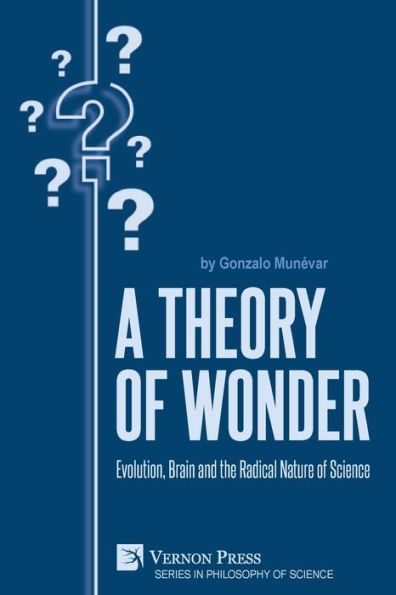
A Theory of Wonder: Evolution, Brain and the Radical Nature Science in Chattanooga, TN
Current price: $89.00
Barnes and Noble
A Theory of Wonder: Evolution, Brain and the Radical Nature Science in Chattanooga, TN
Current price: $89.00
Loading Inventory...
Size: Hardcover
'A Theory of Wonder' aims to determine the best way science can satisfy our sense of wonder by exploring the world. Empiricism tells us that science succeeds because it follows the scientific method: Observation passes judgment on Theory - supporting or rejecting it.
Much credit is given to the inventor of the method, Galileo, but when historically-minded philosophers of science like Kuhn and Feyerabend called our attention to what Galileo actually wrote and did, we were shocked to find out that Galileo instead drives a dagger through the heart of empiricism; he strikes down the distinction between theory and observation. Plain facts, like the vertical fall of a stone, ruled out the motion of the Earth. To conclude that the stone really falls vertically, however, we must assume that the Earth does not move. If it does move, then the stone only "seems" to fall vertically. Galileo then replaced the "facts" against the motion of the Earth with "facts" that included such motion. This process is typical during scientific revolutions.
A good strategy for science is to elaborate radical alternatives; then, and on their basis, reconsider what counts as evidence. Feyerabend was called irrational for this suggestion; but looking at the practice of science from the perspective of evolution and neuroscience shows that the suggestion is very reasonable instead, and, moreover, explains why science works best as a radical form of knowledge. It also leads to a sensible biological form of relative truth, with preliminary drafts leading to exciting discussions with other researchers in the philosophy of science.
This book will be of particular interest to university students, instructors and researchers in history or philosophy of science, as well as those with a general interest in the nature of science.
Much credit is given to the inventor of the method, Galileo, but when historically-minded philosophers of science like Kuhn and Feyerabend called our attention to what Galileo actually wrote and did, we were shocked to find out that Galileo instead drives a dagger through the heart of empiricism; he strikes down the distinction between theory and observation. Plain facts, like the vertical fall of a stone, ruled out the motion of the Earth. To conclude that the stone really falls vertically, however, we must assume that the Earth does not move. If it does move, then the stone only "seems" to fall vertically. Galileo then replaced the "facts" against the motion of the Earth with "facts" that included such motion. This process is typical during scientific revolutions.
A good strategy for science is to elaborate radical alternatives; then, and on their basis, reconsider what counts as evidence. Feyerabend was called irrational for this suggestion; but looking at the practice of science from the perspective of evolution and neuroscience shows that the suggestion is very reasonable instead, and, moreover, explains why science works best as a radical form of knowledge. It also leads to a sensible biological form of relative truth, with preliminary drafts leading to exciting discussions with other researchers in the philosophy of science.
This book will be of particular interest to university students, instructors and researchers in history or philosophy of science, as well as those with a general interest in the nature of science.
'A Theory of Wonder' aims to determine the best way science can satisfy our sense of wonder by exploring the world. Empiricism tells us that science succeeds because it follows the scientific method: Observation passes judgment on Theory - supporting or rejecting it.
Much credit is given to the inventor of the method, Galileo, but when historically-minded philosophers of science like Kuhn and Feyerabend called our attention to what Galileo actually wrote and did, we were shocked to find out that Galileo instead drives a dagger through the heart of empiricism; he strikes down the distinction between theory and observation. Plain facts, like the vertical fall of a stone, ruled out the motion of the Earth. To conclude that the stone really falls vertically, however, we must assume that the Earth does not move. If it does move, then the stone only "seems" to fall vertically. Galileo then replaced the "facts" against the motion of the Earth with "facts" that included such motion. This process is typical during scientific revolutions.
A good strategy for science is to elaborate radical alternatives; then, and on their basis, reconsider what counts as evidence. Feyerabend was called irrational for this suggestion; but looking at the practice of science from the perspective of evolution and neuroscience shows that the suggestion is very reasonable instead, and, moreover, explains why science works best as a radical form of knowledge. It also leads to a sensible biological form of relative truth, with preliminary drafts leading to exciting discussions with other researchers in the philosophy of science.
This book will be of particular interest to university students, instructors and researchers in history or philosophy of science, as well as those with a general interest in the nature of science.
Much credit is given to the inventor of the method, Galileo, but when historically-minded philosophers of science like Kuhn and Feyerabend called our attention to what Galileo actually wrote and did, we were shocked to find out that Galileo instead drives a dagger through the heart of empiricism; he strikes down the distinction between theory and observation. Plain facts, like the vertical fall of a stone, ruled out the motion of the Earth. To conclude that the stone really falls vertically, however, we must assume that the Earth does not move. If it does move, then the stone only "seems" to fall vertically. Galileo then replaced the "facts" against the motion of the Earth with "facts" that included such motion. This process is typical during scientific revolutions.
A good strategy for science is to elaborate radical alternatives; then, and on their basis, reconsider what counts as evidence. Feyerabend was called irrational for this suggestion; but looking at the practice of science from the perspective of evolution and neuroscience shows that the suggestion is very reasonable instead, and, moreover, explains why science works best as a radical form of knowledge. It also leads to a sensible biological form of relative truth, with preliminary drafts leading to exciting discussions with other researchers in the philosophy of science.
This book will be of particular interest to university students, instructors and researchers in history or philosophy of science, as well as those with a general interest in the nature of science.
You May Also Like













More About Barnes and Noble at Hamilton Place
Barnes & Noble is the world’s largest retail bookseller and a leading retailer of content, digital media and educational products. Our Nook Digital business offers a lineup of NOOK® tablets and e-Readers and an expansive collection of digital reading content through the NOOK Store®. Barnes & Noble’s mission is to operate the best omni-channel specialty retail business in America, helping both our customers and booksellers reach their aspirations, while being a credit to the communities we serve.
2100 Hamilton Pl Blvd, Chattanooga, TN 37421, United States
Find Barnes and Noble at Hamilton Place in Chattanooga, TN
Visit Barnes and Noble at Hamilton Place in Chattanooga, TN
