
Home
A Theory of Civilisation
Barnes and Noble
Loading Inventory...
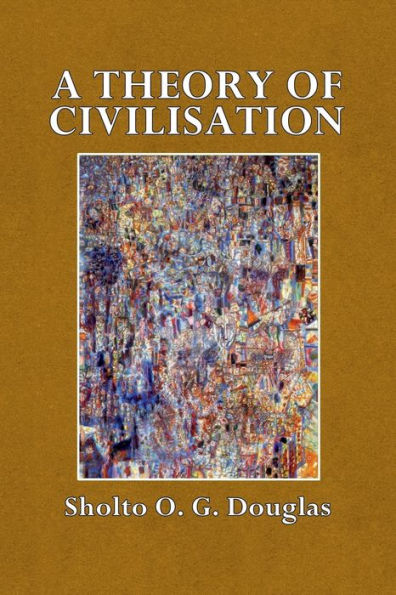
A Theory of Civilisation in Chattanooga, TN
Current price: $8.99
Barnes and Noble
A Theory of Civilisation in Chattanooga, TN
Current price: $8.99
Loading Inventory...
Size: OS
From the beginning of the INTRODUCTION Why did the civilisation of ancient Greece and Rome decay and die ? That is a question which must occur to every mind that studies the history of classical civilisation. Why did that former period of knowledge and culture, of vast intellectual and artistic achievement, fail to pass by a direct path of ascent into our modern civilisation? We know that there were intellects at work in the world then which were not separated by any real gulf of difference from the intellects that have crowned our modern civilisation. In every purely intellectual point the great men of that period were not inferior to the great men of modern times- or, at any rate, were not utterly inferior to them. In poetry- epic, lyric, dramatic- Greece and Rome have left us models which we have barely surpassed. In sculpture we have never reached the perfection of Greece. Of classical painting we possess next to nothing, and we know so little that it would be rash to claim for the modem world an overwhelming superiority of craftsmanship. In architecture we may look proudly on Chartres or Ely; but, with thoughts of the Parthenon and of the temples of Paestum, we dare not claim an intrinsic superiority for Christian architecture. And even in the latter days of the great epoch of Greco -Roman civilisation, Tacitus, that most perfect craftsman of prose literature, gave the world in his Annals a work that some of us may well think has never been equaled.
From the beginning of the INTRODUCTION Why did the civilisation of ancient Greece and Rome decay and die ? That is a question which must occur to every mind that studies the history of classical civilisation. Why did that former period of knowledge and culture, of vast intellectual and artistic achievement, fail to pass by a direct path of ascent into our modern civilisation? We know that there were intellects at work in the world then which were not separated by any real gulf of difference from the intellects that have crowned our modern civilisation. In every purely intellectual point the great men of that period were not inferior to the great men of modern times- or, at any rate, were not utterly inferior to them. In poetry- epic, lyric, dramatic- Greece and Rome have left us models which we have barely surpassed. In sculpture we have never reached the perfection of Greece. Of classical painting we possess next to nothing, and we know so little that it would be rash to claim for the modem world an overwhelming superiority of craftsmanship. In architecture we may look proudly on Chartres or Ely; but, with thoughts of the Parthenon and of the temples of Paestum, we dare not claim an intrinsic superiority for Christian architecture. And even in the latter days of the great epoch of Greco -Roman civilisation, Tacitus, that most perfect craftsman of prose literature, gave the world in his Annals a work that some of us may well think has never been equaled.
You May Also Like














More About Barnes and Noble at Hamilton Place
Barnes & Noble is the world’s largest retail bookseller and a leading retailer of content, digital media and educational products. Our Nook Digital business offers a lineup of NOOK® tablets and e-Readers and an expansive collection of digital reading content through the NOOK Store®. Barnes & Noble’s mission is to operate the best omni-channel specialty retail business in America, helping both our customers and booksellers reach their aspirations, while being a credit to the communities we serve.
2100 Hamilton Pl Blvd, Chattanooga, TN 37421, United States
Find Barnes and Noble at Hamilton Place in Chattanooga, TN
Visit Barnes and Noble at Hamilton Place in Chattanooga, TN
