
Home
A Terrible Thunder: the Story of New Orleans Sniper
Barnes and Noble
Loading Inventory...
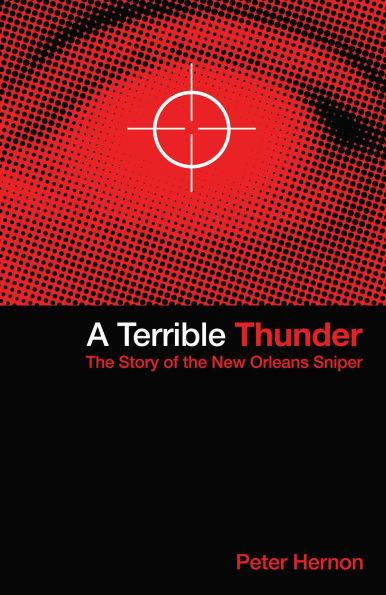
A Terrible Thunder: the Story of New Orleans Sniper in Chattanooga, TN
Current price: $20.00
Barnes and Noble
A Terrible Thunder: the Story of New Orleans Sniper in Chattanooga, TN
Current price: $20.00
Loading Inventory...
Size: Paperback
When Terror Came to New Orleans: A City Under Siege
On New Year's Eve 1972, Mark James Robert Essex, a 23-year-old former Navy seaman, began a calculated assault on the New Orleans police that would leave nine dead, ten wounded, and a city forever changed. What drove this quiet young man from small-town Kansas to wage a one-man war against an entire police force?
Peter Hernon, who covered the siege as an Associated Press reporter, spent over a year investigating this shocking story. Through extensive interviews and previously unpublished material, he reconstructs both the terrifying 11-hour hotel siege and the tragic transformation of Mark Essex—from a "happy-go-lucky" youth in Emporia, Kansas, to an embittered gunman consumed by rage.
The book alternates between the chaos of that January week—when hundreds of police officers, Marine helicopters, and volunteer gunmen battled a lone sniper while the Howard Johnson hotel burned around him—and Essex's journey through systematic racism in the U.S. Navy that left him, in Hernon's words, "a casualty of history."
This is more than a true crime narrative. It's a powerful examination of how persistent injustice can transform an ordinary person into an instrument of violence, and a sobering meditation on alienation in America. As
The New York Times
noted, Hernon's account "reads as fluently as a novel" while raising profound questions about society's responsibility for those it pushes to the breaking point.
A meticulously researched, compellingly written account of one of the most violent attacks on police in American history—and the broken system that created a killer.
On New Year's Eve 1972, Mark James Robert Essex, a 23-year-old former Navy seaman, began a calculated assault on the New Orleans police that would leave nine dead, ten wounded, and a city forever changed. What drove this quiet young man from small-town Kansas to wage a one-man war against an entire police force?
Peter Hernon, who covered the siege as an Associated Press reporter, spent over a year investigating this shocking story. Through extensive interviews and previously unpublished material, he reconstructs both the terrifying 11-hour hotel siege and the tragic transformation of Mark Essex—from a "happy-go-lucky" youth in Emporia, Kansas, to an embittered gunman consumed by rage.
The book alternates between the chaos of that January week—when hundreds of police officers, Marine helicopters, and volunteer gunmen battled a lone sniper while the Howard Johnson hotel burned around him—and Essex's journey through systematic racism in the U.S. Navy that left him, in Hernon's words, "a casualty of history."
This is more than a true crime narrative. It's a powerful examination of how persistent injustice can transform an ordinary person into an instrument of violence, and a sobering meditation on alienation in America. As
The New York Times
noted, Hernon's account "reads as fluently as a novel" while raising profound questions about society's responsibility for those it pushes to the breaking point.
A meticulously researched, compellingly written account of one of the most violent attacks on police in American history—and the broken system that created a killer.
When Terror Came to New Orleans: A City Under Siege
On New Year's Eve 1972, Mark James Robert Essex, a 23-year-old former Navy seaman, began a calculated assault on the New Orleans police that would leave nine dead, ten wounded, and a city forever changed. What drove this quiet young man from small-town Kansas to wage a one-man war against an entire police force?
Peter Hernon, who covered the siege as an Associated Press reporter, spent over a year investigating this shocking story. Through extensive interviews and previously unpublished material, he reconstructs both the terrifying 11-hour hotel siege and the tragic transformation of Mark Essex—from a "happy-go-lucky" youth in Emporia, Kansas, to an embittered gunman consumed by rage.
The book alternates between the chaos of that January week—when hundreds of police officers, Marine helicopters, and volunteer gunmen battled a lone sniper while the Howard Johnson hotel burned around him—and Essex's journey through systematic racism in the U.S. Navy that left him, in Hernon's words, "a casualty of history."
This is more than a true crime narrative. It's a powerful examination of how persistent injustice can transform an ordinary person into an instrument of violence, and a sobering meditation on alienation in America. As
The New York Times
noted, Hernon's account "reads as fluently as a novel" while raising profound questions about society's responsibility for those it pushes to the breaking point.
A meticulously researched, compellingly written account of one of the most violent attacks on police in American history—and the broken system that created a killer.
On New Year's Eve 1972, Mark James Robert Essex, a 23-year-old former Navy seaman, began a calculated assault on the New Orleans police that would leave nine dead, ten wounded, and a city forever changed. What drove this quiet young man from small-town Kansas to wage a one-man war against an entire police force?
Peter Hernon, who covered the siege as an Associated Press reporter, spent over a year investigating this shocking story. Through extensive interviews and previously unpublished material, he reconstructs both the terrifying 11-hour hotel siege and the tragic transformation of Mark Essex—from a "happy-go-lucky" youth in Emporia, Kansas, to an embittered gunman consumed by rage.
The book alternates between the chaos of that January week—when hundreds of police officers, Marine helicopters, and volunteer gunmen battled a lone sniper while the Howard Johnson hotel burned around him—and Essex's journey through systematic racism in the U.S. Navy that left him, in Hernon's words, "a casualty of history."
This is more than a true crime narrative. It's a powerful examination of how persistent injustice can transform an ordinary person into an instrument of violence, and a sobering meditation on alienation in America. As
The New York Times
noted, Hernon's account "reads as fluently as a novel" while raising profound questions about society's responsibility for those it pushes to the breaking point.
A meticulously researched, compellingly written account of one of the most violent attacks on police in American history—and the broken system that created a killer.
You May Also Like











More About Barnes and Noble at Hamilton Place
Barnes & Noble is the world’s largest retail bookseller and a leading retailer of content, digital media and educational products. Our Nook Digital business offers a lineup of NOOK® tablets and e-Readers and an expansive collection of digital reading content through the NOOK Store®. Barnes & Noble’s mission is to operate the best omni-channel specialty retail business in America, helping both our customers and booksellers reach their aspirations, while being a credit to the communities we serve.
2100 Hamilton Pl Blvd, Chattanooga, TN 37421, United States
Find Barnes and Noble at Hamilton Place in Chattanooga, TN
Visit Barnes and Noble at Hamilton Place in Chattanooga, TN