
Home
A History of Cold War Industrialisation: Finnish Shipbuilding between East and West
Barnes and Noble
Loading Inventory...
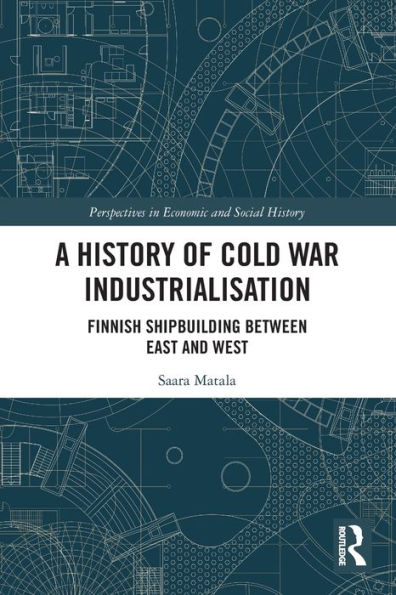
A History of Cold War Industrialisation: Finnish Shipbuilding between East and West in Chattanooga, TN
Current price: $190.00
Barnes and Noble
A History of Cold War Industrialisation: Finnish Shipbuilding between East and West in Chattanooga, TN
Current price: $190.00
Loading Inventory...
Size: Hardcover
This monograph explores the economic consequences of the Cold War, a polarised world order which politicised technology and shaped industrial development. It provides a detailed archival-based history of the Finnish shipbuilding industry (1952–1996), which f lourished, thanks to the special relationship between Finland and the Soviet Union. Overall, it shows how a small country, Finland, gained power during the Cold War through international economic and technological cooperation. The work places Finland in a firmly international context and assesses the state–industry relationship from five different angles: technopolitics, trade infrastructure, techno-scientific cooperation, industrial reorganisation, and state aid. It presents a novel way to analyse industrialisation as an interaction between institutional stabilisation and f luctuation within a techno-economic system. In so doing, it makes empirical, theoretical, and methodological contributions to the history of industrial change.
A History of Cold War Industrialisation
will be of interest to advanced students and scholars in economic history, maritime history, Cold War history, and international political economy.
A History of Cold War Industrialisation
will be of interest to advanced students and scholars in economic history, maritime history, Cold War history, and international political economy.
This monograph explores the economic consequences of the Cold War, a polarised world order which politicised technology and shaped industrial development. It provides a detailed archival-based history of the Finnish shipbuilding industry (1952–1996), which f lourished, thanks to the special relationship between Finland and the Soviet Union. Overall, it shows how a small country, Finland, gained power during the Cold War through international economic and technological cooperation. The work places Finland in a firmly international context and assesses the state–industry relationship from five different angles: technopolitics, trade infrastructure, techno-scientific cooperation, industrial reorganisation, and state aid. It presents a novel way to analyse industrialisation as an interaction between institutional stabilisation and f luctuation within a techno-economic system. In so doing, it makes empirical, theoretical, and methodological contributions to the history of industrial change.
A History of Cold War Industrialisation
will be of interest to advanced students and scholars in economic history, maritime history, Cold War history, and international political economy.
A History of Cold War Industrialisation
will be of interest to advanced students and scholars in economic history, maritime history, Cold War history, and international political economy.
You May Also Like









More About Barnes and Noble at Hamilton Place
Barnes & Noble is the world’s largest retail bookseller and a leading retailer of content, digital media and educational products. Our Nook Digital business offers a lineup of NOOK® tablets and e-Readers and an expansive collection of digital reading content through the NOOK Store®. Barnes & Noble’s mission is to operate the best omni-channel specialty retail business in America, helping both our customers and booksellers reach their aspirations, while being a credit to the communities we serve.
2100 Hamilton Pl Blvd, Chattanooga, TN 37421, United States
Find Barnes and Noble at Hamilton Place in Chattanooga, TN
Visit Barnes and Noble at Hamilton Place in Chattanooga, TN
