
Home
A Brief History of Assyrians Kermanshah
Barnes and Noble
Loading Inventory...
A Brief History of Assyrians Kermanshah in Chattanooga, TN
Current price: $39.99
Barnes and Noble
A Brief History of Assyrians Kermanshah in Chattanooga, TN
Current price: $39.99
Loading Inventory...
Size: Hardcover
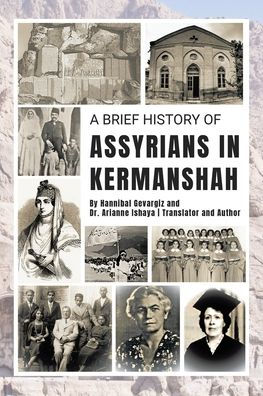
This book is a valuable contribution to the history of historical towns and cities in Iran (former Persia). In this age of constant political upheavals when civilian populations are uprooted from their home base, many readers are interested to know what happens to these displaced communities; how they cope with homelessness, and try to resurrect their cultural and national identity. The Assyrians are the main subject of this study. They were uprooted from their ancestral homes in Northwest Iran during World War I. Only a fraction survived and made their home in Kermanshah and a few other cities in Iran as refugees. So, this book is a community study of the history of uprooted Assyrians in Kermanshah.
What is remarkable is that although Assyrians came to this town as penniless, uprooted refugees, they became a stable part of the community through hard work and utmost sacrifices. Moreover, historically speaking, even during the relatively short period of time (1920s-1970s) that Assyrians were a part of Kermanshah’s larger community, they contributed greatly to the educational, economic, and literary heritage of this town.
Assyrian women played a big role in the education of all children, both Muslim and Christian, in Kermanshah. The most popular elementary schools were established and directed by two Assyrian women who, between them, educated hundreds of children each year. Assyrian physicians and numerous Assyrian nurses staffed the American Mission hospital, and Assyrian engineers and architects contributed to the growth of the town.
The Assyrians do not have an independent country of their own. They are dispersed throughout the world. What has helped them to maintain their identity as a people, has been a network of social relations through family and community that have defied geographical distance and the passage of time.
Most of the Assyrians of Kermanshah now live in the United States of America. They have pictures of their families, old churches, and monuments in Kermanshah in this book. So they are pleased to see their history in print.
This book is also of special interest to those who trace the history of the American Protestant Missions in Iran and their contributions to the Education, health, and welfare of the host communities.
Arianne Ishaya
What is remarkable is that although Assyrians came to this town as penniless, uprooted refugees, they became a stable part of the community through hard work and utmost sacrifices. Moreover, historically speaking, even during the relatively short period of time (1920s-1970s) that Assyrians were a part of Kermanshah’s larger community, they contributed greatly to the educational, economic, and literary heritage of this town.
Assyrian women played a big role in the education of all children, both Muslim and Christian, in Kermanshah. The most popular elementary schools were established and directed by two Assyrian women who, between them, educated hundreds of children each year. Assyrian physicians and numerous Assyrian nurses staffed the American Mission hospital, and Assyrian engineers and architects contributed to the growth of the town.
The Assyrians do not have an independent country of their own. They are dispersed throughout the world. What has helped them to maintain their identity as a people, has been a network of social relations through family and community that have defied geographical distance and the passage of time.
Most of the Assyrians of Kermanshah now live in the United States of America. They have pictures of their families, old churches, and monuments in Kermanshah in this book. So they are pleased to see their history in print.
This book is also of special interest to those who trace the history of the American Protestant Missions in Iran and their contributions to the Education, health, and welfare of the host communities.
Arianne Ishaya
This book is a valuable contribution to the history of historical towns and cities in Iran (former Persia). In this age of constant political upheavals when civilian populations are uprooted from their home base, many readers are interested to know what happens to these displaced communities; how they cope with homelessness, and try to resurrect their cultural and national identity. The Assyrians are the main subject of this study. They were uprooted from their ancestral homes in Northwest Iran during World War I. Only a fraction survived and made their home in Kermanshah and a few other cities in Iran as refugees. So, this book is a community study of the history of uprooted Assyrians in Kermanshah.
What is remarkable is that although Assyrians came to this town as penniless, uprooted refugees, they became a stable part of the community through hard work and utmost sacrifices. Moreover, historically speaking, even during the relatively short period of time (1920s-1970s) that Assyrians were a part of Kermanshah’s larger community, they contributed greatly to the educational, economic, and literary heritage of this town.
Assyrian women played a big role in the education of all children, both Muslim and Christian, in Kermanshah. The most popular elementary schools were established and directed by two Assyrian women who, between them, educated hundreds of children each year. Assyrian physicians and numerous Assyrian nurses staffed the American Mission hospital, and Assyrian engineers and architects contributed to the growth of the town.
The Assyrians do not have an independent country of their own. They are dispersed throughout the world. What has helped them to maintain their identity as a people, has been a network of social relations through family and community that have defied geographical distance and the passage of time.
Most of the Assyrians of Kermanshah now live in the United States of America. They have pictures of their families, old churches, and monuments in Kermanshah in this book. So they are pleased to see their history in print.
This book is also of special interest to those who trace the history of the American Protestant Missions in Iran and their contributions to the Education, health, and welfare of the host communities.
Arianne Ishaya
What is remarkable is that although Assyrians came to this town as penniless, uprooted refugees, they became a stable part of the community through hard work and utmost sacrifices. Moreover, historically speaking, even during the relatively short period of time (1920s-1970s) that Assyrians were a part of Kermanshah’s larger community, they contributed greatly to the educational, economic, and literary heritage of this town.
Assyrian women played a big role in the education of all children, both Muslim and Christian, in Kermanshah. The most popular elementary schools were established and directed by two Assyrian women who, between them, educated hundreds of children each year. Assyrian physicians and numerous Assyrian nurses staffed the American Mission hospital, and Assyrian engineers and architects contributed to the growth of the town.
The Assyrians do not have an independent country of their own. They are dispersed throughout the world. What has helped them to maintain their identity as a people, has been a network of social relations through family and community that have defied geographical distance and the passage of time.
Most of the Assyrians of Kermanshah now live in the United States of America. They have pictures of their families, old churches, and monuments in Kermanshah in this book. So they are pleased to see their history in print.
This book is also of special interest to those who trace the history of the American Protestant Missions in Iran and their contributions to the Education, health, and welfare of the host communities.
Arianne Ishaya
You May Also Like















More About Barnes and Noble at Hamilton Place
Barnes & Noble is the world’s largest retail bookseller and a leading retailer of content, digital media and educational products. Our Nook Digital business offers a lineup of NOOK® tablets and e-Readers and an expansive collection of digital reading content through the NOOK Store®. Barnes & Noble’s mission is to operate the best omni-channel specialty retail business in America, helping both our customers and booksellers reach their aspirations, while being a credit to the communities we serve.
2100 Hamilton Pl Blvd, Chattanooga, TN 37421, United States
Find Barnes and Noble at Hamilton Place in Chattanooga, TN
Visit Barnes and Noble at Hamilton Place in Chattanooga, TN
